
Learn to identify the clinical symptoms of insomnia. Discover how nighttime sleep difficulties cause severe daytime fatigue, cognitive decline, and physical safety risks.
Understanding Insomnia Symptoms: A Guide to Nighttime Signs and Daytime Effects
Insomnia symptoms are clinically categorized into two distinct phases: nighttime sleep disruptions and daytime functional impairments. For many individuals, experiencing difficulty falling asleep despite feeling exhausted, or waking up completely unrefreshed in the morning, serves as the initial indicator of a deeper sleep issue.
Left unmanaged, the cumulative lack of restorative rest creates a cascade of physical, cognitive, and emotional symptoms that can severely fracture your overall quality of life.
The Two Faces of Insomnia: Nighttime vs. Daytime Symptoms
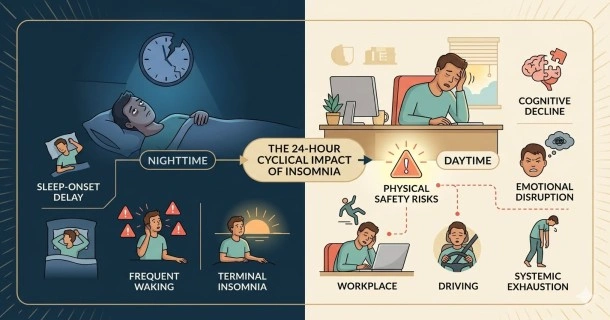
Insomnia is a 24-hour disorder. The stress of the night directly drives the physical and mental impairments observed throughout the day.
Nighttime Insomnia Symptoms
These symptoms represent the structural breakdown of your sleep architecture during the night:
- Sleep-Onset Issues: Finding it incredibly difficult to initially fall asleep at bedtime, despite feeling physically exhausted throughout the evening.
- Fragmented Cycles: Awakening frequently during the night or lying fully awake for long stretches in the middle of the night.
- Early Awakening: Waking up far too early in the morning without the physical ability to drift back to sleep.
- Chemical Dependency: Relying on over-the-counter sleeping pills, prescription sedatives, or alcohol as a regular crutch to induce sleep.
Daytime Insomnia Symptoms
These symptoms are the direct biological consequences of failing to secure restorative, deep sleep cycles the night before:
- Cognitive Decline: Pronounced difficulty concentrating, memory lapses, and an inability to focus on routine daily tasks. This frequently causes a drop in job or school performance.
- Emotional Disruption: Elevated feelings of anxiety, persistent low mood, or severe irritability over minor daily stressors.
- Systemic Exhaustion: Chronic daytime drowsiness and persistent physical fatigue.
- Immunological Strain: A weakened immune system, leaving the body highly susceptible to common viral or bacterial infections.
How Insomnia Affects Daily Life and Safety Risks
The complications of insomnia extend far beyond feeling tired; they introduce substantial, direct threats to physical safety:
- Motor Vehicle Hazards: Drowsy driving drastically impairs a driver's physical reaction times and general mental alertness. This severe cognitive lag contributes to more than 100,000 motor vehicle crashes every single year.
- Elevated Fall Risks: Clinical research indicates that chronic insomnia significantly elevates the risk of suffering dangerous physical trips and falls, particularly in older women.
- Psychological Complications: Prolonged sleep loss acts as a primary catalyst for long-term health issues, doubling the risk of developing clinical depression, panic disorders, and substance abuse tendencies.
What are the most common nighttime symptoms of insomnia?
The hallmark nighttime signs of insomnia include extreme difficulty initially falling asleep, waking up frequently during the night, and waking up hours before your alarm without the ability to fall back asleep. Waking up feeling unrefreshed or poorly rested is also a primary symptom.
How does insomnia affect daily life and physical safety?
Insomnia severely lowers your daytime alertness and slows down physical reaction times. This creates immediate safety hazards, making you highly prone to workplace injuries and responsible for over 100,000 drowsy driving accidents annually. In older populations, it drastically increases the risk of physical falls.
Can a lack of sleep from insomnia weaken my immune system?
Yes. During deep, non-rapid eye movement (NREM) sleep, your body actively releases critical proteins called cytokines that manage immune response. Chronic insomnia disrupts these restorative stages, leading to a weakened immune system that leaves you vulnerable to getting sick.