
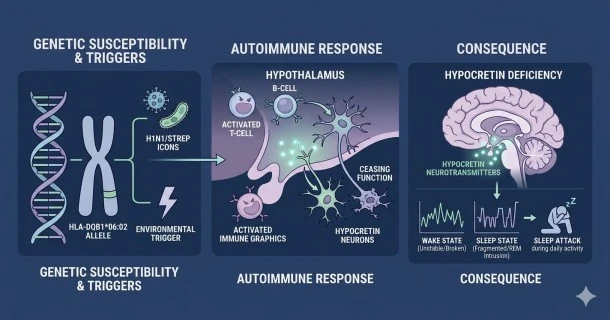
What causes narcolepsy? Read how genetic factors like the HLA-DQB1*06:02 allele combine with autoimmune responses and infectious triggers to destroy hypocretin neurons.
What Causes Narcolepsy?
The fundamental cause of narcolepsy is a breakdown in the neural signaling systems that keep the brain awake and stabilize sleep boundaries. While the primary trigger varies between subtypes, the onset of this chronic neurological disorder is heavily linked to a critical deficiency in a chemical messenger known as hypocretin (also called orexin).
Understanding what drives this chemical deficiency requires evaluating a combination of autoimmune reactions, genetic predispositions, and potential structural injuries to the brain stem and hypothalamus.
The Primary Driver: Hypocretin (Orexin) Deficiency
In a healthy central nervous system, approximately 70,000 specialized neurons in the lateral hypothalamus produce hypocretin. This neurotransmitter acts as an "on-off switch" that stimulates areas of the brain involved in sustaining alertness while aggressively suppressing rapid eye movement (REM) sleep during the day.
- In Narcolepsy Type 1 (NT1): Nearly all hypocretin-producing cells are permanently destroyed. This loss causes the boundaries separating wakefulness from sleep to become highly unstable, allowing features of dream sleep (like sudden paralysis or vivid hallucinations) to break out during normal waking hours.
- In Narcolepsy Type 2 (NT2): The underlying pathways are more obscure. Hypocretin levels in the cerebrospinal fluid remain normal, meaning the condition is likely caused by minor neural damage or alternative mutations in sleep receptors.
Major Root Causes and Triggers
1. Autoimmune Destruction of Neurons
The overwhelming consensus in modern sleep medicine is that Narcolepsy Type 1 is a selective, organ-specific autoimmune disease. Rather than an illness like rheumatoid arthritis triggering it directly, the body’s own T-cells and B-cells mistakenly identify hypocretin neurons as a threat, mounting a highly targeted attack that kills them.
2. Genetic Factors and the HLA Gene Group
Narcolepsy is rarely inherited directly, with only a 1% to 2% risk of a child developing it if a parent is diagnosed. However, genetic susceptibility provides the foundation for the disorder.
- More than 95% to 98% of Type 1 narcolepsy patients carry a specific immune system gene variant known as the HLA-DQB1*06:02 allele.
- This genetic variation makes the immune system highly prone to overreacting or confusing brain proteins with external infections.
3. Environmental and Infectious Triggers
A genetic predisposition typically requires an environmental trigger to activate the aberrant autoimmune response. These triggers include:
- Upper Respiratory Infections: Infections such as Streptococcus pyogenes (strep throat) or the H1N1 influenza virus mimic components of hypocretin cells, tricking the immune system into cross-attacking the brain.
- Seasonal Variations: Diagnoses historically peak during spring and early summer, matching exposure patterns to winter seasonal illnesses.
4. Secondary Narcolepsy (Brain Injuries)
In rare instances, narcolepsy develops without any genetic or autoimmune profile due to direct, acquired damage to the brain's sleep-control centers. Known as secondary narcolepsy, this can stem from:
- Traumatic Brain Injuries (TBI): Severe physical trauma that tears or disrupts hypothalamic pathways.
- Neurological Lesions: Brain tumors, strokes, or central nervous system inflammation (encephalitis) that physically destroy the lateral hypothalamus.
Explore the Rest of Our Silo Guide
- Narcolepsy Symptoms: Learn to recognize daytime exhaustion and the warning signs of emotional muscle weakness.
- Narcolepsy Diagnosis: Find out how sleep labs test hypocretin levels and analyze nap architecture using the MSLT.
- Narcolepsy Treatment: Explore wake-promoting pharmaceutical options and essential sleep hygiene protocols.
Frequently Asked Questions (FAQs)
What chemical is missing in the brain of someone with narcolepsy?
People with Narcolepsy Type 1 are missing a vital neurotransmitter called hypocretin (also known as orexin). This chemical is responsible for stabilizing wakefulness and keeping dream states from interrupting normal daytime routines.
Is narcolepsy a strictly hereditary condition passed down in families?
No, it is not strictly hereditary. While a key genetic marker (HLA-DQB1*06:02) is required to increase susceptibility, the actual condition occurs sporadically and rarely runs cleanly through families.
How does an infection trigger the onset of narcolepsy?
Certain infections, like swine flu (H1N1) or strep throat, can cause "molecular mimicry". The proteins of these viruses closely resemble hypocretin brain cells, confusing the immune system into accidentally destroying the brain's wakefulness center while fighting the infection.
Can a severe concussion or head injury cause narcolepsy?
Yes. Physical damage to the hypothalamus from a severe head injury, brain tumor, or stroke can destroy wake-promoting centers. This is clinically classified as secondary narcolepsy.
Why don't people with Narcolepsy Type 2 lack hypocretin?
The exact cause of Narcolepsy Type 2 remains unknown. Medical researchers suggest that Type 2 involves less extensive damage to hypocretin pathways, or is driven by an entirely separate, subtle malfunction in the brain's waking circuitry.