
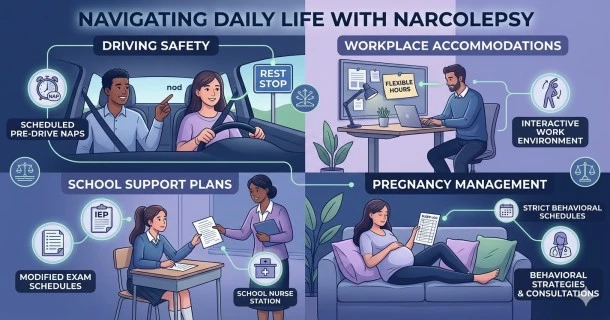
Discover essential strategies for living with narcolepsy. Learn about driving safety guidelines, workplace accommodations, school support plans, and pregnancy care.
Living with Narcolepsy: Coping Strategies and Daily Management
Living with narcolepsy requires combining medical treatment with proactive lifestyle changes to stay safe, productive, and fulfilled. Because sudden sleep attacks and muscle weakness can disrupt your career, education, and relationships, implementing targeted daily adaptations is crucial.
With the right adjustments, individuals can minimize the impact of this neurological disorder on their personal and professional lives.
1. Narcolepsy and Driving Safety Guidelines
Operating a motor vehicle can be exceptionally dangerous due to the risk of daytime sleep attacks. Commercial driving is generally prohibited, and private driving permissions depend entirely on local laws and symptom control.
- Schedule Pre-Drive Naps: Taking a planned, 15-to-20-minute nap immediately before operating a vehicle can improve alertness for a short drive.
- Manage Long-Distance Trips: On longer trips, stop every 45 to 60 minutes to walk around, stretch, or do light exercise.
- Use Passengers and Carpools: Drive with a passenger who can keep you engaged in conversation, or rely on public transit and rideshares.
2. Career Adjustments and Workplace Accommodations
Many individuals maintain successful careers by selecting optimal work environments and requesting formal accommodations under the Americans with Disabilities Act (ADA) or local labor laws.
- Look for Flexible Work Schedules: Roles that offer flexible start times or remote options allow you to schedule short daytime naps when drowsiness peaks.
- Choose Interactive Environments: Jobs involving regular teamwork, movement, or frequent interaction with coworkers help maintain alertness better than solitary, sedentary tasks.
- Request Professional Accommodations: Requesting formal workplace accommodations—such as a standing desk or designated quiet nap areas—can significantly improve performance.
3. Supporting School-Aged Children with Narcolepsy
In children and teenagers, persistent daytime fatigue can cause learning issues and poor concentration. Building a strong support network at school is essential for academic success:
- Implement a 504 Plan or IEP: Work with school administrators to establish a formal learning plan that includes extra time for exams, scheduled nap breaks, and permission to stand or walk when sleepy.
- Coordinate with the School Nurse: Provide the school clinic with a clear medication schedule, authorized dosages, and explicit protocols for managing sudden daytime sleep attacks or cataplexy.
4. Managing Narcolepsy During Pregnancy
Managing narcolepsy changes significantly during pregnancy or while family planning. Many standard wake-promoting agents and cataplexy medications carry potential fetal risks and may complicate nursing.
- Schedule a Pre-Pregnancy Consultation: Speak with your neurologist and obstetrician well in advance to discuss tapering off specific medications.
- Enhance Behavioral Strategies: Expecting mothers must rely more heavily on behavioral strategies, including strict sleep hygiene schedules and structured daytime naps, to safely manage severe drowsiness.
Frequently Asked Questions (FAQs)
Is it legal to drive if you have been diagnosed with narcolepsy?
Driving laws vary by region. In most places, individuals can drive private vehicles if a board-certified sleep specialist confirms their symptoms are fully controlled by medication, and they have remained free from sudden sleep attacks for a set period.
What workplace accommodations can someone with narcolepsy request?
Under disability protection laws, you can request reasonable accommodations. Common examples include a standing desk, flexible work hours, permission to take short nap breaks, and shifting away from safety-sensitive tasks like heavy machinery operation.
How can a school accommodate a child with narcolepsy?
Schools can provide accommodations through a 504 plan or an Individualized Education Program (IEP). This typically includes scheduled nap breaks, extended time on exams, tracking medications with the school nurse, and allowing the child to stand or walk during long lessons.
Can you take narcolepsy medications while pregnant?
Many common wake-promoting and REM-suppressing medications are avoided during pregnancy due to potential fetal risks. You must work closely with your neurologist to evaluate the risks and benefits or adjust your treatment plan before trying to conceive.
How do scheduled daytime naps help manage narcolepsy?
Brief, planned 15-to-20-minute naps can relieve severe daytime drowsiness. These scheduled breaks satisfy the brain's immediate sleep drive, helping to prevent unpredictable, sudden sleep attacks for several hours afterward.