
What is narcolepsy? Learn how this neurological disorder disrupts the sleep cycle, the role of hypocretin, and the difference between Type 1 and Type 2.
What is Narcolepsy?
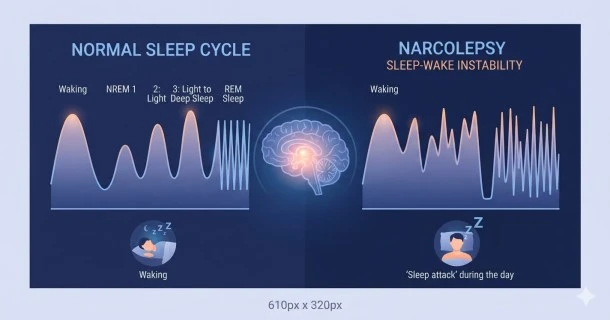
Narcolepsy is a chronic, long-term neurological disorder that impairs the brain's ability to regulate sleep and wakefulness.Unlike a typical sleep cycle where a person gradually moves through Non-REM stages before reaching dream sleep, individuals with narcolepsy experience an erratic sleep-wake boundary. They can plunge into Rapid Eye Movement (REM) sleep within minutes of falling asleep or experience elements of REM sleep while completely awake.
This unstable regulation causes severe, persistent daytime exhaustion and sudden, irresistible "sleep attacks." These attacks can cause individuals to fall asleep instantly mid-activity, including during conversations, meals, or work tasks.
Narcolepsy and the Brain
A healthy sleep cycle depends on a crucial neurotransmitter called hypocretin (also known as orexin), which is produced in the hypothalamus. Hypocretin acts as the brain’s master switch to sustain wakefulness and stabilize the boundaries between sleeping and waking states.
Medical research reveals that people living with narcolepsy possess a severe shortage or complete lack of these hypocretin-producing cells. Without enough hypocretin, the brain cannot maintain stable wakefulness, leading to sudden shifts between waking, Non-REM, and REM sleep states.
Understanding the Subtypes
Narcolepsy is not a single, uniform condition. To understand how it affects individuals, it is classified into two distinct clinical subtypes:
- Narcolepsy Type 1 (NT1): This type is defined by a severe lack of hypocretin and the presence of cataplexy—a sudden, temporary episode of muscle weakness triggered by strong emotions like laughter or surprise.
- Narcolepsy Type 2 (NT2): This type features severe daytime sleepiness and sudden sleep attacks, but individuals do not experience cataplexy and usually maintain normal hypocretin levels.
Learn More About Narcolepsy
To help you find detailed information, we have broken down each aspect of this condition into dedicated guides:
- Narcolepsy Symptoms: Explore the primary signs, including excessive daytime sleepiness, sleep paralysis, and vivid waking hallucinations.
- Narcolepsy Causes: Discover how autoimmune responses, genetics, and environmental factors destroy hypocretin cells.
- Narcolepsy Diagnosis: Learn about the essential diagnostic sleep studies, including Polysomnography (PSG) and the Multiple Sleep Latency Test (MSLT).
- Narcolepsy Treatment: Review modern management strategies ranging from wake-promoting medications to structured nap schedules.
Frequently Asked Questions (FAQs)
What is narcolepsy?
Narcolepsy is a chronic neurological disorder that disrupts the brain's ability to control sleep-wake cycles, leading to intense daytime drowsiness and uncontrollable sleep attacks.
Is narcolepsy a mental illness?
No. Narcolepsy is a physical neurological condition caused by the loss of specific wake-promoting cells in the brain, not a psychological or mental illness.
What is the difference between Narcolepsy Type 1 and Type 2?
Type 1 involves a severe shortage of the brain chemical hypocretin and includes cataplexy (sudden muscle weakness), while Type 2 causes severe sleepiness without muscle weakness.