
Discover what causes restless leg syndrome to flare up. Explore brain iron deficiency, dopamine imbalances, genetic factors, and medication triggers.
Restless Legs Syndrome Causes: Understanding the Neurological Triggers
While the exact primary origin of Restless Legs Syndrome (RLS)—also known as Willis-Ekbom Disease—remains an active area of ongoing research, clinical neuroscience has identified distinct physiological pathways and systemic conditions that cause or worsen this sensorimotor disorder.
If you are trying to understand what causes restless leg syndrome to flare up or why your lower-limb discomfort intensifies at night, medical consensus points toward a complex interplay between central nervous system iron utilization, genetic predisposition, and neurotransmitter regulation.
The Core Biological Mechanism: Iron and Dopamine
At a cellular level, the leading medical explanation for RLS centers on a metabolic dysfunction involving brain iron utilization.
- The Dopamine Connection: Iron acts as an essential cofactor for the enzyme that synthesizes dopamine, a neurotransmitter responsible for regulating smooth, coordinated muscle movements and motor signaling.
- Central Nervous System Iron Deficit: Even when a standard peripheral blood test shows normal systemic iron levels, localized iron insufficiency within specific structures of the brain (like the substantia nigra) can impair dopamine pathways. This metabolic bottleneck sends faulty sensory and motor signals down the spinal cord, manifesting as the characteristic nighttime urge to move.
Primary (Idiopathic) RLS vs. Secondary RLS
To establish a precise clinical path, physicians divide the root causes of RLS into two primary classifications:
1. Primary (Idiopathic) Restless Legs Syndrome
Primary RLS has no single, identifiable external medical trigger. Instead, it is characterized by:
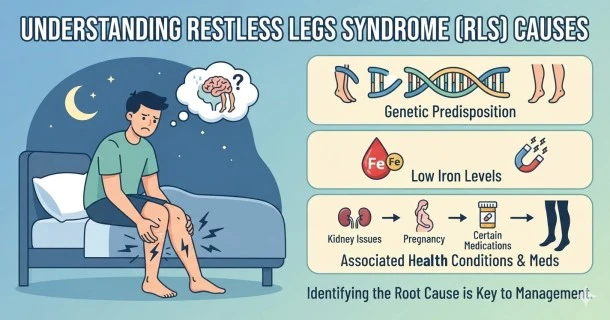
- Genetic Predisposition and Family History: Approximately 50% to 60% of individuals with primary RLS have an immediate family member with the condition. Specific genetic variants associated with limb movement regulation run heavily through hereditary lines.
- Early-Onset Profile: Symptoms typically emerge gradually before the age of 45, often presenting as early as childhood, and persist as a slowly progressive, lifelong neurological condition.
2. Secondary Restless Legs Syndrome
Secondary RLS develops abruptly, typically after the age of 45, and is directly caused by a distinct co-occurring medical condition, biochemical deficiency, or structural nerve disruption:
- Systemic Iron Deficiency Anemia: Severely depleted overall iron stores (clinically indicated by low serum ferritin levels) limit the raw materials available for brain dopamine production.
- Chronic Renal Failure (Uremia): Advanced kidney disease heavily correlates with severe RLS symptoms, likely due to a buildup of metabolic waste products in the blood that irritate peripheral nerves.
- Peripheral Nerve Damage (Neuropathy): Damage to the nerve fibers in the legs or feet—frequently caused by chronic conditions like Type 2 diabetes or rheumatoid arthritis—can trigger or severely aggravate RLS sensations.
- Pregnancy: Hormonal shifts and natural iron depletion frequently induce RLS during the third trimester. This form is typically transient, resolving spontaneously within a few weeks following childbirth.
External Variables and Chemical Flare-Up Triggers
Beyond chronic underlying diseases, several common everyday substances and lifestyle factors can cause acute spikes in symptom severity:
Dopamine-Blocking and Altering Medications: Many widespread over-the-counter and prescription drugs can worsen RLS by actively interfering with central nervous system pathways. These include:
Sedating Antihistamines: Common allergy, cold, and over-the-counter sleep aids (e.g., diphenhydramine).
Antiemetics: Certain anti-nausea medications used to treat stomach upset.
Psychiatric Medications: Specific prescription antidepressants, antipsychotics, and mood stabilizers.
Cardiovascular Drugs: Select calcium channel blockers utilized for high blood pressure or heart conditions.
Lifestyle and Substance Triggers: Consuming alcohol, tobacco, or excessive caffeine close to bedtime acts as a severe chemical trigger that destabilizes sleep architecture and worsens lower-limb arousal.
Physical Inactivity: Extended periods of forced physical restriction—such as long-distance flights, continuous car travel, or casting for a fractured bone—frequently provoke intense evening flare-ups.
Frequently Asked Questions (FAQs)
What causes restless leg syndrome to flare up suddenly?
Sudden symptom flare-ups are most frequently caused by a combination of cumulative sleep deprivation, extended physical inactivity during the afternoon, or the consumption of chemical triggers like caffeine and alcohol. Additionally, introducing a new medication containing sedating antihistamines (common in over-the-counter cold remedies) can immediately block dopamine pathways, causing severe evening limb restlessness.
Can low iron levels cause RLS even if I am not anemic?
Yes. Your overall red blood cell count may be entirely normal, but your brain can still experience localized iron insufficiency. In sleep medicine, clinicians evaluate specific serum ferritin levels rather than standard hemoglobin counts. If ferritin drops below optimal levels, a physician may recommend targeted oral or intravenous iron therapies to support brain dopamine synthesis.
Will restless leg syndrome go away if I stop a trigger medication?
If your RLS symptoms are purely secondary and driven by a newly introduced medication (such as a specific antidepressant or anti-nausea drug), the symptoms will frequently diminish or disappear entirely once that specific compound is safely discontinued. Always consult your prescribing physician before altering or stopping any prescription medication.