
Explore proven restless legs syndrome treatments. Learn about non-pharmacological home remedies, nighttime relief strategies, and essential sleep hygiene protocols.
Restless Legs Syndrome Treatments: Lifestyle Guidelines & Home Remedies
While there is currently no permanent cure for primary Restless Legs Syndrome (RLS), a combination of strategic lifestyle changes, physical therapies, and target home remedies can substantially reduce symptom severity. For mild-to-moderate cases, non-pharmacological adjustments are often the primary line of defense to restore restful sleep and improve overall quality of life.
The core objectives of an RLS treatment program focus on:
- Reducing the frequency and intensity of distressing nighttime limb sensations.
- Protecting and increasing the total quantity and depth of sleep.
- Identifying and resolving secondary underlying triggers (such as nutritional deficiencies or systemic illnesses).
Immediate Physical Relief Strategies for Nighttime Flare-Ups
When an intense urge to move occurs closer to bedtime or during periods of rest, specific localized actions can help disrupt the sensory-motor loops causing the distress:
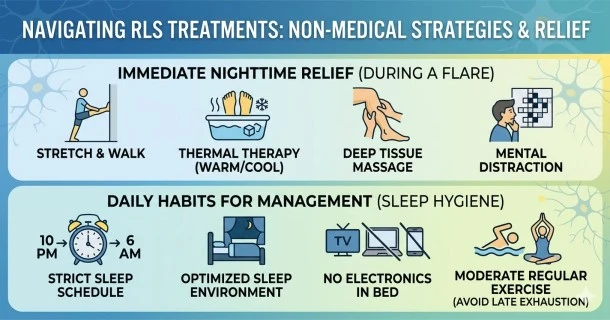
- Targeted Stretching and Walking: Engaging in focused, moderate stretching exercises for your lower calves and hamstrings right before bed can mitigate early evening symptoms. Walking at a steady, rhythmic pace during a flare-up provides immediate, temporary sensory relief.
- Thermal Therapy: Taking a warm or cool bath, or applying thermal gel packs (heating pads or ice wraps) to the lower limbs can alter sensory nerve signals traveling to the brain, suppressing the crawling or tingling sensation.
- Deep Tissue Massage: Firmly massaging the calves, shins, or thighs physically stimulates the mechanoreceptors in the muscles, which can counteract and dull the deeper neurological RLS signals.
- Cognitive Distraction Tasks: Engaging your mind in highly focused, complex tasks (such as solving detailed crosswords, working on puzzles, or playing strategic games) can effectively distract central nervous processing away from limb discomfort during low-movement periods.
Critical Sleep Hygiene Protocols for RLS Management
Because cumulative sleep deprivation acts as a primary trigger for severe RLS flares, establishing rigid sleep hygiene is imperative:
- Strict Sleep Synchronization: Go to bed and wake up at the exact same times every day—including weekends. Stabilizing your circadian biological clock helps normalize neurotransmitter cycles and hormonal balance.
- Optimized Thermal Environment: Keep your bedroom distinctly cool, exceptionally quiet, comfortable, and darkly insulated. Cooler room temperatures prevent physical agitation that can amplify extremity arousals.
- Eliminate Electronic Overstimulation: Remove sensory-disrupting devices, including televisions, laptops, tablets, and mobile phones, from your immediate sleeping zone.
- Do Not Remain Bedridden While Awake: If an RLS flare prevents you from falling asleep within 20 minutes, get out of bed. Move to a dimly lit room, engage in gentle stretching or deep breathing relaxation exercises, and only return to bed when your limbs have calmed down.
Substance and Lifestyle Triggers to Eliminate
Certain everyday substances act as direct chemical stimulants that disrupt central dopamine utilization or alter vascular flow to the limbs:
- Avoid Central Nervous System Stimulants: Nicotine and alcohol are potent neuro-disruptors. Eliminating tobacco and minimizing alcohol consumption—particularly in the late afternoon and evening—can prevent severe lower-limb arousal during the night.
- Moderate Physical Activity: Engaging in a routine of moderate, low-impact exercise (such as swimming, yoga, or indoor cycling) helps naturally manage symptoms. However, avoid high-intensity or exhaustive leg workouts late in the evening, as excessive muscular fatigue can cause paradoxical overnight flare-ups.
- Review Medication Profiles: Many common over-the-counter and prescription drugs—most notably sedating antihistamines (found in allergy and cold remedies) and specific anti-nausea medications—interfere with dopamine pathways. Work alongside your primary care physician to identify and safely adjust any triggering pharmaceuticals.
- Strategic Seating Arrangements: When booking travel arrangements or buying tickets for films, opt for an aisle seat. This reduces the stress of forced confinement and allows you the freedom to periodically stand or move without disturbing others.
Frequently Asked Questions (FAQs)
What is the fastest way to stop an RLS flare-up naturally at night?
The fastest ways to gain temporary relief during an acute nighttime flare-up include performing deep calf stretches, getting out of bed to walk around, taking a warm or cool bath, or massaging the affected leg muscles firmly. These physical actions flood the brain with competitive sensory feedback, helping to dull and override the internal urge to move.
Can lifestyle changes completely eliminate Restless Legs Syndrome?
For mild cases of primary RLS or cases triggered by habits (such as high alcohol or caffeine consumption), lifestyle modifications can sometimes eliminate or dramatically reduce symptoms. However, if your RLS is severe or stems from genetic or progressive neurological causes, lifestyle changes function as complementary therapies to support medical treatments rather than a standalone cure.
Why do hot or cold packs help with restless leg symptoms?
Hot or cold packs alter the localized temperature of your skin and muscle tissue, which stimulates surface-level thermoreceptors. These nerve signals travel quickly up the spinal cord to the brain, effectively "blocking" or distracting the nervous system from processing the uncomfortable, deeper crawling sensations caused by RLS.