
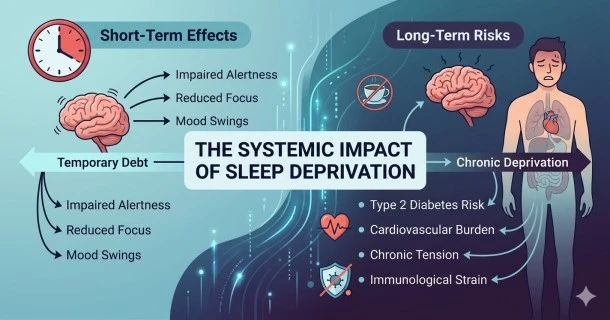
Discover how chronic sleep deprivation harms your brain and body. Learn the short-term symptoms, long-term health risks, and how to recover from a lack of sleep.
Understanding Sleep Deprivation: Symptoms, Short-Term Effects, and Long-Term Health Risks
Sleep deprivation occurs when an individual fails to get an adequate amount of restful sleep required for optimal physical and mental functioning. In our fast-paced modern world, sleep debt has grown into a widespread public health crisis, with studies estimating that the average person sleeps nearly an hour and a half less per night than individuals did a century ago.
While occasional late nights are manageable, chronic sleep deprivation severely diminishes your brainpower, compromises your immune system, and places a heavy burden on your cardiovascular health.
Common Causes of Sleeplessness
A lack of sleep is rarely an isolated issue. It is typically driven by three primary categories of disruptors:
- Lifestyle Factors: Modern work constraints, such as rotating shift work schedules, or frequent long-distance travel across multiple time zones (jet lag).
- Underlying Medical Conditions: Chronic pain, primary sleep disorders like obstructive sleep apnea, or psychological conditions that physically fracture your sleep architecture.
- Medication Side Effects: Over-the-counter or prescription drugs containing stimulants that inadvertently keep the central nervous system alert close to bedtime.
Recognize the Warning Signs: Symptoms of Sleep Deprivation
When you shortchange your sleep, your body drops clear neurological and physical cues. Recognizing these early symptoms can help you address sleep debt before it impacts your daily lifestyle:
- Persistent Fatigue: Feeling continuously sluggish, lazy, or entirely devoid of physical energy, even after a baseline rest period.
- Appetite and Weight Shifts: Sleep deprivation disrupts the hormones leptin and ghrelin, which regulate hunger cues. This can spark a fluctuating or elevated appetite, frequently driving unexpected weight gain or loss.
- Cognitive Decline & Poor Focus: A noticeable drop in your mental focus, logical processing, and overall concentration. Your overall physical reaction time slows down significantly, causing a spike in daily errors.
- Memory Lapses: Difficulty encoding new information or quickly recalling facts that should be easily accessible in your mind.
- Emotional Fragility: An inability to handle standard daily stressors, accompanied by sudden bouts of unnecessary anger or irritability over minor problems.
Direct Comparisons: Short-Term vs. Long-Term Health Consequences
The physiological impact of sleep deprivation accumulates rapidly over time. The table below outlines how a temporary sleep debt transitions into severe systemic damage if left unaddressed:
Impact Window | Physical Consequences | Cognitive & Psychological Effects |
| Short-Term Effects (1 to 3 nights of poor sleep) |
|
|
| Long-Term Risks (Weeks to months of chronic sleep debt) |
|
|
Frequently Asked Questions (FAQs)
Can losing just a small amount of sleep really impact my daytime health?
Yes. Clinical data demonstrates that losing just one and a half hours of sleep for a single night can cause up to a 32% drop in your total daytime alertness. This subtle drop significantly impairs your brain's processing speed and doubles your risk of encountering a physical accident at work or while driving.
Why does sleep deprivation cause automated changes in weight and appetite?
Sleep loss directly alters the biochemical regulation of your endocrine system. It suppresses leptin (the hormone that tells your brain you are full) and elevates ghrelin (the hormone that signals hunger). This hormonal imbalance causes intense cravings for high-calorie, sugary foods, frequently leading to metabolic issues and obesity over time.
Can you truly "catch up" on a massive backlog of sleep debt?
While you can recover from a brief, short-term sleep deficit by sleeping extra hours over the weekend, you cannot fully erase weeks or months of chronic sleep deprivation with a few long rests. Overcoming deep sleep debt requires establishing a consistent, healthy sleep schedule over several consecutive weeks to reset your body's natural circadian rhythms.