Is low blood pressure causing dizziness during your pregnancy? Discover why gestational hypotension happens, how it affects your baby, and safe home remedies.
Managing Low Blood Pressure (Hypotension) During Pregnancy
Pregnancy brings profound transformations to a woman's body, especially within the cardiovascular system. To accommodate your growing baby and support placental circulation, your total blood volume expands dramatically, and your body produces higher levels of gestational hormones.
These changes naturally alter your systemic circulation, frequently resulting in gestational low blood pressure (hypotension)—defined clinically as a reading below 90/60 mm Hg. While a mild drop is standard and usually harmless, experiencing regular bouts of dizziness or lightheadedness requires careful monitoring to ensure a safe, comfortable pregnancy journey.
Understanding the Timeline and Causes of Gestational Hypotension
A gradual drop in blood pressure typically begins early in the first trimester and drops to its absolute lowest point during the middle of your second trimester (around 24 weeks). After this point, your numbers should slowly rise back up to your pre-pregnancy baselines as your due date approaches.
This drop is driven by several overlapping physiological factors:
- Hormonal Vasodilation: Surging levels of the hormone progesterone actively relax and widen the walls of your blood vessels. Because your vascular space opens up faster than your body can expand its fluid volume, pressure naturally decreases.
- Supine Hypotension Syndrome: As your pregnancy progresses into the second and third trimesters, your expanding uterus increases in weight. If you lie flat on your back, this heavy weight presses directly on the inferior vena cava—the massive vein returning blood back to your heart. This restriction cuts down central circulation, triggering sudden nausea and dizziness.
- Orthostatic and Postprandial Shifts: Gravity can easily pool blood inside your legs and pelvis when you stand up quickly, reducing immediate blood flow to your brain. Similarly, after eating a heavy meal, circulation shifts heavily toward your digestive tract, causing post-meal blood pressure drops.
- Nutritional and Hydration Demands: Your daily requirement for fluids increases dramatically during gestation. Dehydration, low blood sugar (hypoglycemia), or underlying anemias tied to Vitamin B12 or Folic Acid deficiencies will drastically compromise your body's ability to maintain healthy blood pressure.
Does Low Blood Pressure Harm Your Baby?
In the vast majority of cases, mild to moderate low blood pressure does not pose a direct threat to your baby. Your placenta is highly efficient at drawing necessary nutrients and oxygen from your bloodstream.
The primary clinical danger of gestational hypotension is maternal falls. A sudden spell of lightheadedness can lead to fainting (syncope) or an accidental loss of balance, which poses a physical trauma risk to both mother and child.
Exception: A sudden, catastrophic drop in blood pressure caused by severe internal bleeding (such as an ectopic pregnancy rupture early on) or systemic shock is a life-threatening emergency that restricts placental blood flow and demands immediate hospital care.
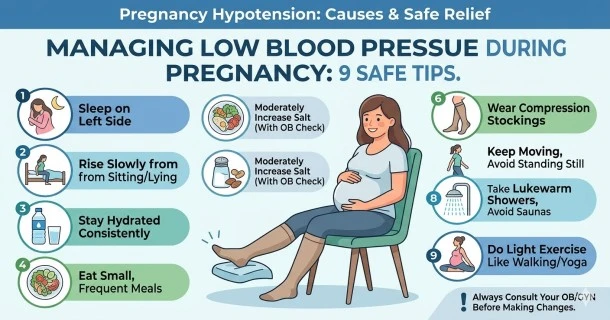
9 Safe, Non-Pharmacological Ways to Elevate Blood Pressure
Because standard prescription vasoconstrictors (like midodrine) are generally avoided during pregnancy due to fetal safety precautions, managing low blood pressure relies entirely on safe, proactive lifestyle habits:
- Adopt Left-Side Sleeping Postures: Never sleep flat on your back during your second or third trimesters. Sleep strictly on your left side to lift the weight of the uterus off your inferior vena cava, optimizing blood flow to your heart, kidneys, and placenta.
- Practice Micro-Transitions: Never jump straight out of bed or stand up abruptly from a deep couch. Sit on the edge of your furniture for 30 to 60 seconds, flex your ankles to activate your calf muscles, and rise slowly.
- Maintain Constant Sipping Hydration: Carry a water bottle everywhere. Sipping water consistently throughout the day expands your plasma volume to directly support your expanding circulatory framework.
- Switch to Small, Low-Carb Meals: Eat five to six mini-meals daily rather than three large, heavy dinners. Reducing your carbohydrate load prevents significant post-meal blood pooling in your stomach.
- Strategic Sodium Adjustment: If your obstetrician confirms it is safe for your kidneys and heart, you can mildly increase your salt intake by adding a light pinch to fresh meals or snacking on lightly salted crackers.
- Wear Graduated Compression Stockings: Slide into supportive compression socks or stockings first thing in the morning before stepping out of bed. This gentle pressure stops blood from pooling in your lower extremities.
- Avoid Prolonged, Motionless Standing: Standing still for too long allows blood to pool downward due to gravity. If you must stand in place, subtly shift your weight from one foot to another or tap your toes to keep blood moving.
- Take Cool or Lukewarm Showers: Avoid hot baths, saunas, or excessively steamy showers. High heat acts as a powerful vasodilator, relaxing your blood vessels and causing your blood pressure to tank suddenly.
- Engage in Low-Impact Movement: Gentle, regular physical activities—like daily walking or prenatal yoga—strengthen your cardiovascular tone and optimize overall blood circulation. Avoid intense or exhaustive workouts that cause sudden post-workout blood pressure drops.
Frequently Asked Questions (FAQs)
What is the fastest way to relieve sudden dizziness while pregnant?
If you feel lightheaded, dizzy, or faint, sit down immediately or lie down flat on your left side. Elevating your feet slightly above your heart level can also help. Lying on your left side immediately unblocks major blood vessels, allowing oxygen-rich blood to surge back to your brain and heart to relieve dizziness within moments.
Can I take over-the-counter medications to raise my low blood pressure while pregnant?
No. You must never take over-the-counter stimulants, high-dose caffeine pills, or unprescribed medications to raise your blood pressure during pregnancy. Many of these agents can constrict blood vessels in the placenta, restricting crucial oxygen and nutrients from reaching your baby. Stick to safe remedies like hydration, left-side sleeping, and compression garments.
When should low blood pressure during pregnancy be evaluated by a doctor?
While mild lightheadedness upon standing can be normal, you must contact your OB/GYN or seek immediate medical attention if your low blood pressure is accompanied by:
- Fainting (syncope) or a complete loss of consciousness
- Severe, persistent headaches or sudden changes in your vision
- Sudden chest pain, shortness of breath, or numbness down one side of your body
- Vaginal bleeding or severe abdominal pain