
Learn how cholesterol absorption inhibitors like Ezetimibe (Zetia) lower LDL-C safely. Discover how they work, side effects, and statin-free alternatives.
Cholesterol Absorption Inhibitors: A Guide to Statin Alternatives
Managing high cholesterol is critical for preventing heart disease, but standard therapies like statins are not always a perfect match for everyone. If you experience severe statin-associated muscle pain or struggle to hit your target lipid goals, cholesterol absorption inhibitors offer a scientifically proven alternative.
The most common prescription drug in this class is Ezetimibe (widely known by the brand name Zetia). This medication lowers "bad" low-density lipoprotein (LDL) cholesterol through a completely distinct biological pathway than traditional liver-targeted medications.
What Are Cholesterol Absorption Inhibitors?
Cholesterol absorption inhibitors are a specialized class of lipid-lowering medications that prevent your body from taking up cholesterol in the small intestine. Unlike statins—which decrease cholesterol production directly in the liver—these inhibitors disrupt the entry of both food-derived and naturally occurring cholesterol into your bloodstream.
Crucially, medications like Ezetimibe successfully lower LDL-C and slightly drop triglycerides without interfering with your body’s ability to absorb essential fat-soluble vitamins (such as Vitamins A, D, E, and K).
Mechanism of Action: How Do They Work?
Your body receives cholesterol through two distinct biological pathways:
- Dietary Pathway: Cholesterol consumed from the foods you eat.
- Biliary Pathway: Cholesterol naturally produced by your liver and recycled through bile secretions.
[Dietary & Biliary Cholesterol]
              │
              ▼
    [Small Intestine Lumen]
              │
      (NPC1L1 Protein Blocks Absorption) 🚫 [Ezetimibe / Zetia]
              │
              ▼
   [Lower Cholesterol to Liver] ──► [Liver Spikes LDL Receptors] ──► [Clears LDL from Bloodstream]
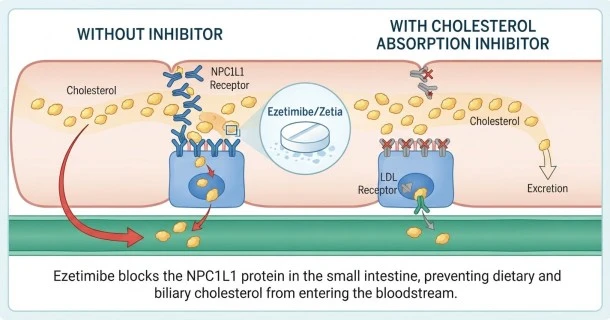
At a cellular level, ezetimibe localizes at the brush border of the small intestine. It binds to and blocks a critical gatekeeper protein called Niemann-Pick C1-Like 1 (NPC1L1).
By turning off this transport protein, the drug stops micellar cholesterol from entering intestinal cells. Because the liver receives significantly less cholesterol from the digestive tract, it depletes its internal storage. To compensate, the liver triggers increased hepatic LDL receptor activity, pulling dangerous floating LDL particles out of your circulation to clear your blood.
What Results Can You Expect From Zetia (Ezetimibe)?
Ezetimibe is highly effective both as a standalone treatment and as an add-on therapy:
- As Monotherapy: Taken alone, Ezetimibe typically reduces your LDL cholesterol by 15% to 25% and lowers triglycerides by roughly 8%.
- In Combination Therapy: When paired with a low or moderate-dose statin, the dual-action effect can more than double the LDL reduction achieved by a statin alone.
Note on Optimization: To achieve peak results, these medications must be paired with foundational lifestyle adjustments. Maintaining a heart-healthy diet low in saturated fats and engaging in consistent physical activity are vital to maximizing the drug's efficacy.
Who is a Good Candidate for This Treatment?
Physicians typically prescribe cholesterol absorption inhibitors under specific clinical scenarios:
- Statin Intolerance: For individuals who experience debilitating liver markers, muscle weakness, or severe leg cramps from statin use.
- Unmet Lipid Targets: For high-risk individuals who are already taking the maximum tolerable dosage of a statin but still cannot reach their target safe LDL levels.
- Genetic Disorders: Patients dealing with rare hereditary lipid issues like homozygous familial hypercholesterolemia or sitosterolemia.
How to Correctly Take Your Medication
To ensure the maximum efficacy of your prescription, follow these standard clinical administration guidelines:
- Consistency: Take the tablet at the exact same time every single day.
- Flexibility: You can safely consume this medication with or without meals.
- Bile Acid Sequestrant Interaction: If your doctor also has you taking bile acid sequestrants (like cholestyramine), space them out carefully. Take your ezetimibe at least two hours before or four hours after your dose of bile acid sequestrants to prevent absorption interference.
Potential Side Effects and Safety Warning Signs
While Ezetimibe is generally well-tolerated, some individuals may experience mild adverse reactions. Common side effects include:
- Nausea, stomach irritation, abdominal discomfort, constipation, or diarrhea
- Headaches and episodes of dizziness
- Mild back or joint aches
- Sinusitis or cold symptoms
Critical Safety Alert
Rare but severe medical events such as liver inflammation (hepatitis), pancreatitis, or life-threatening systemic swelling (angioedema) can occur.
Stop taking the drug and seek immediate emergency medical care if you experience:
- Unexplained, severe muscle pain, tenderness, or widespread soreness
- Profound, uncharacteristic muscle fatigue or general physical weakness
- A sudden high fever accompanied by dark, tea-colored urine
Frequently Asked Questions (FAQ)
What is the most common cholesterol absorption inhibitor?
The single most widely prescribed and FDA-approved pharmaceutical option in this class is Ezetimibe, sold under the primary brand name Zetia. It is also available in convenient single-pill fixed-dose combinations with statins, such as Vytorin (ezetimibe/simvastatin) or Roszet (ezetimibe/rosuvastatin).
Can I use cholesterol absorption inhibitors if statins cause me muscle pain?
Yes. Because cholesterol absorption inhibitors target the NPC1L1 protein in your digestive tract rather than halting internal cellular enzyme production within muscle tissues, they carry a significantly lower risk of statin-associated muscle symptoms (SAMS). They are a primary choice for managing statin intolerance.
Do these drugs stop my body from absorbing natural healthy fats and vitamins?
No. Unlike older classes of medications like bile acid sequestrants that broadly bind lipids in the gut, Ezetimibe is highly selective. It specifically targets sterol receptors, meaning it effectively blocks cholesterol molecules while leaving the absorption of vital triglycerides and fat-soluble vitamins perfectly intact.