
Stroke Symptoms
Warning signs of stroke are sudden weakness or numbness in one side, dizziness, loss of balance, problem speaking & seeing and severe headache.
Brain attack or Stroke
Stroke or “brain attack,” occurs when there is an interruption of blood supply to the brain causing brain tissue damage. The most common cause is a blocked blood vessel. Stroke can cause physical and emotional problems such as paralysis, problems with thinking or speaking.
Warning symptoms of a stroke
Typical warning signs of a stroke develop suddenly and can include:
- Weakness or numbness, particularly on one side of your body
- Sudden confusion or trouble in understanding
- Talking difficulty
- Dizziness, loss of balance, or walking difficulty
- Problem seeing out of one or both eyes
- Double vision
- Severe headache
Sometimes one or more of these warning signs comes and goes called as TIA, occurs when blood flow is temporarily blocked. It means you may be at higher risk for a future stroke.
If you have been warning signs of a stroke, immediately getting treatment can help prevent permanent damage to your brain. It is important, and a must to review the symptoms of a stroke with family and friends, so that during emergency, they will help you.
Symptoms of heart disease
Heart attack symptoms are pain or discomfort in chest, arms, back, jaw, neck, or stomach, shortening of breath and sweating.
Angina
One main symptom of heart disease is angina, which occurs when a blood vessel to the heart is narrowing, and the blood supply is gotten reducing. Angina may produce pain or discomfort in your chest, shoulders, arms, jaw, or back, especially when you exercise. The pain may disappear, when have rest, or take angina medicine? Angina does not produce any permanent damage to the heart muscle, but if you have angina, your risk factor to heart attack increases.
Common heart disease symptoms
A heart attack occurs when a blood vessel to the heart has blocked. Due to blockage, enough blood cannot reach the heart muscle, and permanent damage occurs. During a heart attack, you may have these symptoms.
- Chest pain or any discomfort
- Pain or any discomfort in your arms, back, jaw, neck, or stomach
- Shortening of breath
- Sweating
- Indigestion
- Nausea
- Light-headedness
- Tiredness
You may have all of these symptoms, and it may go away. Chest pain that does not go away after resting for a few minutes may signal a heart attack.
However, in some people, particularly diabetes, the symptoms may be mild or even absent due to a condition in which the heart rate stays at the same level during exercise, inactivity, stress, or sleep. In addition, nerve damage caused by diabetes may produce lack of pain during a heart attack.
Women may not have chest pain but may be more likely to have shorting of breath, breath difficulty, nausea, or back and jaw pain. If you have these symptoms of a heart attack, immediately get emergency medical care. Treatment is most effective if given within an hour of a heart attack. Early treatment can help prevent permanent damage to the heart.
You should check your risk for heart disease and stroke at least once a year by checking cholesterol and blood pressure levels. If you are a smoker and or having a family history of premature heart disease, you must increase checking frequency. Periodical check your urine for protein, another risk factor for heart disease. If you are at high risk, you may need to undergo further testing.
Heart & Blood vessel diseases

Common diabetic heart and blood vessel diseases are coronary artery disease (CAD), cerebral vascular disease and peripheral arterial disease.
Diabetic Heart and Blood vessel disease
Two major types of heart and blood vessel disease, otherwise called cardiovascular disease frequent among diabetics are coronary artery disease (CAD) and cerebral vascular disease. Narrowing or blockage of the blood vessels in the legs, a condition called peripheral arterial disease is also common among diabetics.
Coronary Artery Disease
Coronary artery disease, otherwise called as ischemic heart disease, develops by hardening or thickening of the walls of the blood vessels that go to your heart. The blood vessels supply oxygen and other nutrients your heart needs for its normal functioning. If this blood vessel to your heart becomes, narrowed or blocked by fatty deposits, the blood supply and thus oxygen and nutrients are reduced or cut off, resulting in a muscle damage and heart attack.
Cerebral Vascular Disease
Cerebral vascular disease affect’s blood flow to the brain, resulting in strokes and TIAs. It causes by narrowing, blocking, or hardening of the blood vessels that go to the brain due to fatty deposits or by high blood pressure.
Stroke
Stroke results when the blood supply to the brain is suddenly stopped, which occur when a blood vessel to the brain or neck is blocked or bursts. Brain cells are then short supply of or no supply of oxygen and die. A stroke can affect speech, vision, or paralysis. Fatty deposits or blood clots that limit or block one of the blood vessels in the brain or neck cause strokes. People with diabetes are at increased risk for strokes caused by blood clots.
TIAs
Temporary blockage of a blood vessel to the brain causes TIAs. This blockage leads to a brief, sudden change in brain function, can lead to numbness, weakness, particularly one sided, loss of balance, confusion, blindness in one or both eyes, double vision, speaking difficulty, or a severe headache. However, most symptoms disappear quickly and permanent damage is unlikely if not it could be a stroke. The occurrence of a TIA means that a person is at risk for a stroke sometime in the future.
Heart Failure
Heart failure is a chronic condition in which the heart cannot pump blood properly. Heart failure develops over a period of years, and symptoms can get worse over time. People with diabetes have more risk of heart failure than non-diabetes. Congestive heart failure develops when fluid builds up inside body tissues. When it is in the lungs, breathing becomes difficult.
Cardiomyopathy develops when a blockage of the blood vessels and high blood-glucose levels damages your heart muscle and causes irregular heart beat. It may not have any early symptoms, but later the symptoms are weakness, shortness of breath, a severe cough, fatigue, and swelling of the legs and feet. Diabetes can also interfere by limiting the pain signals commonly carried by these nerves, which is why a person with diabetes may not have the common warning signs of a heart attack.
Peripheral Arterial Disease
Another heart disease common in people with diabetes is the peripheral arterial disease (PAD). Blood vessels in the legs are narrowing or blocks by fatty deposits, decreasing blood flow to the legs and feet. PAD increases the chances of a heart attack or stroke. Poor blood circulation to legs and feet also increases the risk of amputation. Some with PAD develop pain in the calf or other parts of the leg when walking and relieved by resting for a few minutes.
Prevent Heart attack & Stroke
Even if you are at high risk for heart disease and stroke, you can keep your heart and blood vessels healthy by wisely choosing your heart friendly foods.
Tips to prevent heart attack and stroke
- First and far most is to keep your blood-glucose level in near normal range. If you are hypertensive, keep your blood pressure under control. If you are hypercholesterol, keep it near normal try to increase your HDL (good cholesterol) level and try to reduce your LDL (bad cholesterol) level.
- Make sure your food is heart-friendly, consult dietician and plan your diet as per your interest.
- o Limit saturated fat; it increases your blood cholesterol level. Saturated fat is rich in meats, lard, poultry skin, butter, dairy products, shortening, palm oil, and coconut oil.o Increase fiber intake, fiber may help lower blood cholesterol. Include at least 14 grams of fiber daily for every 1000 calories consumed. Fiber-rich foods are oat bran, oatmeal, whole-grains, breads made of whole grains, fruits, vegetables, beans and peas. Increase your fiber intake slowly to avoid any digestion problems.
- o Limit your cholesterol containing foods to less than 300 milligrams per day.
- o Limit trans-fat in your foods; limit all fried items, limit foods made of hydrogenated oil, vegetable shortening, and margarines.
- Keep yourself active in your daily routines; use a staircase instead of lift or elevators, go by walk instead of the vehicle if possible, play with your child, do some gardening and clean your vehicle or house. Plan to do at least 30 minutes of exercise, on most of the days in a week.
- Do not be obese or overweight, if so plan to reduce by an increase physical activity, wisely choose a food plan. However, does the weight reduction slowly do not be in a rush. Aim to lose no more than one to two pounds a week.
- If you are a smoker, take immediate steps to quit it.
- Aspirin, study shows taking a low dose every day can help reduce the risk of heart disease and stroke. Still aspirin is not safe for everyone; consult your doctor about your suitability and dosage of aspirin.
- Transient ischemic attacks (TIAs) otherwise called as mini-stroke, a prompt treatment for TIAs may help you prevent or delay a future stroke. Symptoms of TIAs are general weakness, numbness, severe headache, numbness, loss of balance, confusion, double vision.
Heart attack & Stroke Risk
Just having diabetes puts you at risk for heart disease and stroke. Additional risk factors are high blood pressure, cholesterol, obesity, and family history of heart attack/stroke.
Heart disease, Heart attack, and Stroke - Risk factors
- Family history of heart disease, if one or more members of your family had a heart attack at an early age (before age 55 for men or 65 for women), you may be at increased risk.
- Obesity, the waist size of more than 40 inches in the case of men and 35 inches in the case of women. Big waist size means high abdominal fat, which can increase the production of LDL or bad cholesterol.
- Badly controlled diabetes, that is fasting blood-glucose levels of 100 mg/dL or higher.
- High blood pressure means your heart must work harder to pump blood. Therefore, it can stain the heart, may damage blood vessels, and increases the heart disease risks. High pressure of blood may harm blood vessels in brain thus risk for stroke.
- High blood cholesterol can build up inside blood vessels causing narrowing and hardening of arteries (blood vessels that carry blood from heart to rest of the body). Therefore, high-cholesterol can increase the risk of getting heart diseases and stroke. Elevated level of triglycerides of 150 mg/dL or higher and low levels of HDL or good cholesterol below 40 mg/dL in men and below 50 mg/dL in women increases your risk of developing heart disease and stroke.
- Smoking multiplies your risk of getting heart disease and stroke. Smoking and diabetes increases the chances of narrowing blood vessels, thus increases the risk of heart disease and stroke.
- If you already had a heart disease, heart attack increases the risk of getting another heart attack.
- If you already had a stroke or transient ischemic attack (TIA) or mini-stroke, increases the risk of getting another stroke.
Heart Disease
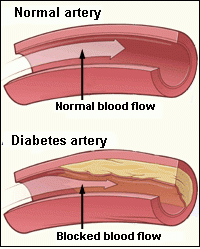
Statistics says 2 out of 3 people with diabetes die from heart disease and stroke. However, it can be preventable by managing blood-glucose level near normal, at most of the time.
Atherosclerosis by high blood-glucose
High blood-glucose levels over time can lead to increased deposits of fatty materials on the insides of the blood vessel walls. These deposits may affect blood flow, increasing the chance of clogging and hardening of blood vessels (atherosclerosis).
Heart disease, heart attack, stroke chances for diabetes
Having diabetes means that you are much more likely to have a coronary artery (heart) disease, a heart attack, or a stroke. The good news is that you can take steps to prevent heart disease or reduce your chances of having another heart attack. Lifestyle changes, such as choosing foods wisely and being physically active, as well as taking medication can help.
For diabetes, the chances of getting heart disease or a stroke are at least twice as likely as someone who is non-diabetes. In addition, people with diabetes have more chances to develop heart disease or have strokes at an earlier age than other people.
Some studies suggest that if you are middle-aged and have type 2 diabetes, then your chance of having a heart attack is as high as someone non-diabetes that has already had one heart attack.
People with diabetes who already had one heart attack are at even greater risk of having a second one. Additionally, heart attacks in people with diabetes are more serious and likely to result in death.
Diabetic Foot Care
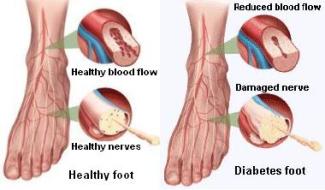
People with neuropathy need a special foot care, Loss of sensation in the feet means that sores or injuries may not be notice and thus may end up with amputation.
Why does diabetic foot need extra care?
The nerves to the feet are the longest in the body may be the reason for circulation problems and increase the risk of foot ulcers.
More than 50 % of all lower-limb amputations in the US occur in people with diabetes, approximately 86,000 amputations per annum. Studies show amputations caused by neuropathy are by poor circulation can be prevented by proper foot care.
Choose correct fitted footwear
Wrongly, fitted footwear is the most common cause of foot injury in diabetes patents. Thus, every patient with diabetes should choose comfortable, well-fitted footwear without strain or minimum strain on your foot.
Diabetic foot care tips
- Clean your feet daily with lukewarm water (not hot water) and a mild soap. Avoid soaking your feet for some time, and dry them with a soft towel be carefully between toes.
- Inspect your feet and particularly toes every day for any cuts, blisters, redness, swelling, or other problems. If you are not able to check the bottom of your foot, then use a mirror or get help from someone. Consult your health care provider if any problems.
- Moisturize your feet with a moisturizing lotion.
- After a bath, file corns and calluses gently with a pumice stone.
- Each week, cut your nails and file the edges with an Emery board. Does carefully accidental toe damage may happen?
- Always go with shoes or slippers to protect your feet from injuries. Prevent skin irritation by wearing thick and soft socks.
- Be careful when wearing new footwear, check, and relax for every one hour.
- Always avoid going near any hot object in the floor, because your foot is slow in sensing any heat before it causing damage to your foot.
- Before wearing your shoes, check any thing inside and make sure there are no sharp edges, or objects that might injure your feet.
- If you need help to take care of your feet, make an appointment with a foot doctor, also called a podiatrist.
If you are strict in your foot care, then you can be easy noticed any problem with your foot and get immediate treatment and thus avoid amputation.
Neuropathy Treatment
Currently, there is no permanent cure for diabetic neuropathy only keeps it from getting worst. Good diabetes care is the first step to prevent or treat diabetic neuropathy.
Neuropathy treatment first step - Diabetes care
- Eat food that is good - follow the food pyramid,
- Be physically active – diabetes exercise,
- Monitor blood-glucose level and keep it in target,
- Monitor and maintain hemoglobin A1C (Hb A1C) at near normal,
- Have your medicine or injection in time and learn to adjust the volume with respect to your varying needs.
Diabetic neuropathy treatment
Treatment for diabetic neuropathy depends on your symptoms and the type of neuropathy that you have. In general, treatment focuses on reducing current symptoms and preventing the condition from getting worse.
Peripheral neuropathy treatment
Peripheral neuropathy has been mild to severe pain in specific parts of the bodies. Consult your doctor about treatment that can reduce the pain and improve physical and mental well-being. These treatments may include:
- Medicines suggested for treatments are pain relievers or creams to relieve pain. Most often prescription medicines are useful to reduce pain may include medicines used for the treatment of depression, such as tricyclic antidepressants and the antidepressant duloxetine hydrochloride, and medicines that control seizures, such as pregabalin and gabapentin. These medicines may reduce pain even though not having depression or seizures.
- Some studies show acupuncture or acupressure may be helpful in the treatment of diabetes neuropathy by relieving the pain.
- Physical therapy such as exercises, stretching, yoga, and massage; consult your physician before starting physical therapy. If you decided to take yoga, consult registered yoga teacher for your yoga poses. If you decide (or advised) to use heat or cool, be careful, do not go beyond a certain limit, because neuropathies are not sensitive to temperature changes.
- Transcutaneous electrical nerve stimulation (TENS) is a neuropathy treatment to reduce pain by applying brief electrical pulses to nerve endings in the skin.
Autonomic neuropathy treatment
Autonomic nerve may cause problems in digestion, urination, sweating, sexual function, blood pressure, and other involuntary body functions.
- Constipation - Eat food rich in fiber.
- Frequent diarrhea - Eat foods that are high in fiber. Use anti diarrhea medications and may need antibiotics such as tetracycline, amoxicillin, or metronidazole.
- Mild gastroparesis – disorder of stomach causing delayed stomach emptying. Eat small frequent foods that are low in fiber and fats. You may also need medicines for quick stomach emptying.
- Abnormal sweating – high or over sweating can be controlled by avoid intense heat and humid condition, and some Botulinum toxin (Botox) injections may also help. For low sweating use moisturizers to prevent dry or cracked skin. Drinking more water can prevent overheating. Try to avoid places that are extreme, hot, or cold.
- Urinary tract infection - can be treating with antibiotics for urinary tract.
- Bladder problems – manage urinary incontinence by following timely urination and do not wait for urge.
- Sexual problems – consult doctor to diagnose the cause and treatment accordingly. Doctor may suggest using medicines or devices to improve erections. For women may need nonprescription lubricants and estrogen creams for vaginal dryness.
- Blood pressure problems - can be treating with medicines and by wearing compression stockings.
Proximal neuropathy treatment
Weakness or pain, mostly one-sided in thighs, hips, buttocks, and legs
- Treatment for weakness or pain is usually medication and physical therapy.
- Prevention consists of keeping blood-glucose under tight control.
Focal neuropathy treatment
Double vision, eye pain, paralysis on one side of the face, severe pain in lower back or legs, chest or abdominal pain (mistakenly diagnosed as heart attack or appendicitis). Treatment is based on the symptoms, mostly pain relieving medications.
Neuropathy Test
Neuropathy diagnosis test begins by examining blood pressure, heart rate, reflexes, and sensitivity to position change, vibration, temperature, or light touch.
Peripheral neuropathy test and diagnosis
Peripheral neuropathy is a diagnosis by physical and neurological examination such as checking tendon reflexes, muscle strength & tone, sensitivity and co-ordination & balance.
The doctor may test your bloods to find the level of vitamin B-12 and thyroid function test.
Other important nerve tests include
- Nerve conduction study; check the flow of electrical current through a nerve. With this test, an image of the nerve impulse is available on a screen as it transmits an electrical signal. Impulses that seem slower or weaker than usual indicate possible damage to the nerve. This test allows the doctor to assess the condition of all the nerves in the arms and legs.
- Electromyography (EMG) is useful to see how well muscles can respond to electrical impulses transmitted by the nearby nerves. The electrical activity of the muscle can be available on a screen. A response that is slower or weaker than usual suggests damage to the nerve or muscle. This test is often carryout at the same time as nerve conduction studies.
- EEG measures electrical activities of the brain, and it is useful to evaluate brain’s function and to detect seizure disorders.
- Spinal tap is useful to analyze cerebrospinal fluid (CSF). This test is to detect any infectious disease (e.g., meningitis), low or high levels of CSF, and to detect abnormal protein levels. Collect and analyze the cerebrospinal fluid by inserting a needle between two lumbar (lower spine) vertebrae.
Autonomic neuropathy test and diagnosis
- Breathing tests to measure how heart rate and blood pressure respond to breathe such as the Valsalva maneuver, in which exhale forcibly.
- Tilt-table test to monitors how blood pressure and heart rate respond to changes in posture (position), simulating what occurs when stand up from lying position. Lie flat on a table, which tilted to raise the upper part of the body. Normally, the body compensates for the drop in blood pressure that occurs when stand up by narrowing the blood vessels and increasing heart rate. The response is slowed or abnormal if autonomic neuropathy.
- Gastrointestinal tests - Gastric emptying tests are the most common test to check for slowed movement of food through the digestive system.
- Quantitative Sudomotor Axon Reflex Test (QSART) evaluates how the nerves that regulate your sweat glands respond to electrical stimulation. Test for low or over sweat gland secretion.
- Thermoregulatory sweat test by coating with a powder that changes color when sweat and take you to chamber with slowly increasing temperature. The body temperature increases 1 to 1.5 degrees Celsius, which makes most people sweat. Sweat pattern helps to confirm the diagnosis of autonomic neuropathy or other causes for low or over sweating.
- Ultrasound test diagnoses any physical abnormality in bladder and urinary tract by high-frequency non-audible sound wave imaging.
Neuropathy Types
Classifications of diabetic neuropathy are peripheral, autonomic, proximal, or focal. Each takes care of different parts of the body in various ways.
Diabetic neuropathy types
- Peripheral neuropathy (nerves in – toes, feet, legs, hands, arms), the most common type of diabetic neuropathy, causes pain or loss of feeling in the toes, feet, legs, hands, and arms.
- Autonomic neuropathy (nerves in – heart and blood vessels, digestive system, urinary tract, sex organs, sweat glands, eyes, lungs) causes changes in digestion, bowel and bladder function, sexual response, and perspiration. It can as well affect the nerves that serve the heart and control blood pressure, as well as nerves in the lungs and eyes. Autonomic neuropathy can moreover causes hypoglycemia unawareness, a condition in which people no longer experience the warning symptoms of low blood-glucose levels.
- Proximal neuropathy (nerves in – thighs, hips, buttocks, legs) causes pain in the thighs, hips, or buttocks and leads to weakness in the legs.
- Focal neuropathy (eyes, facial muscles, ears, pelvis and lower back, chest, abdomen, thighs, legs and feet) results in the sudden weakness of one nerve or a group of nerves, causing muscle weakness or pain. It can affect any nerve in the body.
Peripheral neuropathy
Peripheral neuropathy, otherwise called by distal symmetric neuropathy or sensorimotor neuropathy, is nerve damage in the arms and legs. First, it affects the feet and legs before hands and arms.
Peripheral neuropathy affects the nerves in toes, feet, legs, hands, and arms. Peripheral neuropathy may also cause muscle weakness and loss of reflexes, especially at the ankle, leading to changes in the way a person walks. Foot deformities, such as hammertoes and the collapse of the mid-foot, may occur. Blisters and sores may appear on numb areas of the foot because an injury goes unnoticed. If foot injuries are not treating promptly, may end up with amputated. However, amputations can be preventable if problems are treating in time.
Autonomic neuropathy
Autonomic neuropathy affects the nerves and causes problems in heart & blood vessels, digestion system, respiratory function, urination track, sexual response, sweat organs and vision. In addition, the system that restores blood-glucose levels to normal after a hypoglycemic episode may affect, resulting in loss of the warning symptoms of hypoglycemia.
Proximal neuropathy
Proximal neuropathy, otherwise called as lumbosacral plexus neuropathy, femoral neuropathy, or diabetic amyotrophy. It affects thighs, hips, buttocks, and legs. It starts pain in the thighs, hips, buttocks, or legs, usually on one side of the body. Proximal neuropathy is more common among type 2 diabetes and in older adults with diabetes. Proximal neuropathy can cause weakness in the legs so needs help for standing from sitting position. It needs treatment for weakness or pain; recovery period varies depending on the severity of nerve damage.
Focal neuropathy
Focal neuropathy appears suddenly and affects nerves in the head, torso, or leg.
Focal neuropathy is painful, unpredictable and occurs mostly in older diabetic adults. It tends to improve by itself over time and does not cause any long-term damage.
People with diabetes also tend to develop nerve compressions, otherwise called as entrapment syndromes. The most common one is carpal tunnel syndrome, causes numbness /tingling of hands, and sometimes muscle weakness/pain. Other nerve’s entrapments may cause pain on the shin outside or foot inside.