
Type 1 Diabetes Sick or Illness

Diabetes Sick Day Plan
Any illness among a diabetes individual can make their blood-glucose level to fluctuate. During illness, do not try to stop taking your diabetes pills or insulin, even if you cannot eat as usual. Even your doctor recommends you to take extra insulin when you are sick.
- Pay close attention to your blood glucose levels - Check your blood glucose every two to four hours and record it. If your blood sugar remains high or getting too low, then consult healthcare professional at your earliest.
- Test for the presence of ketones - Type 1 diabetes whose blood glucose level is over 250 mg/dl left untreated leads to ketoacidosis. It is a dangerous condition develop due to the burning of fat for energy instead of glucose. So you should test the presence of ketones in the urine. Keep taking your diabetes medicines/insulin, even if you cannot keep food down.
- Don't avoid medication/insulin – It is quite natural for you to think of avoiding medicine during illness. You may have a fear of going low blood glucose due to eating less. But stress hormones are usually high during a disease that needs extra medicine than usual. An exception is if you are on metformin with dehydration that can affect kidney function. In such a case, ask your doctor whether you can discontinue metformin. You should avoid dehydration by drinking a glass of water or herbal tea every hour. If you are vomiting or diarrhea, then drink broth that contains electrolytes.
- Drink more liquid - Drink at least one cup of water or other calorie-free, caffeine-free liquid every hour while you are awake.
- At least drink fluids - If you cannot eat your usual food, try drinking juice or eating crackers or soup because you still need calories. Also, if you cannot eat enough, you increase your risk of low blood glucose, also called hypoglycemia.
- Be careful about your medications - Larger dose of Aspirin can lower your blood glucose levels. Decongestant medications can raise blood glucose levels.
- Modify medication dose - While fighting an infection, your blood glucose levels tend to rise a little. Thus you need more medication or insulin than usual. However, during dehydration due to vomiting or unable to eat or drink anything, then some people with diabetes may experience low blood glucose levels.
How much medication/insulin you have to increase during illness? Even some diabetics may need to double their basal insulin say, for example from 15 units to 30 units and increase bolus due to an increase in insulin resistance in response to infection. Be careful and arbitrarily increase your doses. Also, remember to test more frequently while illness, which makes sure you are not going too high or low.
Urgent symptoms - immediately call health care provider.
- Blood-glucose has been above 240 for longer than a day
- Have ketones in your urine
- Feel sleepier than usual
- Have trouble breathing
- Can’t think clearly
- Throw up more than once
- Had diarrhea for more than six hours
How can diabetes compromise your immunity?
According to a 1973 study done by Loma Linda University, when you eat 100 grams of sugar (equal to a 1-liter soda bottle), your white blood cells are 40 % less effective at killing germs.
High blood glucose level can weaken your immune system and harder to fight off the influenza virus. The flu can, in turn, affect your blood glucose levels and leads to blood glucose fluctuations.
People with diabetes are three times more likely to be hospitalized if they get the flu.
High blood sugar appears to unleash destructive molecules dicarbonyls that might interfere with the body’s natural infection-fighting defense mechanism beta-defensins. This harmful molecules dicarbonyls are the breakdown product of the glucose.
Diabetes suppresses your immune function, especially when your blood sugars elevated. High blood sugars reduce your white blood cells ability to fight off germs and infections. It makes you sicker. Additionally, sickness requires a more extended recovery period.
Why doesn't everyone exposed to the virus get a cold? Cytokines are pro-inflammatory protein molecules produced by your immune system in response to the virus that affected you. Some people’s immune system response effectively may be due to how well they are genetically programmed. Even sometimes your immune system responds well to the virus and not at other times. Many people suffered from a cold for 3 to 4 times a year, and others may not catch a cold even once.
What increases your chance to catch a cold? Cold viruses begin in the nose. If an infected person is near you and coughs or sneezes, this allows airborne illnesses to lodge in your nose. Stay away at least 3 feet from the infected person. Infected person hands and fingers are also infected and when they touch doorknobs, computer keyboard, telephone, etc. then this object carry the virus. Unknowingly you may contact these object and touch your mucosal membranes may increase your chances to get infected.
Illness - Cold, Flu & Pneumonia
What is the difference between a common cold and flu? A common cold is a milder respiratory infection, whereas flu is a severe infection. However, both can cause a sore throat, running nose, congestion, and cough. Flu additionally has body aches and fever.
Studies show adults had 2 to 3 colds or flu in a year and children had 6 to 12.
How do I know I got flu? You can understand by its symptoms of a sore throat, runny nose, muscle aches, sudden onset of fever, headache, tiredness, weakness, and dry cough. A cough may continue for several weeks.
Keep in mind that bacterial infections, such as sinus infections, bronchitis, and pneumonia, often follow immediately after the flu making them harder to identify. Although they begin more slowly, they are more dangerous.
How do you prevent spreading of flu? Anyone with the flu should cover their mouth and nose while coughing or sneezing, wash hands often, and do not share toiletries.
What is some medication useful for flu? Rimantadine (Flumadine) 100 mg twice daily for about five days or Tamiflu 75 mg twice daily for about five days.
What is pneumonia? The bacterium Streptococcus causes pneumonia infection. This infection leads to pneumonia, septicemia (blood poisoning), and meningitis. At its worst, it can cause permanent brain damage or even death.
11 Tips to avoid cold & flu
Avoid exposure to germs, cleanliness, sleep well, physically active, take nutritious foods, including probiotics, and manage stress smartly.
- Wash your hands - Remember cold, and flu viruses enter your body through the mucosal membrane such as nose, mouth, and eyes. So don’t touch your face with your hands. Often wash your hands with soap and water, if no sink around then you can use sanitizers.
- Sleep well - Daily optimal rest is must for the proper functioning of the immune system. Optimal sleep duration and efficiency are needed to keep the cold and flu at bay. Additionally, sound sleep helps the body to recover and repair also helps faster recovery from cold and flu.
- Aerobic exercise – Studies shows aerobic exercise for 30 minutes for four days in a week will help boost your body’s ability to fight cold and flu. Exercise raises your heart rate and oxygen supply, thus help fight infection. However, over intensive training lower your immune function and cause inflammation, so be in moderation.
- Fruits - Berries, Cherries, Peaches, Apricots, Apples, Oranges, Pears, Kiwi, etc. are some fruits rich in antioxidants, anti-inflammatory, fibers, vitamins, and minerals. These nutritious fruits help stop/fight cold and flu.
- Soups - Vegetable or chicken soup can help fight infection. Bone broth is nutritious and helps to stop cold and flu, if you take it regularly. Additionally, bone broth help fights off infection, cold, and flu.
- Vitamin C - may help avoid and shorten cold and flu attacks. Vitamin C is found naturally in fruits such as cantaloupe, citrus fruits, mango, kiwi, berries, and watermelon. Also available in vegetables such as broccoli, potatoes, spinach, peppers, and tomatoes. Additionally available as a dietary supplement in the form of pills and chewable tablets.
- Fresh air – Open windows at least for a short period can help the entry of fresh air. Opening the car windows for some time can allow fresh air circulation, this help removes harmful microorganism if any.
- Drink herbal teas - Peppermint, Ginger, Clove, Echinacea, Lemon Balm, Oregano, and Licorice Tea can help improve the immune system. Additionally, herbal teas can help avoid dehydration during illness.
- Avoid crowd - During a flu epidemic, if possible, avoid crowds that include buses, trains, concerts, movies, and malls. It can help reduce your risk of exposing to flu or cold viruses.
- Probiotic – Probiotic drinks such as yogurt and kefir help improve your guts beneficial microbial population. Studies shown people can reduce their cold risk by consuming probiotics regularly.
- Reduce stress – Stress can wear off your immune system and its function. Nowadays, it is impossible to avoid stress, but it is possible to learn how to deal with it smartly.
Flu & pneumonia vaccination
The best way to prevent the flu is getting vaccinated against those viruses once a year.
Who needs the flu vaccine? The flu vaccine can be useful for anyone over six months age. Recommendable for people with diabetes, everyone aged 50 or over, and other chronic medical conditions such as asthma, heart disease, lung disease, or kidney disease. Once you caught flu, then a vaccine is of no use.
How does the flu vaccine work? Once vaccinated, your body takes about two weeks to develop antibodies; proteins used by your immune system to locate and kill the flu, causing viruses. Fall and winter are favorable environments for infections. Thus you need to vaccinate in the early fall. If you missed the vaccine in early fall, still vaccination is beneficial, because flu is a peak in the winter months.
Vaccination is not 100% protective against all the flu viruses, because there may be some less common flu virus that may attack you.
The flu vaccine is made up of inactive virus strains selected by experts based on the prevalence of the most common flu virus at that period. It is only effective against these virus chosen strains.
Who needs the pneumococcal vaccine? Babies, the elderly (aged 65 or over), and children or adults with chronic health conditions such as heart or kidney disease.
Pneumococcal vaccine has about 50-70% effective in preventing pneumonia.
How often is the pneumococcal vaccine given? For babies, three pneumococcal vaccination at eight weeks, 16 weeks, and one year age. For adults, one single pneumococcal vaccination will protect for life. Adults with chronic health conditions may sometimes need a pneumococcal vaccination every five years.
How does the pneumococcal vaccine work? Pneumococcal vaccine encourages your body to produce antibodies against pneumonia bacteria. Antibodies are proteins produced by the body to neutralize or destroy disease-causing organisms.
More than 90 strains of the pneumonia bacterium identified. The childhood vaccine protects against 13 strains, and the adult vaccine protects against 23 strains.
You should avoid pneumonia vaccination if you are vaccine allergy, fever, pregnancy, and breastfeeding.
Type 1 Diabetes Self Monitoring of Blood Glucose

Research shows keeping blood glucose close to normal reduces diabetes complications. For better diabetes care, you need to monitor the glucose level within the target range.
What is a blood glucose test? A blood glucose test measures the quantity of glucose or sugar in your bloodstream. The result can help determine how well your diabetes is being managed or need any modification. Checking your blood glucose provide the freedom of choices, the confidence to learn, and the motivation to keep striving to do better.
SMBG! You need to learn! What does it mean? What sugar level means? How to use it? When to check? How to record?
What are the tests for the blood-glucose assessment?
- Use a glucose monitor to test glucose level at home called self-monitoring of blood glucose (SMBG).
- The A1C test gives an average blood-glucose level over the last three months. It is the best way to know your overall diabetes control performance. This test otherwise called as hemoglobin A1C or HbA1C.
For effective diabetes treatment, you need to use both the A1C and SMBG to get a complete picture of blood-glucose control.
What is Self-Monitoring of Blood Glucose?
Glucose readings are just BS numbers, not a judgment of your ability to manage your diabetes. Think of your test results as a check, not ability.
Self-Monitoring blood sugar (or glucose) is a simple blood test lets you know how well you are controlling your diabetes. Additionally, it helps us provide the information required to make any correction in the diabetes treatment for achieving healthy blood sugar level.
Self-monitoring blood-glucose helps to learn how food, physical activity, and medicine affect glucose levels.
SMBG is like an elephant just sat down on one side of the see-saw delicately balancing carbs and insulin.
Who should self-monitor their blood glucose level? People who may benefit from self-monitoring of blood glucose include all type 1 diabetes, those who are taking insulin, and pregnant women struggling to control blood glucose. And, those with frequent asymptomatic low sugar or ketones.
Why should you monitor your blood sugar at home? You need to know what affects your blood sugar level;
taking food (it raises),
medicine or insulin (it reduces),
exercise (it lower), and
stress (erotic variation).
Monitoring help provides details about how your choices of food, activity levels, illness, or medications influence your blood sugar levels.
What are the supplies you need for self-monitoring blood glucose? Glucometer, Glucose strips, Pricking device (Lancets), Logbook, and Drop of patient blood!
- User manuals it provides information regarding the apparatus (lancing device or glucose monitor). After going through it, place it safely so that when you have doubted it may clarify it.
- Alcohol wipes or soap & water to clean fingers or another testing site, this helps to avoid measurement errors.
- Lancing device with a lancet for pricking finger to get small blood drop for the test strip. Many lancing devices have a dial to select the depth of needle to prick. If you are getting insufficient blood, then dial the number up to go deeper prick or do otherwise.
- The test strip will receive the blood sample and convert it into meter readable form.
- Blood glucose meter helps to measure the blood glucose level.
- Control solution is used to checks test strip & meter accuracy. The amount of glucose in the control solution is known. The monitor reading using the control solution should match with the control solution reading. When the result does not fall into the range, this may indicate the test strip or control solution is expired/damaged, or meter is not correctly calibrated. You should contact the meter manufacturer for assistance.
- Warranty card & Bill should keep securely, and if there is any defect occurs to the meter, then you need this for free repair or replacement.
What should you do after testing? Even if your meter has a memory to store BS numbers; you should keep a log of your results. This log should include dates, times, and other information that could affect your level.
How long do I need to monitor my blood glucose? Diabetes is a chronic condition and not curable. So blood glucose monitoring is always required for proper diabetes management. However, you can reduce the number of tests if your blood sugar is within the target range.
What can I do with my results? Note down your blood glucose results in a proper logbook and review with your health care team. Alternatively, you can print your results from your diabetes management software.
My meter display error message! What to do? Review your meter’s user manual for specific error codes and try their suggested solution. Confirm whether you used the right amount of blood and placed correct part of the strip. Contact the manufacturer (phone number available in the manual), diabetes educator, your diabetes friend, or online community members for suggestions.
When does blood sugar spike? The idea of testing is not to catch your peak; it may occur from 30 minutes to 3 hours after eating based on the food you ate and your digestive strength. Your blood glucose stabilizes typically at about 2 hours, that is why suggested to test after 2 hours after eating. If the 2-hour testing number is on the higher side, then you should modify what you ate for that meal. It is advisable to reduce the amount of starchy carbs in it.
What is the correct way to prick?
Clean your hands in running water with soap or use an alcohol wipe, dry your fingers, warm your hands by rubbing together, prick on the side of your finger (switch fingers regularly), and use a fresh lancet each time.
Tips for proper Lancing procedure
- Clean the site with warm, soapy water and dry. You know, food residue can introduce false high blood sugar reading.
- Lancing device uses a lancet to obtain blood by pricking the skin. It should be thin and sharp for no or less painful. You should not clean or reuse lancets because they quickly become blunt.
- Adjust the depth setting on the lancing device to control the penetration based on the size of the blood sample your meter required. Most meters require minimal blood drop less than that of a teardrop.
- Hold the lancing device firmly, but not with force. You can use finger sides as they are less painful.
- Many meters allow alternate test sites (upper arms and thighs). However, fingertips or the outer palm are more accurate.
- Obtain blood sample by gentle squeeze (milking) from the base of the finger to the tip. Don’t put pressure directly on the lanced site.
- Disposal of lancets and other testing supplies should be under your local laws for sharps. A hard plastic container with a screw-top can use to dispose of in the household trash.
Can’t get blood out of your finger? Then place your finger under warm water for few seconds, hang hands down, squeeze the finger gently, increase the picking depth in the lancing device, and always use a new lancet every time you check BS.
Does pricking hurt you too much? You can decrease hurting:
by adjusting the lancing device pricking depth by 1 level,
every time uses the new lancet,
try a thinner lancet,
change lancing device,
use fingertip sides (instead of fingertip pad), and
use alternative sites if possible.
Is it possible to use any other site for testing other than fingertip? Yes, some blood glucose meters allow you to use blood from alternative sites. Alternative locations for testing are the upper arm, forearm, base of thumb and thigh. Usually, blood glucose from your fingertip and your alternative site may vary. Specifically, the variation is high when blood glucose is changing quickly, that is after a meal, after a dose of insulin or during or after exercise.
Can I use the alternative site for all of my testings? No, alternate site testing should be used only when your blood sugar is stable; immediately before a meal, after fasting, and before bedtime. Always check from your fingertip, when blood sugar is unstable; after meals, exercise, insulin, or whenever you feel BS might be falling.
What is the target blood sugar range?
Criteria for individualizing your target blood-glucose range: How long you have diabetes? What is your life, expectancy? What are the other conditions you have, such as blood pressure, cholesterol, etc.? Do you have any cardiovascular disease? Do you have an asymptomatic low blood-glucose level?
As a general rule,
- Before a meal (Fasting): your blood sugar should be within 70–130 mg/dl (3.89 to 7.23 mmol/l),
- Postprandial: number after two hours of meals should be less than 180 mg/dl (10 mmol/l),
- Random Blood Sugar: 24/7 hours of the day; test done at any time of the day should be within 140 to 199 mg/dl.
- At bedtime is 100 to 140 mg/dl (5.56 to 7.78 mmol/l)
However, it is always better to maintain normal healthy blood sugar range; it is the blood sugar range of a non-diabetes healthy individual.
What to do if your numbers are too low? If you are experiencing symptoms such as shaky, nausea, nervous, irritable, hungry, sweaty, headache, weakness, and tired, then you may have hypoglycemia!
What to do if your numbers are too high? If you are experiencing symptoms such as feeling thirsty, tired, and frequent urination, then you may have hyperglycemia!
When do you need a change in treatment? If your pre-meal blood glucose is consistently below 70 mg/dl (3.89 mmol/l) or above 140 mg/dl (7.78 mmol/l). Alternatively, your bedtime range is steadily lower than 100 mg/dl (5.56 mmol/l) or higher than 160 mg/dl (8.89 mmol/l). Then you properly need to modify your treatment regimen, consult your doctor.
How often should I monitor my blood glucose level?
Some studies have found more often self-monitoring blood glucose (SMBG) with a conventional blood sugar meter, the better their glycosylated hemoglobin (HbA1c) levels.
American Diabetes Association survey found "21% of adults with T1D never checked their blood glucose. Of those with insulin-treated T2D, 47% never monitored, and among those with T2D who were not using insulin, 76% never checked.''
How often should diabetes type 2 tests their blood-glucose level? Type 2 diabetes treating with oral medications should measure your blood glucose level once or twice a week. It is preferable to test either before meals or after 90 minutes of a meal. However, if you are on insulin with or without oral medication, then your blood glucose measurement will be more frequent, consult your doctor for more details.
SMBG & Type 2 Diabetes: SMBG is for patients with non-insulin-treated type 2 diabetes who are struggling for control. For others, benefits seem minimal.
Reference: General practice psychiatry, Volume 42, No.9, September 2013 Pages 646-650.
How often should a diabetes type 1 have to test their blood glucose level? Some individuals are testing their blood glucose once or twice daily, while others do it four or five times.
Type 1 diabetes should measure their blood glucose levels before every meal and 90 minutes after meals. Testing in the morning, during the wake up (before taking any food) help provides you how much insulin you need.
For best diabetes management, people with Type 1 diabetes should monitor six or seven times a day; however, a person whose Type 1 diabetes is in stable control can monitor four times a day.
For example, if your post-breakfast number is continuously within the target, then you can skip that reading.
Seven Points chart system where you can fill your blood glucometer readings for:
fasting or before breakfast reading,
2 hours after breakfast,
before lunch,
2 hours after lunch,
before dinner,
2 hours after supper or bedtime, and
at midnight at 3.00 AM.
Additionally, the chart has a comment column to note down changes in food, insulin dose, or any other changes that affect the glucose level. This seven-point SMBG covers an entire day of glucose fluctuations, still not as accurate as continuous glucose monitor (CGM).
If your blood sugar level is uncontrolled, then you may require more frequent SMBG. Also, if you are pregnant, then more frequent monitoring of blood glucose helps a lot.
A fasting blood sugar reading before you eat or drink anything, gives you a starting point for the day and to determine how well the night BS. If your readings are consistently higher, then you are advised to check blood sugar at 3 AM. The high result may suggest the dawn phenomenon and low may suggest the Somogyi effect.
Other essential occasions you need to test your blood glucose level are:
- Before and every 2 hours during the long drive.
- Before, during, and after heavy exercise.
- During illness
- Under heavy stress.
- Sleep-deprived.
5 Tips for proper SMBG testing
- Read the instructions carefully. Glucose meters and test strips come with instructions for use in the user manual. Read the guidelines carefully for appropriate use. It also includes a phone number to contact the manufacturer.
- Meter and test strips should handle with clean, dry hands. Keep meter and supplies in a cool, dry area; not in the car or the sunlight. To comparatively test the meter accuracy; you can carry the meter to the office visit.
- Use only the test strips recommended for your glucose meter; they are unique for each meter. Otherwise, the meter may give false or inaccurate results. Test strips are for single-use, discard after use. Test strips must be kept in the original canister because moisture can affect it and the containers should remain closed. Check for expiry date.
- Factors that may affect your blood glucose reading are the number of red blood cells in the blood; uric acid, glutathione, and vitamin C present in the blood.
- Perform quality-control checks by using control solutions to ensure the test strips and meter are working correctly. Do this every time you begin a new bottle of the test strip or if you doubt the accuracy of the results.
10+ Benefits of self-monitoring blood glucose
A study published in Diabetes Care stated, “Self-monitoring of blood glucose (SMBG) has been considered a key component of patient management.
Monitoring your blood glucose provides useful information to answer these essential questions:
- SMBG helps patients to early diagnosis and treatment for low or high blood sugars.
- SMBG facilitates therapeutic adjustments to achieve long-term A1C goals.
- SMBG helps motivate patients toward a healthier lifestyle.
- Whether you need to take action to correct blood glucose?
- Help you learn how do you correct any out-of-target blood glucose level?
- Help understand, which foods are best for your blood-glucose control as well as which foods are most harmful to your diabetes control.
- Help to understand what physical activity and the duration of the exercise is right for you so that you can avoid activities that have ill effects on your health.
- What changes can you make? The way you eat, medication, or increased inactivity. For example, if your blood glucose was within target range before particular food. And out of range later, then you should limit that food, exercise more, or take more insulin.
- What causes out-of-target blood glucose? Whether you eat more, skip exercise, sickness, medication not working correctly, or any change in your routine.
- SMBG offers more freedom to choices to choose your diet, exercise, and treatment.
Once your master how your blood glucose is influencing by different factors then naturally your anxiety lowered regarding the blood-glucose level, thus chances are more for efficient control.
How do you keep BS record?
You can keep your blood glucose record in your self-monitoring blood glucose (SMBG) chart. The SMBG chart can contain nine columns; date, fasting or pre-breakfast BS, 2 hours post-breakfast BS, pre-launch BS, 2 hours post-lunch BS, pre-dinner BS, 2-hour post-dinner BS, BS at 3 AM, and comments. Rows with specific dates will provide you the complete detail of your BS at different occasions.
Prediabetes

Impaired fasting glucose (IFG) or impaired glucose tolerance (IGT) or borderline diabetes are the other names of prediabetes.
What is Prediabetes?
Prediabetes is the presence of raised blood glucose levels higher than usual, but not high enough to be classified as diabetes.
What should I do if I have prediabetes?
Prediabetes may be scary while diagnosed. However, you have an excellent chance to use this opportunity to turn healthy by a complete lifestyle change.
If you have pre-diabetes, still you can reduce your risk of getting diabetes with modest weight loss and physical more activity. You can able to return to normal glucose levels or slow down the progression of type 2 diabetes.
How long can a person be in the pre-diabetes without causing damage to organs?
Often 90 % of pre-diabetic people have no idea that they have prediabetes. About 50 % of people who are prediabetes will eventually develop diabetes.
Without any intervention, prediabetes is likely to progress into type 2 diabetes in 10 years or less. If you have prediabetes, then the long-term diabetes complications may already be starting.
Prediabetes symptoms, causes & risk factors
Reversing of prediabetes can be possible with weight loss that comes from healthy eating and physical more activity.
What are the symptoms of prediabetes?
What are the warning signs of prediabetes? Warning signs of prediabetes are frequent urination, too much thirst, and unusual hunger.
Most people do not experience any prediabetes symptoms. A blood test is the best way to diagnose prediabetes. The symptoms of prediabetes are the same as diabetes symptoms.
What is the difference between prediabetes and type 2 diabetes?
Prediabetes is slightly higher sugar in the bloodstream than it is. It is an early warning sign that the body is struggling to maintain a healthy blood glucose level.
Slowly over time, prediabetes may progress towards full-blown diabetes type 2. Type 2 diabetes is the pancreas inability to produce enough insulin or body cells is not adequately responding to the insulin that leads to increased blood glucose level.
Type 1 diabetes is an entirely different condition that results due to auto-immune dysfunction attacking the pancreas and destroyed the insulin-secreting pancreatic beta cells. That leads to low or no insulin secretion by the pancreatic beta cells.
What causes prediabetes? What are the risk factors of prediabetes?
Pre-diabetes is a warning sign that metabolism is getting out of balance. The prediabetes causes are the same as diabetes causes. Similarly, prediabetes risk factors are also the same as diabetes risk factors.
Why should you be more cautious about prediabetes?
About 50 % of people who are prediabetes will eventually develop diabetes.
Diabetes progression: Prediabetes sometimes progresses to type 2 diabetes; 50% risk over ten years of progressing to full-blown diabetes. Many newly identified prediabetes patients’ progress to diabetes in less than three years. Reference: Diabetes Care. 30 (2): 228–33.
Signs of neuropathy is eminent in case of prediabetes.
Nerve damage: Small nerve fibers are prominently affected, and maybe the earliest detectable sign of neuropathy in prediabetes. The spectrum of neuropathy is in diabetes and impaired glucose tolerance. References: Neurology January 14, 2003 vol. 60 no: 1 108-111. Diabetes Care, August 2001, vol. 24 no: 8 1448-1453.
Long-term prediabetes is a risk factor for mortality.
Mortality risk: Impaired fasting glucose (IFG), as well as impaired glucose tolerance (IGT), is a risk factor for mortality. Reference: The Australian Diabetes, Obesity, and Lifestyle Study (AusDiab)". Circulation. 116 (2): 151–57.
Cardiovascular risk: Inflammation markers and metabolic characteristics of subjects with one-hour plasma glucose levels, 1-hour OGTT result over 155 mg/dl (or 8.6 mmol/L) links with markers for cardiovascular disease. Reference: Diabetes Care November 16, 2009, DOI: 10.2337/dc09-134.
Diabetes Type

Diabetes mellitus is a heterogeneous group of disorders characterized by high blood glucose levels. This abnormal rise in blood glucose levels is due to either insulin deficiency or the resistance of the body’s cells to the action of insulin. The World Health Organization (WHO) defines four major types of diabetes.
Classification of Diabetes mellitus
It is classified based on the cause or mode of treatments;
- Insulin-dependent diabetes mellitus (IDDM) - need insulin shots to maintain the blood glucose level,
- Non-insulin-dependent diabetes mellitus (NIDDM) - insulin shots are not the must to normalize the glucose level,
- Gestational diabetes mellitus (GDM) - diabetes develops during pregnancy and mostly disappears after delivery,
- secondary to other conditions (e.g., pancreatic disease, Hormonal disease, Drug or chemical exposure, Insulin receptor abnormalities, specific genetic syndromes).
Diagnosis of diabetes is by the presence of the classic signs & symptoms and unequivocally elevated blood-glucose levels, by fasting plasma glucose (FPG) 140 mg/dl, or by venous plasma glucose 200 mg/dl at 2 hours after a 75-g oral glucose challenge.
There are two major types of diabetes
Two primary classifications of Diabetes are:
- Type 1 diabetes or insulin-dependent diabetes mellitus (IDDM) or juvenile diabetes, the pancreas is failed to produce the hormone insulin. Resulting in high blood-glucose level and so, the patients need insulin shots.
- Type 2 diabetes or non-insulin-dependent diabetes mellitus (NIDDM) or insulin resistance, the pancreas does produce insulin, but insufficient quantity or body become insensitive to insulin (insulin resistance). Type 2 diabetes is prevalent, particularly among older adults.
Subdivisions in Type 2 diabetes
- pre-diabetes - blood glucose is higher than usual but not high enough to diagnose as diabetes. You can reverse borderline diabetes with proper food and physical activities.
- Gestational diabetes - develops during pregnancy due to hormonal changes that occur naturally during pregnancy.
Diabetes Retinopathy
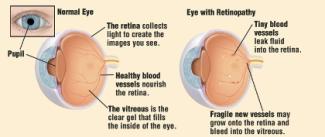
In diabetic retinopathy, blood vessels may swell and leak fluid or abnormal new fragile blood vessels grow on the surface of the retina, if untreated causing blindness.
Is it enough for diabetics to visit an Endocrinologist (diabetes specialist)? No, you should also have a regular visit to an ophthalmologist (eye doctor) at least once or twice a year for eye test. It helps detect eye complications in the early stages and proper treatment to prevent any sight loss.
Diabetic eye diseases
People with diabetes both type 1 and type 2 have to get a dilated eye exam by an ophthalmologist (eye doctor) immediately after diagnosis. Patients with diabetes are more likely to develop vision problems such as cataracts, glaucoma and diabetic retinopathy. According to the National Eye Institute, about 28.5 percent of U.S. adult’s ages 40 and older with diabetes have diabetic retinopathy. Diabetes eye problems are mostly asymptomatic so a comprehensive yearly eye exam is the only way to ensure early detection of eye disease associated with diabetes.
Diabetic eye disease refers to a group of eye problems that people with diabetes may face as its complication. All can cause severe vision loss or even blindness.
Diabetic eye disease may include:
- Diabetic retinopathy - damage to the blood vessels in the retina
- Macular edema
- Cataract - clouding of the eye's lens, develop at an earlier age for diabetics.
- Glaucoma - increased fluid pressure inside eye that leads to optic nerve damage and loss of vision diabetics have twice chance to get glaucoma as other adults.
Diabetic retinopathy
Retinopathy is the most common diabetic eye disease and a leading cause of blindness in adults. Causes of Retinopathy are if the blood vessels swell and leaks or an abnormal new fragile blood vessel grows on the surface of the retina. The retina is the light-sensitive tissue at the back of the eye. Clear retina is a necessary for proper vision.
At the beginning of diabetic retinopathy, there is no vision change. Over time can get worse and even cause vision loss. Usually diabetic retinopathy affects both eyes.
Diabetic macular edema
Diabetic macular edema causes swelling of the retina due to leakage of fluid from blood vessels within the macula. The macula is the central portion of the retina, the special nerve endings that sense color and responsible for daytime vision.
Stroke Treatments
Early treatment can prevent or at least limit damage to the brain. Acting fast, treatment at the first symptoms of brain attack can save your life and avoid damages.
Stroke Treatment
Common stroke treatments are medications, hospital care, surgery, and rehabilitation.
Ischemic stroke treatment - To treat an ischemic stroke, doctors must quickly restore blood flow to your brain. “Clot-busting” drugs must give within three hours after a stroke to minimize damage.
Medicinal treatment
Aspirin is the well-proven treatment after a stroke to reduce the chances of having another stroke. After a stroke in the emergency room, most probably you will get a dose of aspirin. The dosage may vary, if you have taken a daily aspirin for its blood-thinning effect, you want to make a note of it in any convenient way, so that the doctors will know that you already had some aspirin.
Important when taking aspirin: If you are having a hemorrhagic stroke, taking aspirin could worsen the bleeding.
Other blood-thinning medicines, such as warfarin (Coumadin) and heparin may also be useful; still, they are not as common in use as aspirin.
Tissue plasminogen activator (tPA) - FDA has approved the clot-dissolving medicine tissue plasminogen activator (tPA) to treat strokes caused by blood clots. A statistic shows 85 percent of the strokes are callused by Blood clots. Tissue plasminogen activator dissolves the clot and restores blood flow to the brain. It has a risk of causing bleeding in the brain, when an expert doctor uses it properly its benefits outweigh the risks.
Not every stroke patient should treat with tPA. It is extremely important to determine the type of stroke very quickly for effective treatment only if given promptly. It will worsen the bleeding if given to hemorrhagic stroke. For a maximum result, the medication must start within three hours of the onset of stroke symptoms. Thus, it is critical that healthcare professionals and the public recognize the stroke as a medical emergency and respond quickly.
Surgical treatment
Carotid endarterectomy is a stroke treatment by surgery performs commonly when a fatty buildup called plaque blocks the carotid artery in the neck. This surgical procedure can remove the accumulated plaque.
Cerebral angioplasty is another stroke treatment by surgery technique in which balloons, stents and coils are useful to treat problems with the brain's blood vessels. It is widely used depends on its safety and effectiveness.
Hemorrhagic stroke
Treatment for hemorrhagic stroke depends upon the cause of the bleeding. Its cause may be high blood pressure, use of anticoagulant medications, head trauma, blood vessel malformation. Monitor the patients closely during and after a hemorrhagic stroke. The initial care includes several steps:
- Finding the cause of the bleeding
- If high pressure, bring it to normal
- Stop blood thinning medicines that could increase bleeding (e.g.; warfarin, aspirin)
- Measure the pressure using a ventriculostomy tube, within the brain area called the ventricle; if high bring it to normal by removing cerebrospinal fluid.
Surgical treatment
Surgery may be useful to treat a hemorrhagic stroke or prevent another stroke. The most common procedures are aneurysm clipping and arteriovenous malformation (AVM) removal. Doctor may recommend these procedures only if you are at high risk of spontaneous aneurysm or AVM rupture:
Aneurysm clipping is by placing a tiny clamp at the base of the aneurysm to isolate it from the circulation of the artery to which it attaches. This procedure can help to keep the aneurysm from bursting, or it can stop re-bleeding of an aneurysm that had recently hemorrhaged. The clip will fold in place permanently.
Coiling (aneurysm embolization) procedure is done by maneuvered a catheter into the aneurysm. Then push a tiny coil through the catheter and positions it inside the aneurysm. In the due course, the coil fills the aneurysm, causing clot and sealing the aneurysm off from the connecting arteries.
Surgical AVM removal is not always possible to remove an AVM if it is too large, or if it is located deep within the brain. However, in the case of a smaller AVM in an easily accessible location of the brain can be removed and eliminate the risk of rupture, lowering the overall risk of hemorrhagic stroke.
Rehabilitation therapy Stroke
Recovery and rehabilitation depend on the area of the brain involved, and the amount of tissue damaged.
Treatment following a stroke includes rehabilitation therapies to restore function or help people relearn skills. Physical, occupational, and speech therapy may be included, as well as psychological counseling. Steps to prevent future problems should include smoking cessation, meal planning, daily activity, and medications to manage blood-glucose, blood pressure, and cholesterol levels.
Type 1 diabetes

If the body’s insulin production is insufficient or stopped, called as type-1 diabetes. The autoimmune disorder causes T1D and needs to treat with insulin shots.
Type-1 diabetes is also known as Insulin-Dependent Diabetes Mellitus (IDDM) and juvenile diabetes. It is spelled as type-i diabetes, diabetes one and diabetes 1.
Formerly, it was known as "juvenile diabetes," because it represents a majority of the cases in children, teenagers, or young adults, but now we came to know that it can also affect adults.
Among youth ages younger than ten years, the rate of new cases of type 1 diabetes was 19.7 per 100,000 each year for type 1 diabetes. Among youth aged ten years or older, the number of new cases was 18.6 per 100,000 each year for type 1 diabetes.
What is Type-1 diabetes?
Only about 10% of the people with diabetes are type 1, remaining 90% are type 2.
What is type 1 diabetes? Type 1 diabetes develops due to the autoimmune destruction of the beta cells in the islet cells of Langerhans in the pancreas. It usually ends up with the more or less absolute deficiency of insulin. This destruction process starts a long time before the illness diagnosed. Thus, there exists an opportunity for prevention of diabetes in the future.
To halt or delay pancreas destruction, know type 1 diabetes risk factors, and type 1 diabetes symptoms for early type 1 diabetes diagnosis. It helps to stop or slow down beta cells destruction.
Type-1 diabetes needs insulin treatment and healthy diabetes lifestyle change for proper blood-glucose level maintenance and to avoid diabetes complications. Insulin cannot be taken through the mouth because insulin is a hormone (protein) that is broken down by the digestive system.
Sometimes after initial treatment, some peoples have a period from a few weeks to a few months, when the pancreas is again start-producing insulin known as "diabetes honeymoon period." During this time, a person may need to take less or no insulin, depending on how much insulin you produce. After this honeymoon period, you need to take insulin for the rest of his life.
Autoimmune disorder
What is an autoimmune disease? Due to the combination of genetics and environmental triggers, the immune system overacts by producing antibodies that mistakenly attack their body tissues instead of fighting infections.
In the case of t1d, Immune system antibodies attack and destroy insulin-producing cells in the pancreas.
Scientists are not sure why it happens? But the immune system mistakenly sees the insulin-producing cells in the pancreas as foreign and destroys them. This attack is known as "autoimmune" disease.
An autoimmune attack occurs after viral infection; mumps, rubella, cytomegalovirus, measles, influenza, encephalitis, polio, or Epstein-Barr virus.
The cells in the islets of Langerhans, where insulin secreted in the pancreas, and these viruses are similar.
Thus if infected by these viruses, then few individuals immune systems mistakenly attacked the islet of Langerhans by considering it as virus and damaged it permanently. As a result, insulin production is stopped leads to type-1 diabetes; it is mostly diagnosing after diabetic ketoacidosis (DKA) episode.
What is islet cells of Langerhans? Islets of Langerhans (or islands of Langerhans) is an irregularly shaped patch of endocrine tissue within the pancreas. The most common are the beta cells that produce insulin.
What is insulin? Insulin is the primary hormone in the regulation of carbohydrate, fat, and protein metabolism. Insulin is crucial for various metabolic processes; promotes
the metabolism of glucose by the body’s cells,
prevents the liver from releasing glucose,
encourage muscles to take up amino acids (components of protein), and
Inhibits the breakdown & release of fats.
8 Challenges of Type 1 Diabetes
Type 1 diabetes is one of the most common chronic illnesses of childhood and requires a complex and demanding treatment regimen.
- Prepare to give up - certain unhealthy things like sugary drinks, refined carbs, and Tran’s fat-rich snacks/foods.
- Carb counting - Diabetes management requires an intense awareness of food intake. Figuring out what is in the food you are eating, mainly how many carbs in it. Instead of seeing the food as food, your brain starts seeing carbs as numbers.
- Self-monitoring of blood glucose (SMBG) - refers to home blood glucose testing for people with type 1 diabetes. The 2015 NICE guidelines recommend that people with type 1 diabetes should test their blood glucose at least four times per day, including before each meal and before bed.
- Self-administration of insulin - Learn the role of insulin, types of insulin, where to inject it, and methods of insulin delivery.
- Imitate your pancreas – gather enough information and knowledge to mimic pancreas with tools that are inferior to a pancreas.
- Spotting high and low sugar levels – understand your body better to accurately detect low/high BS and learn how to manage it properly.
- Being always vigilant - Type 1 diabetes is a condition where a small mistake can be fatal, and this is the toughest challenge.
- Being disciplined is the next toughest challenge! Fed-up, losing heart, being lazy, and losing the spirit is shared. Still, you have to come out with full vigor, similar to a new Phoenix emerged from the fire. A study has shown that only 30% of people with diabetes are compliant with the prescribed drug regimen. Compliance with insulin therapy, SMBG, regular eating hours, and prescribed exercises are essential.
- Identify the odds - Remember various things that affect blood sugar beyond food, insulin, and activity. For instance, too much stress and too little sleep both negatively affect blood glucose.
- Make sure all the numbers are right before bedtime – What should be your BG number before going to bed to avoid hyper and hypo? Nighttime hypoglycemia is a vexing problem among people on tight diabetes control. Those in strict control were three times more likely to have hypoglycemia than those on standard regimens. And more than half of these episodes occurred while sleeping.
- Dealing with hypoglycemia - Make sure you do not put yourself in a dangerous situation such as passing out while sleeping or driving a car.
Eight things that make your diabetes life easier are reduced stress, regular regimental schedule, exercise, using technology, support networks, organize, knowledge, and educate yourself.
Can type 1 diabetes be reversed? Sadly, no. Don’t lose your hope; there are numerous clinical studies are underway and expecting an early breakthrough.
Many believe the pharmaceutical companies put profit over principle, preferring to keep people living with diabetes dependent on costly insulin than to cure them once and for all. However, there are many parents of a type 1 diabetes child who are striving hard to find a cure.
Put your mind to meditate/pray for an early breakthrough. Pray for success to these positive minded people over negative.
Is it possible to save a partially functioning Pancreas? For more than a decade, clinical trials are underway trying to halt this endocrine failure by prescribing immune-modulating drugs to newly onset type 1 diabetes. During the stage of diagnosis, almost more than 90% of islets would already have destroyed. So the chance to save pancreas function is only possible if you can diagnose early before much damage.
Why me? Why now? Why Diabetes? Why this punishment? Why did God allow it to happen to me?
These questions are heartbreaking. Who on earth 'likes' this big D? It just happened. And it sucks. We can mourn the loss of the functioning pancreas, cry a little, and then move on.
It is distressing and life-disturbing to receive a diagnosis of a chronic disease such as diabetes mellitus. All at least most, when first diagnosed with diabetes experience the “Why me? Syndrome.” It is a common reaction!
Instead of having the attitude of a victim, change your thought, take your diagnosis as a life challenge and say “Why not me?”
Today, you are lucky to have numerous innovative tools to help you manage your diabetes effectively than ever before.
Once you accept your diagnosis; you can stop wasting your energy as being angry at it. Accept your responsibility and channelize your energy towards effective management of your condition. If you take control of your life, then you can thrive with diabetes!!!
Heart disease treatments
Early treatment can prevent or at least limit damage to the heart muscles. Acting fast, at the first symptoms of heart attack, can save your life.
Heart attack treatment
It is always best to reach for treatment within one hour of your first symptom.
Treatment for heart attack begins once your doctor suspects it even before confirming it.
- Oxygen to nourish affected muscles due to lack of oxygen
- Aspirin is used to prevent further blood clot
- Nitroglycerin, to reduce the workload on the heart and improve blood flow through the coronary arteries
- Treatment for chest pain
Once the diagnosis confirms or suspect’s heart attack, then begin the treatment to restore blood flow to the heart. Treatments may include medicines and medical procedures.
Medicines for Heart attack treatment
Different kinds of medicines used to treat heart attack include the following.
Thrombolytic Medicines - Otherwise call as a clot busters, are useful to dissolve blood clots that are blocking the coronary arteries. These medicines are most effective, when given within one hour after the start of heart attack symptoms.
Beta Blockers - Decrease the workload to your heart, beta blockers can be useful to relieve chest pain or discomfort and helps to prevent additional heart attacks. Beta-blocker can also correct irregular heartbeats.
Angiotensin-Converting Enzyme (ACE) Inhibitors - ACE inhibitors can lower your blood pressure and reduce strain on the heart. It also helps to slow down further weakening of the heart muscle.
Anticoagulants - It makes the blood thinner and prevents clots from forming in your arteries.
Antiplatelet Medicines - Medicines such as aspirin and clopidogrel can help to stop platelets, a type of blood cell from clumping together, and forming unwanted clots.
Medical Procedures for heart attack treatment
If medicines cannot stop a heart attack, medical procedures such as surgical or non-surgical may be used. These procedures include the following.
Angioplasty - A non-surgical procedure can be useful to open coronary arteries that blocks by a blood clot. In angioplasty, a catheter (a thin, flexible plastic tube) with a balloon on the end is inserting through a blood vessel to the blocked coronary artery. Now, inflate the balloon so that it pushes the plaque against the wall. Then leave small stents in the artery to help keep it open the stents has medicinal coating to prevent the arteries block again. Deflate and remove the balloon after placing the stents in position. This widens the arteries and thus restoring blood flow.
Coronary Artery Bypass Grafting - It is a surgical procedure in which take arteries or veins from other areas of, the body and put in place to bypass (go around) blocked coronary arteries. This provides a new way for blood flow to the heart muscle.
Cardiac rehabilitation
Once discharged from the hospital after a heart attack treatment, do not think the treatment is over. At home, your treatment may include daily medicines and cardiac rehabilitation that may include lifestyle changes, including:
- Quitting smoking,
- Losing weight,
- Changing your diet,
- Increasing your physical activity,
Cardiac rehabilitation is to lower your chances of having another heart attack and fully recovered from your heart attack.
Stroke Diagnosis Tests
If you had a stroke, or warning signs of stroke, it is very important to get prompt medical attention.
Step needed after a Stroke.
You need to consult doctor if
- The stroke symptoms disappear without treatment
- The stroke cause symptoms are important even if it goes without a treatment
- Don’t try to diagnose by yourself
Your doctor or health care provider asks many questions to evaluate and diagnose the stroke cause:
- Symptoms you had during a stroke
- Your medical history – problems, operation and any other illnesses
- Any illness, which run in your family
- Medicines currently you are taking.
- Doctor might be interested to talk to the person, who was with you during a stroke.
Stroke Diagnosis by Physical examination
During physical examination for stroke diagnosis,
your doctor will check.
- pulse
- blood pressure,
- Examine heart, lungs, etc.
Neurologic examination for stroke diagnosis
It includes tests for muscles and nerves; your doctor will check muscles
- Strength,
- Sensation (or sensitivity),
- Coordination or balancing
- Reflexes
Additionally, test for stroke diagnosis
Ask a question to check
- Memory,
- Speech
- Thinking ability
Stroke diagnosis tests
Depending on the results of your evaluation, your doctor may need additional tests to understand your problem; they are:
- CT scans
- MRI scans
- Carotid Doppler
- Transcranial Doppler
- Magnetic resonance angiogram
- Cerebral arteriogram
CT scans - CT scan utilizes x-rays to produce a 3D image of your head. CT scan can be helpful in diagnose of ischemic stroke, hemorrhagic stroke, and other problems of the brain and brainstem.
MRI scans - Magnetic resonance imaging (MRI) uses magnetic fields to produce a 3D image of your head. The MRI scan produces the images of the brain and spinal cord in more detail than CT scan to do. MRI can be helpful in diagnose of ischemic stroke, hemorrhagic stroke, and other problems involving the spinal cord, brain and brainstem.
Tests that View the Blood Vessels that Supply the Brain
Carotid Doppler - Carotid Doppler’s other names are Carotid duplex, Carotid ultrasound. High frequency non-hearable audio waves (ultrasound waves) are useful to show a picture of the carotid arteries in your neck, and the blood flowing to your brain. This test can be helpful to diagnose if your carotid artery is narrowing by arteriosclerosis (cholesterol deposition).
Transcranial Doppler (TCD) - Ultrasound waves are useful to measure blood flow in some of the arteries in your brain.
Magnetic resonance angiogram (MRA) - This is a special type of MRI scan, which can be helpful to see the blood vessels in your neck or brain.
Cerebral arteriogram - Cerebral arteriogram other names are cerebral angiogram, Digital subtraction angiography, or simple DSA. Inserting a catheter (a tiny, flexible tube) into an artery in your arm or leg and injecting a special dye (sensitive to x-ray) into the blood vessels leading to the brain. The x-ray images show any abnormalities of the blood vessels, which can include narrowing, blockage, or malformations. Cerebral arteriogram is a more complicated test than carotid doppler or MRA, but its results are the most accurate.
Other Neurologic Tests
Electroencephalogram (EEG) HeHH - EEG measures your brain waves through several electrical leads painlessly attached to your head. EEG is not routinely in use for stroke diagnosis, but your doctor may order once he/she thinks that you may have had a seizure.
Lumbar puncture (LP, spinal tap) - Insert a needle in your lower back to obtain a sample of the fluid (cerebrospinal fluid, CSF) which surrounds your brain and spinal cord. LP is not routinely in use for diagnosis of ischemic stroke. However, LP is often required if sub-arachnoid hemorrhage (bleeding from a cerebral aneurysm) is suspected. You may need LP if your doctor suspects a nervous system infection (such as meningitis) or inflammation.
Electromyogram / Nerve conduction test (EMG / NCV) - This test records the electrical activity of the nerves and muscles. EMG is not useful for stroke diagnosis, but you may need if your doctor suspects a problem with the nerves in your arms or legs.
Brain’s biopsy - Surgical diagnosis tests perform by removing a small piece of the brain for microscopic examination. Biopsy is useful to diagnose lesions (tumors) which are not able to diagnose by CT or MRI scans. It is very rarely useful for stroke diagnosis, when your doctor suspects cerebral vasculitis.
Heart disease diagnose test
Heart attack diagnosis is on the basis on your symptoms, personal / family medical history, and the diagnosis test results.
Heart disease diagnosis
Diagnoses of heart diseases are by different tests they are.
- Electrocardiogram (EKG)
- Echocardiogram
- Chest X-ray (CXR)
- Urinalysis (UA)
- Pulse oximetry (Blood oxygen)
- Blood test for protein
- Coronary Angiography
Electrocardiogram (EKG) - During EKG, 3-10 electrical leads attaches to your chest, arms and legs. EKG records the electrical activities of the heart. Certain electrical wave changes on an EKG are the strong evidence of a heart attack. An EKG can also indicate if you are having abnormal heartbeats (arrhythmias), mostly caused by heart attack and other similar conditions.
Echocardiogram - Other wise called as 2D echo, Cardiac echo, TTE, or TEE. Ultrasound waves are useful to take the picture of your heart and the circulating blood. The ultrasound probe may be located on your chest (trans-thoracic echocardiogram, TTE) or deep in your throat (trans-esophageal echocardiogram, TEE).
Chest X-ray (CXR) - An x-ray of the heart and lungs is a standard test for patients with acute problems. Chest x ray can be helpful to diagnose important problems such as pneumonia or heart failure.
Urinalysis (UA) - Urinalysis is a simple urine test to screen for bladder infection or kidney problems. If you suspect infection, you may require a urine culture test.
Pulse oximetry (Blood oxygen) - Pulse oximetry is useful to measure oxygen receives by the blood from the lung. A small probe with a red light attaches to one finger to measure blood oxygen.
Blood test for protein - Heart attack develops when heart muscle cells die and burst, releasing certain proteins in the blood stream. Blood test is useful to measure proteins in the bloodstream, if it is higher than the normal; it is an evidence of a heart attack.
Commonly used Heart attack diagnosis blood tests are troponin tests, CK or CK–MB tests and serum myoglobin tests. You many need to repeat the blood tests to note for changes over time.
Coronary Angiography - Coronary angiography is a special x-ray to examine the heart and blood vessels. This test is requiring during a heart attack to help locate the blockages in the coronary arteries.
During coronary angiography, your doctor inserts a catheter (a thin, flexible tube) from an artery in your arm or upper thigh and slowly treads it to your heart called cardiac catheterization. Then injects a special dye (that can be visible on X-ray) into the blood stream through this catheter.
If there is any blockage, it can precisely be located using coronary angiography. Once located the blockage then treat it by restoring the blood flow using angioplasty.