
Gestational Diabetes Risk Factors

Gestational diabetes is high blood sugar occurs in the second and third trimester of pregnancy and resolves at birth.
Gestational diabetes occurs in approximately 9.2 percent of pregnancies in America.
Gestational Diabetes Risk Factors
Researchers are yet unable to understand why some women develop gestational diabetes and others not. However, we know there are some risk factors as underlined below that make it more likely. Although having a high BMI is a risk factor for gestational diabetes, slim women can also get it.
- History of diabetes - the first-degree relatives; parent, brother, or sister is having diabetes.
- Have pre-diabetes; high glucose levels yet not high enough to diagnose diabetes.
- Have hypertension and or dyslipidemia.
- Thirty-five years of age or older – our body organs start losing their normal functioning, including the pancreas. Thus, aging makes it challenging to support increasing insulin requirement and the risk of gestational diabetes.
- Overweight and or obese; body mass index (BMI) + 25 kg/m2 or during pregnancy weight gain of 10 kg in the first trimester.
- Has PCOs (polycystic ovarian syndrome)
- During previous pregnancy have had gestational diabetes.
- Previous recurrent abortion (>3 in previous pregnancies);
- History of preterm delivery (<37 gestational week) or cesarean section.
- In the previous delivery, gave birth a baby weighing more than 9 pounds (4000 grams).
You have one or more of the above said gestational diabetes risk factors, then you are more likely to have gestational diabetes.
If you have many of the gestation diabetes risk factors, then you need to be professionally monitored. So that modifiable risk factors can be reduced or even eliminate.
Routine screening for gestational diabetes involves an oral glucose test; it consists of drinking a sugary drink contains 50 to 75 g of glucose. This test measures how your body metabolizes this sweet drink.
Gestational diabetes causes
Almost all women have some degree of impaired glucose intolerance during pregnancy due to hormonal changes that occur during pregnancy. That means their blood glucose is higher than usual, but not high enough to have diabetes. During the later part of pregnancy, these hormonal changes place a pregnant woman at risk for gestational diabetes.
The elevated blood glucose level in gestational diabetes is caused by hormones released by the placenta during pregnancy.
The placenta produces a hormone that is similar to growth hormone (it helps the baby grow) that modifies the metabolism and how she processes carbohydrates and lipids. It raises maternal blood glucose level and reduces insulin sensitivity (less able to utilize insulin properly). Thus the baby can get the nutrients it needs from the extra glucose in the blood.
At 15 weeks of pregnancy, human placental growth hormone also raises maternal blood glucose level.
Gestational diabetes starts when your body is not able to make and use all the insulin it needs for pregnancy. Without enough insulin, glucose cannot leave the blood and convert into energy. Glucose builds up in the blood to high levels, called hyperglycemia.
UTI Causes
Almost 80% of urinary tract infections (UTIs) in adults are causing by Escherichia coli (E. coli). An e.coli bacterium is normally present in the colon.
Urinary tract infection causes
Normally, urine is sterile and usually free of bacteria, viruses, and fungi. However, it does contain fluids, salts, and waste products.
An infection occurs when microorganisms, usually bacteria from the digestive tract, enters into the opening of the urethra and begins to multiply.
- Almost 80% of urinary tract infections (UTIs) in adults are causing by Escherichia coli (E. coli). An e.coli bacterium is normally present in the colon and may pass into the urethral opening from the skin around the anus and genitals. Women are more susceptible to UTI because their urethral opening is nearer to the anus and their urethra is shorter, so bacteria easily get in to the bladder.
- Other bacteria that may cause urinary tract infections include; Staphylococcus saprophyticus (5 to 15% of cases), Chlamydia trachomatis, and Mycoplasma hominis. Chlamydia trachomatis or mycoplasma hominis can transmit to their partner during sexual intercourse, causing UTI.
- Sexual intercourse may trigger UTI in some women, for unknown reasons.
- Urinary catheterization (i.e., to drain urine from the bladder by inserting a small tube through the urethra) can also induce UTI by introducing bacteria into the urinary tract.
- In infants, bacteria from soiled diapers can enter the urethra and cause UTI.
- E. coli may also enter the urethral opening when young girls do not wipe from the front to back after a bowel movement.
Gestational Diabetes

The overall prevalence of gestational diabetes was 13.2%. The prevalence increased with age, from 8% to 26% in women aged 45 or older.
Therefore, it is necessary to diagnose; early diagnosis is always good for both mother and baby.
What is Gestational diabetes?
GDM is characterized as any degree of glucose intolerance onset first during pregnancy’.
Pregnant women who never had diabetes before but develop high blood glucose levels during pregnancy is diagnosed as having gestational diabetes.
Out of every 100 pregnant women in the United States, 3 to 8 get gestational diabetes.
Therefore, it is necessary to diagnose; early diagnosis is always good for both mother and baby.
Diabetes onset age is declining and the childbearing age is increasing, so it is not uncommon for women to have undiagnosed diabetes while pregnant. Thus it is important that all pregnant women should be tested both early in the pregnancy (to rule out diabetes), also later in the 2nd and 3rd trimesters (to detect GDM).
In studies, the cumulative incidence of diabetes ranged from 2.6% to over 70% that examined women 6 weeks postpartum to 28 years postpartum.
Worldwide one in 10 pregnancies is associated with diabetes, out of which 90% is gestational diabetes. Undiagnosed or improperly treated gestational diabetes can lead to maternal & fetal complications. Additionally, women with gestational diabetes and their child’s are at increased risk of developing type 2 diabetes later in life.
Maternal risks of gestational diabetes are an infection, prolonged labor, obstructed labor, cesarean section, uterine atony, postpartum hemorrhage, polyhydramnios, pre-eclampsia, and progression of retinopathy.
Fetal risks of gestational diabetes are spontaneous abortion, intrauterine death, stillbirth, congenital malformation, shoulder dystocia, birth injuries, neonatal hypoglycemia, and infant respiratory distress syndrome.
Women with gestational diabetes and their children are at increased risk for type 2 diabetes and metabolic abnormalities in the future.
Women with a history of gestational diabetes and their children are at high risk for developing diabetes. Children exposed to maternal diabetes are at higher risk for obesity and diabetes compared to their unexposed to maternal diabetes siblings.
Help Insulin Therapy
Hormone Insulin is necessary for effective conversion of glucose into energy, if the right amount of insulin is not secreted by their-own, then needs insulin therapy.
Insulin therapy help tips
Each Insulin type works at a different pace, and most people have to use more than one kind to mimic their actual bodies system.Insulin types available: Rapid-acting insulin, Short-acting insulin, Intermediate-acting insulin, Long-acting insulin and Very long-acting insulin.
Insulin analog commonly available is a vast range. Mostly, you need to use more than one kind to suit your individual requirement. Consult your doctor or diabetes educator and choose a best one individualized to you need.Depend upon individual body condition, lifestyle, food habits, and physical activity, design their insulin regimen for efficient blood-glucose control. Consult with your doctor for your insulin requirement as per your need.
A Good insulin care starts with how properly the insulin is stored. Insulin does not work to its level when it is stored for too long or is exposing to extreme temperatures both high and very low. So learn the correct procedure and follow it for better blood-glucose control.
Nowadays there are more choices for the ways to take insulin (Insulin injecting products), even the choices make us confusing to choose the opt one. Consult your diabetes educator and discuss which one is best suits you.Start your Insulin treatment by following procedure designed as per user’s experience and manufacturer’s suggestions for better diabetic care.
Keep an eye on any sign’s indication either high or low glucose levels. You should know about hyperglycemia (very high blood-glucose – at or over 180 mg/dl), hypoglycemia (low blood-glucose – lower than 70 mg/dl).Learn how to measure glucose levels and do it regularly using your home glucose meter, which enables you to control your insulin dose. If ill or have any unwanted symptoms, then increase the frequency of glucose level check.
Try to follow your diet as careful as possible. Have your food in time and maintain a same volume every day.Try to follow particular time for your insulin therapy and the same dose volume or vary with respect to the requirement.Learn how to give you insulin injections, inspect insulin appearance, check the insulin date, avoid refrigerated insulin it may be painful, rotate the injecting site, avoid injecting site close to mole or scars.Always carry glucose with you to treat hypoglycemia (low blood-glucose). Once you noted symptoms of hypoglycemia, immediately chick blood-glucose if it is lower than 70 mg/dl have the glucose rich food to bring back to normal.See your doctor regularly to carry out check-ups on your eyes, kidneys and feet, and check for any late-stage diabetes signs.
Useful information regarding Insulin injection

- Insulin is injecting into the fatty tissue known as the subcutaneous layer and not into muscle or blood directly.
- You should inject into the deep subcutaneous tissue at a 45-degree angle or at a 90-degree angle when the subcutaneous layer is greater than the needle length.
- Insulin absorption varies depending on the body area it has injected. Insulin is most rapidly absorbed when injected into the abdomen, followed by the upper arm and thigh area.
- Make sure you are rotating the injection site; if you always use the same spot can make the skin tough and uneven. So make sure you rotate the insulin injection sites for easy insulin absorption as well as for low pain injection.
Massage Injection site
Do you massage your injection site? A Review published in Diabetes Spectrum October 2001 vol. 14 no. 4 218-224. The study shows massage at injection sites may increase insulin absorption. In addition, other uncontrolled studies suggest that massage may have a positive effect on blood-glucose levels and symptoms of diabetic neuropathy.
Massaging injection sites after insulin injection can help to reduce irritation in the injection site. It is recommendable to massage the injection site immediately after injection.
You should massage the site gently for two or more minutes. It helps to disperse the insulin as well as absorption effectively and reduce irritation.
Stop bruising during insulin therapy
Bruising is a common occurrence among people on insulin therapy. Certain area of your body has tinier blood vessels, injecting this area tend to bruises easily. If you experience this avoid that area for future injections. To reduce bruising, you have to apply pressure for few seconds to minutes at the injection site after the syringe has removed. An insulin pen user can use 5 mm pen needle to minimize bruising.
Amylin Symlin
Amylin mimetic - Pramlintide (brand Symlin) is a synthetic amylin hormone, secreted by the pancreas along with insulin help to normalize blood-glucose levels.
Synthetic Amylin
Synthetic Amylin (Pramlintide) injections are usually taken with meals; it shows modest improvement in A1C levels without causing weight gain and even promotes moderate weight loss.
Important for synthetic amylin users
Amylin Pramlintide should not combine in the same vial or syringe with insulin and must inject separately. Amylin Pramlintide can be used for people who use insulin (suitable both for type 1 and type 2 diabetes) and not able to achieve their target A1C level. Taking Amylin mimetic may change the amount of insulin you take.
Pramlintide (amylin mimetic) helps keep your blood-glucose from going too high after you eat a common problem in people with diabetes. It works by helping food move more slowly through your stomach. Amylin mimetic helps keep your liver from putting stored glucose into your blood. It also may prevent hunger, helping you eat less and may be helpful in losing weight.
Pramlintide (amylin mimetic) - who should avoid?
Talk with your doctor about whether you should take this type of medicine if you are
- having low blood-glucose, a condition called hypoglycemia unawareness,
- have recently had been severe low blood-glucose,
- have stomach problems caused by diabetes-related nerve damage,
- pregnant or planning to get, or breast-feeding,
- Symlin is not studied for use in children.
There may be times when you should not take your usual dose of Amylin mimetic. If you are having surgery, or you are sick and cannot eat, you should not take your Amylin mimetic.
Insulin Therapy
Start your Insulin treatment by following procedure designed as per user’s experience and manufacturer’s suggestions for better diabetic care.
Insulin Administration Tips
- Wash your hands.
- Choose the injection site – do not use the same area and always rotate the area for less pain and easy distribution of medicine (insulin). The main injecting sites are the abdomen, thighs, and back of the upper arms. The abdomen is most commonly used; it is easy to reach, and the insulin is best absorbed. Do not choose a site too close to moles or scars.
- Medicine temperature - always keep the usable medicine at room temperature, because injecting refrigerated medicine can be painful. Furthermore, insulin stay well for one month at room temperature without refrigeration, as long as the room temperature is under 86 deg F (32 deg C) .
- Clean injection site – may be with alcohol-dipped cotton and make it dry.
- Inspect the insulin - Rapid and short-acting insulin should look clear, but intermediate and long-acting insulin should look cloudy without clumps or crystals. If the insulin looks different from actual, it may be gotten spoiled to throw away or claim exchange.
- Mix well - Intermediate or long-acting insulin is cloudy nature, and it needs to be properly mixed by rolling between hand, but do not shake vigorously.
- Units required - Confirm your unit requirement, pull back the plunger to that number, just to draw air in it.
- Air fill Insulin bottle - Insulin bottle in upright position, insert the needle slightly just to put the measured air in the syringe.
- For mixed medicine user - repeat the step 8 for second medicine.
- Take out medicine - Needle still in the bottle turns the medicine bottle upside-down. Then pull out the plunger to measure our slightly higher medicine than actual need.
- Measure exact medicine without air - Tap the syringe side gently to make it rise to the top, push out the air and excess medicine, and measure out correct units.
- Double confirm the number of unit is correct.
- For mixed medicine user - repeat steps 10 to 12 for your second medicine.
- Hold the syringe similar to a pencil, look at the needle, and confirm correct angled position as per diabetes educator advice.
- Gently insert the needle under the skin. Slowly, and steadily, press the plunger with thumb until the insulin in completed.
- Pull out the empty syringe gently. Press the injection site for some seconds to prevent insulin leak out.
- Massage gently the injected site for better distribution and absorption of medicine.
The above details are only for syringe users, if you are, on other alternate system users visit the links:
Ways to Take Insulin
Nowadays, there are more choices to take insulin (Insulin injecting products), even the choices make us confusing to choose the best.
Different ways to take Insulin
What are the modes of administration of insulin? At present, you cannot take insulin orally like other medications, because your digestive system will break down insulin (a protein) before absorption. Researchers are going on for an oral insulin medication, hope for an earlier outcome that helps stop puncturing your skin.
Usually diabetes injects insulin into their subcutaneously by a syringe, insulin pen, auto-injector, or insulin pump. Patients who like to avoid repeated skin punctures prefer to use an injection port in conjunction with syringes.
- Taking insulin shots by syringes, it has a needle attached to a hollow tube filled with insulin, and it is press or injects into the skin by a plunger. This is the oldest and cheapest insulin injecting system.
- An insulin pen is a pen-like device with a needle and a cartridge of insulin. It is convenient and accurate insulin injecting system than syringes.
- An insulin infuser uses a small tube, which need to insert just beneath the skin and remains in place for several days. Insulin is injected into the end of the tube instead of through the skin. So that we can avoid piercing the skin, many times.
- Jet injectors are useful to deliver the dose of insulin, but they do it without using a needle to make a tiny hole. Jet injectors are useful to deliver trans-dermally. Jet injector uses micro jet (needle-less injection) to deliver insulin into your body. Jet of insulin is forces through the skin with pressure.
- Insulin auto injector has a special design for those who have difficulty injecting themselves; it automatically inserts the needle and injects the contents.
- An insulin pump is a small device, worn on a belt or in a pocket, which holds insulin. The pump connects to a needle through a plastic tube. The needle is inserts under the skin and stays in for several days. Pump automatically drips insulin through the needle under the skin.
Insulin treatment strategy
If you are a diabetes type 1, then you require a base level of insulin called basal insulin to cover a daylong insulin requirement and insulin to cover meals called bolus insulin. Managing the basal and bolus insulin is a continuous process for effective blood-glucose control in type 1 diabetes patients.
Long acting insulin is useful for your basal insulin requirement and short-acting insulin is for your bolus insulin requirement.
Insulin Handling
A Good insulin care starts with how properly the insulin is stored. Insulin does not work to its level when it is stored for too long or is exposes to extreme temperatures both high and very low.
How do you store Insulin?
If you buy several bottles of insulin at once possibly money saver pack, keep the unopened pack in refrigerator but not in a freezer, because insulin clumps.
If you have the insulin needed for a month is a whole bottle, then keep the bottle currently in use is at room temperature. It will be fresh for up to a month without need for refrigeration, as long as the room temperature is under 86 deg F(32 deg C).
Although manufacturers recommend storing your insulin in the refrigerator, injecting cold insulin can be painful. To counter that, many providers recommend storing the bottle of insulin you are using at room temperature.
Inspect stored Insulin before open the pack
Every time before open a new bottle check the date, if it is past that date, do not use it.
In addition, examine the bottle closely to make sure it looks normal before you draw the insulin into the syringe. If you use regular, insulin aspart, insulin lispro, insulin glargine, insulin glulisine, or insulin detemir, make sure it is clear. Check for particles or discoloration of the insulin. If you find any of these in your insulin, do not use it, and return the unopened bottle to the pharmacy for exchange or refund.
Eye
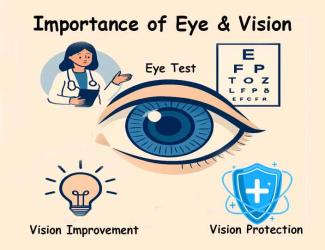
More than 80% of our perception of the world is based on our vision. permits basic everyday tasks, including driving, reading, and interacting with others. necessary for learning and cognitive growth. directly impacts independence and quality of life.
Frequent eye exams offer benefits far beyond just improving vision, making them a crucial part of preventative healthcare.
The Importance of Eyes and Vision
- Eighty percent of the information we gather from our environment comes from our eyes, which are the main senses of perception. It facilitates interaction and navigation by enabling us to distinguish between objects, colors, and movements.
- Brain & Cognitive Function: Because the optic nerve links the brain and eyes, keeping the eyes healthy contributes to the brain's continued healthy functioning, which is necessary for both sophisticated cognitive activities and general quality of life. Well-being and mental clarity are enhanced by healthy vision.
- Safety and Awareness: Whether driving, walking, or working, having good vision is crucial to avoiding accidents. Reduced independence, falls, and accidents can all result from poor vision.
- Early Health Problem Detection: Eye exams provide a window into overall health, as they can identify early signs of systemic diseases, including diabetes, high blood pressure, high cholesterol, liver disease, and even brain cancers.
- Essential for day-to-day functioning, learning, sports, driving, and social interactions are just a few aspects of daily life that are aided by good eyesight. It facilitates body language interpretation, facial recognition, and expression reading—all of which are essential for relationships and communication. From early development and school readiness to preserving independence and quality of life in elderly adults, vision health is crucial throughout life.
- Compensation for Other Sensory Losses: The eyes are essential for safety when other senses, such as hearing or smell, are compromised. When it comes to safety and environmental awareness, the eyes are vital.
- Emotional and Psychological Impact: People who have vision are better able to communicate their emotions and engage with others. Maintaining good eye health is essential for mental wellness because losing sight can lead to hopelessness and anxiety.
Why Eye Examination is Important?
Benefits of Regular Eye Care: There are several reasons why routine eye exams are essential. To begin with, they help with the early detection of eye problems, which is frequently the best defense against vision loss. Regular examination helps prompt diagnosis and treatment because many eye conditions, such as glaucoma, cataracts, and age-related macular degeneration, may not exhibit symptoms in their early stages. While maintaining eyesight, early detection can significantly improve treatment results.
Second, eyes can provide vital information about systemic illnesses and serve as a "window" to overall health. Doctors can check for signs of diabetes, high blood pressure, and even some types of cancer during an eye exam.
Third, children need to get frequent eye checkups. Children's eyes should undergo regular examination by a physician or eye specialist. Proper visual development and scholastic success in children depend on the early detection and treatment of vision problems such as amblyopia, or lazy eye. Between the ages of three and five, they should get at least one eye test.
Critical Eye Conditions to Monitor
Several dangerous eye disorders require early detection and treatment:
Age-related conditions
- Cataracts (a major cause of eyesight loss in the United States).
- Macular degeneration.
- Glaucoma
Diabetic complications
- Diabetic retinopathy (primary cause of adult blindness).
- Early identification can avoid 90% of associated vision loss.
What are some typical hazards to eye health?
Your eyes are delicate wonders, and a startling number of everyday habits and circumstances can endanger your well-being. The most frequent risks to eye health are listed here.
Environmental and Lifestyle Factors
- UV exposure: Over time, cataracts, macular degeneration, and even eye cancer can result from not wearing sunglasses.
- Smoking: raises the risk of cataracts, glaucoma, and age-related macular degeneration.
- Poor diet: Deficits in nutrients, especially vitamin A, can harm vision and even cause blindness..
- Eye strain, dry eyes, and blurred vision can result from excessive usage of digital gadgets.
Infections and Injuries: Conjunctivitis (pink eye) is a common eye problem that produces redness, irritation, and discharge. Improper contact lens hygiene can cause infections and corneal damage.
Eye trauma: Sports or accidents due to the lack of eye protection can cause lifelong harm.
Medical Conditions: Diabetes can lead to diabetic retinopathy, which is the main cause of blindness. High blood pressure may lead to hypertensive retinopathy, which damages the retina. Autoimmune diseases, such as lupus or rheumatoid arthritis, can induce inflammation and visual abnormalities.
Structural and developmental: The issues such as
- Lazy eye (amblyopia), when left untreated in childhood, can lead to lifelong visual loss.
- Crossed eyes (strabismus): A misalignment that can impair depth perception and coordination.
What is the good news? The majority of these risks can be avoided or managed with frequent eye checkups, preventive practices, and a healthy lifestyle. Want to know how to keep your eyes in tip-top shape?
Prevention and Maintenance
What are the most effective prevention techniques for eye problems? To maintain your, implement these vital practices:
Regular eye exams
- Schedule complete eye checkups every 1-2 years.
- Examine more often if at higher risk.
- Children should have their first examination between 3 and 5 years.
Protective Measures
- Wear sunglasses to block 99-100% of UVA and UVB radiation to protect against long-term sun damage. Wear protective eyewear when participating in sports or doing anything else that could cause eye injury.
- Practice healthy living habits.
- Monitor children's vision development.
- To prevent injury and infections, avoid excessive contact with the eyes.
Care for Your Eyes
Caring for your eyes is just about incorporating wise habits into your everyday routine. Here are some of the most effective ways to maintain your eye health.
- Maintain a Healthy Diet: Make an effort to eat foods high in omega-3 fatty acids, zinc, and vitamins A, C, and E, as well as lutein and zeaxanthin. Consider eating leafy greens, carrots, citrus fruits, almonds, and fatty fish, such as salmon.
- Stay hydrated: Drinking enough water prevents dry eyes and promotes tear production.
- Adjust the screen settings: Reduce brightness, boost contrast, and keep a comfortable distance from screens.
- To prevent eye strain, take regular breaks from screens by following the 20-20-20 rule: every 20 minutes, look 20 feet away for 20 seconds.
- Quit smoking: It has been linked to an increased risk of cataracts and other eye disorders.
- Know Your Family's Health History: Having a family history of eye diseases may increase your risk. Some illnesses, such as glaucoma and macular degeneration, can be inherited.
- Regular exercise can minimize the risk of glaucoma and diabetes.
- Managing chronic conditions: Control diabetes, high blood pressure, and cholesterol to lower the chance of visual issues.
What are the global eye health statistics?
Global Visual Impairment: 2.2 billion individuals worldwide suffer from visual impairment. At least half of those instances may have been avoided or are still unresolved.
Leading Causes: Myopia (nearsightedness) affects around 2.6 billion globally. Presbyopia (the difficulty of seeing close objects with age) affects 1.8 billion people.
76 million people are affected by glaucoma, and 146 million individuals suffer from diabetic retinopathy. 196 million people suffer from age-related macular degeneration.
Future projections: It is estimated that over 1.7 billion people will be blind or visually impaired by 2050. An estimated $410.7 billion in lost productivity annually is the economic cost of vision loss.
Disparities and Challenges: Sub-Saharan Africa and South Asia have the highest rates of blindness. Routine eye exams help early detection because many eye conditions develop silently. These data demonstrate the importance of eye care for both individuals and international public health systems.
In summary, eye and vision health is more than just seeing; it is also vital for brain function, social interaction, independence, and overall health monitoring. Maintaining vision and avoiding irreversible damage requires routine eye care and early intervention.
Insulin Regimen
Depend upon individual body condition, lifestyle, food habits, and physical activity their insulin regimen or insulin shots or diabetes shots are designed for efficient blood-glucose control.
Individualized Insulin regimen
Consult your doctor or health care team, to design an insulin regimen that will suit your needs and better blood-glucose control. It helps you feel good, physically and mentally.
The regimen design depends on
- Your body condition,
- The food you eat,
- Your normal physical activity,
- How your body responding to treatment
Insulin regimen type 1 diabetes
A person diagnosed with type 1 diabetes usually begins with two insulin shots per day of two dissimilar types of insulin. Slowly, they may progress to three or four insulin shots per day of different insulin types. The types of insulin used to depend on their blood-glucose levels. Studies have shown that three or four diabetes shots of insulin a day give the best diabetes control and can prevent or delay the eye, kidney, and nerve damage caused by diabetes.
Insulin regimen type 2 diabetes
Most of the type 2 diabetes patients need one insulin shot per day without diabetes pills. Some may need both one insulin shot and diabetes pill in the bedtime. Sometimes diabetes pills will not lower blood-glucose for type 2 diabetes, and they need to take two insulin shots per day of two different types of insulin. It may progress to three or four injections of insulin per day in a due course.