
Eye Supplements
Nutritional eye supplements improve eye health and can help prevent or slow down the progression of many eye diseases.
What is considering as eye supplements?
Eye supplements are design in such a way that they can supplement a healthy diet to get the entire nutrient that is a need for good vision or eyesight.
Even if do eat well, some vitamins, minerals and antioxidant levels needed for eye health cannot be reached with foods alone, that too due to the way we grow our foods today. Eye supplements can help to get enough nutrients that need each day for healthy good vision. However, keep in mind that taking vision supplements does not mean; a healthy diet is no more require or can indulge in harmful eye foods (too many junk food).
Useful eye supplements
Various vitamins, minerals and other nutrients are intensively research for their benefits in supporting vision health, especially age-related macular degeneration, glaucoma, cataract, night blindness, low vision, dry eyes, and eye fatigue. Eye fatigue is mostly causing by modern life with long hours in front of computers & televisions.
Many studies support certain eye nutrients essential for supporting vision health; they are lutein, zeaxanthin, essential fatty acids, zinc, Vitamin A, Vitamin C, Vitamin E, Vitamin B2, selenium, copper and N-Acetyl Cysteine.
Acupressure Cun
To precisely locating an acupoint, needs to know about Cun. Cun is the standard unit of measurement for the body used in acupuncture/acupressure.
Cun
Everyone has different body dimensions; Cun is defining according to the person who is to be treated.
- One cun = width of the thumb, in the middle, at the crease
- Three cun = combined breadth of the four fingers, at the level of the pinky finger's first joint above the palm of the hand
- Twelve cun = the distance from the elbow crease to the wrist crease.
Acupuncture Acupressure
The acupressure system of therapy uses the same points on the body as does acupuncture treatment to prevent diseases. "Acu" means care or precision; therapist takes care to use the exact point. However, instead of using needles to puncture the skin, the therapist uses hands, fingers, palms, elbows or feet, or special devices to place pressure on the points. So, when reference is making to acupressure points, remember that these are the same as acupuncture points.
The primary difference between acupressure and acupuncture is that the latter uses thin needles in addressing health concerns, while the former does not break the skin. However, the two methods of holistic medicine have much in common, since they are both base on touching meridians that carry energy, or chi, throughout the body. In Traditional Chinese Medicine, illnesses are causing by blockages of chi somewhere along the meridians, so both acupressure and acupuncture encourage energy to flow freely once again.
One difference between acupressure and acupuncture arises in the specific application of the techniques. A practitioner experienced in it must perform acupuncture. Several pressure points in specific combinations are access at the same time. The acupuncturist needs to reach the bare skin; therefore, the patient usually to remove the clothing or covering prior to being treated.
Acupressure easy and safe
Anyone can easily learn acupressure from a handbook, especially pressure points that relieve common discomforts. You can perform the miniature massages on yourself, anywhere. An acupressurist only touches one or two pressure points at a time, since they use their fingers, thumbs, palms, and elbows. Since this is similar to massage, it can administer through loose clothing.
Are acupressure’s safe? Acupressure is generally reporting as safe when performed by an experienced practitioner. No serious complications have been publishing, despite millions of treatments every year. Self-administer acupressure is believed to be safe with proper training.
Acupressure Techniques
To stimulate an acupoint properly, must apply gentle deep probing pressure. So apply pressure with a blunt surface: Fingertip, Knuckle and Pencil back or not the point.
Video on How do you do stimulate Acupressure points?
Acupressuring Procedure
Apply a gentle deep probing pressure on the precise acupoint, until that exact acupoint declares a twinge (a sharp, sudden physical, mental, or emotional pain). Twinge appears as a jolt, and after a moment becomes a numb or a tingling radiating from the point.
Once the precise acupoint is located, apply gentle pressure for 15 to 30 seconds, it should produce immediate relief. There may be a feeling of release of tension, sinus drainage, or perspiration, and belch or pass gas. After acupressure treatment, if the symptom for which the treatment is performing is increased, stop stimulating the acupoint.
Reinforcing an acupoint
A simply gentle pressing of a point, means reinforcing it, which increases energies in the areas that the point influences.
Reducing an acupoint
Reducing a point is not the opposite of reinforcing it, reducing can remove a blockage of energy. Reducing just turn a finger or any other blunt abject over that acupoint in counter clockwise direction. Energy accumulates there, which starts moving again after removing the blockage
Acupressure Do & Dont
To enhance the effectiveness of acupressure treatment it is best to follow certain easy to follow guidelines as said in this page.
Acupressure Guidelines
To enhance the value of acupressure treatment, following guidelines are important:
- Do not eat an unusually large meal immediately before or after the treatment.
- Do not over exercise, engage in sexual activity, or consume alcoholic beverages within six hours before or after the treatment.
- Plan to get some rest immediately after treatment, or at least not to work at the top performance. This is especially important for the first few treatments.
- Continue to have prescribed medicines as directed by the regular doctor. Substance as illegal drugs and alcohol, especially in the week prior to treatment will deeply interfere with the effectiveness of acupressure treatments.
- Keep good mental or written notes of what the response is to the treatment. This is important for the doctor to know so that the follow-up treatments can design to help the problem.
Acupressure Scope
Acupressure treatment can enhance health and well-being, prevents the development of illness, and provides treatment by improving self-healing property of the body.
Influences of Acupressure treatment
Acupressure influences three areas of health:
- Promotion of health and well-being,
- Prevention of illness,
- Treatment of various medical conditions
Acupressure can be effective as the supporting or assist to other medical systems of treatment in many medical and surgical disorders.
Conditions that can be treated by Acupressure
- Digestive disorders are gastritis, hyperacidity, spastic colon, constipation, and diarrhea.
- Respiratory disorders are common cold, tonsillitis, asthma, bronchitis, and sinusitis.
- Emotional problems are anxiety, depression, insomnia, nervousness, and neurosis.
- Neurological effects are headaches, migraines, bladder dysfunction, parkinson's disease, and stroke.
- Musculoskeletal problems are muscles cramping, muscle pain & weakness, neck pain, arthritis, back pain, and sciatica.
- Gynecological complaints are premenstrual syndrome, menopausal symptoms, and infertility.
- Miscellaneous conditions are blood pressure regulation, chronic fatigue, immune system enhancement, stress reduction, and addiction control.
Acupuncture is particularly helpful in resolving physical problems related to tension, stress, and emotional conditions.
Number of needed Acupressure treatment
For complex or chronic conditions, one or two treatments a week for several months may recommend. For simple or acute problems, fewer visits are enough.
Side effects of acupressure treatments
Usually not, but in some cases there may be some original symptom worsen for few days of treatment. That too is an indication of that the acupressure is started working. It is quite common with the first one or two acupressure treatments to have a sensation of deep relaxation or even mild disorientation. This disappears within a short time, and never requires anything more than a just rest to overcome.
Acupressure Modern View
As per modern perception, acupressure believed to stimulate the central nervous system to release chemicals that support the body’s natural healing ability for overall well being.
Applying gentle pressure on precise acupoints believes to stimulate the central nervous system (i.e. the brain and spinal cord) to release chemicals into the muscles, spinal cord, and brain. These chemicals either reduce the pain or release other chemicals, such as hormones, that influence the body's natural healing abilities and promote physical and emotional well being.
Scientific study on acupressure mode of action
Electromagnetic signal’s conduction: Western scientists have found evidence that stimulating acupoints enables electromagnetic signals to conduct at is the greatest rate than under normal conditions. This signal conduction may enhance the flow of pain killing bio-chemicals (such as endorphins) and immune-system cells to specific locations that are injured or vulnerable to disease.
Opioid activation: research shows that several types of opioids may release into the central nervous system during acupressure treatment, thereby reducing pain.
Changes in Brain chemistry and involuntary body functions: studies have shown that acupressure may alter brain chemistry and releases neurotransmitters and neurohormones in a good way. It also affects the parts of the central nervous system connecting to sensation and involuntary body functions, such as immune reactions and processes whereby a person's blood pressure, blood flow, and body temperature are regulating.
The Traditional Chinese explanation is that channels of energy run in regular patterns through the body and over its surface called meridians. It is considering as Energy Rivers flowing through the body to irrigate and nourish the tissues.
If there is any restriction in the meridian path, then gentle pressure (acupressure) on certain precise acupoint may built up back pressure (similar to dams) and once the applied pressure is released, it can flush out the block and reestablishes the regular flow. Acupressure treatments can help the body organs to correct imbalances in their digestion, absorption, and energy production activities, and in the circulation of their vital energy through the meridians.
This improved energy and biochemical balance achieved by acupressure results in encourages the body's natural healing abilities, and in promoting physical and emotional wellbeing.
Qigong
Qigong is an ancient Chinese health care system that integrates physical postures, breathing techniques and focused intention.
They believed in a fundamental substance of the human body called Qi - vital energy that can be cultivating by Qigong.
Meaning of Qigong/Chi Kung
The Chinese word Qigong (Chi Kung); the word Qi is pronounced as chee means the life force or vital energy, the word Gong is pronounced as gung, means skill to cultivate. Together, Chi Kung means cultivating vital energy. It is a practicing art for health maintenance, healing and increasing vitality.
Classification of Qigong
Qigong can classify as martial, medical, or spiritual. All types have three things in common: they all involve a posture, breathing techniques, and focused mind. Practicing some qigong increase the Qi others improve circulation, use it to cleanse and heal the body, store it, or emit Qi to heal others.
Qigong is an exercise to regulate the body, mind, and breathing in order to control or promote the flow of qi. Since qi plays an important role in the vital processes of the human body, the regulation of qi flow is the use to preserve health and treat disease.
Medical Qigong
Medical qigong exercise practiced preventing and treating diseases. It focused on the mobilization of functional potentialities by regulating the mind; it is psychosomatic both physical and mental. Qigong works to ease, smooth, and regulate breathing to store up or accumulate vital energy Qi in the body.
Medical Qigong classification
Medical qigong can divide into two main categories:
- The patients themselves to preserve and promote their own health practice internal qigong.
- External qigong is performed by a master (emit Qi) on a person with health problems.
Qigong can practice while sitting still, standing upright, or lying on the back or side. The basic requirement is to stay comfortable and relaxed.
Gentle, rhythmic smooth movements of Qigong reduce stress, build stamina, increase vitality, and enhance the immune system. It has also been finding to improve cardiovascular, respiratory, circulatory, lymphatic, and digestive functions.
Qi
In TCM chi is pronounce as chee, spell as Qi means energy. Chi is the vital force, which keep as alive, healthy and active. In TCM, qi is considering as the fundamental substance of the human body, and its movements explain various life processes.
Vital energy Qi (Chi)
Qi represents an invisible energy flow, which circulates in plants, animals, and human as well as this universe. It animates the physiological functions, health and wellbeing of the individual.
Qi in its physiological sense constitutes, replenishes, and nourishes the human body. Qi is often mentioning as vital energy, because it has believed to be the motive energy derived from the essential substance for different vital processes.
Classification of Qi
The energy Qi is of two types they are inborn and acquired.
- The congenital or inborn Qi is the innate vital energy inherited from the parents during conception, which is stored in the kidney. It is essentially limited and the quality and amount of this Qi represents our basic constitution.
- The acquired or postnatal Qi is obtain from the foods we eat and the air that we breathe. It is the vital energy gathered in the chest, which is synthesis by the spleen from the food and by the lungs from the inhaled fresh air. From the chest, this qi circulates through the body organs and tissues.
Since qi is invisible, it can only be realize through its actions.
Functions of Chi
Qi has five functions; they are
- The energy source of body activities,
- Providing warms and nourishes the body,
- Protecting the body surface against any pathogenic factor,
- Vehicle of transportation inside the body, and
- Maintaining harmony among body organs
Chi obstruction: Illness
As per TCM, energy distributes throughout the human body along the energy networks called meridians, which connects all parts of the body. A healthy individual requires normal circulations of qi; any stagnation or restriction of this circulation develops illness to social difficulties. The circulation of qi is disturbing or stagnating by mental or emotional condition. For example, anger may lead to dizziness, headache, or distention of the stomach with impaired appetite. On the other hand, the exercise of mind such as qigong can support the circulation of qi.
Some common TCM treatments are diet, exercise, meditation, herbs and acupuncture to enhance or correct the chi flow.
Five Elements
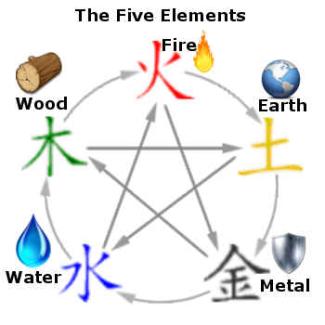
Traditional Chinese medicine’s five elements theory is helpful to interpret the connection between the physiology and pathology of the human body and the natural environment.
Five phases or elements
In traditional Chinese medicine, five elements theory is useful to interpret the relationship between the physiology and pathology of the human body and the natural environment. The five elements are a comprehensive pattern, which organizes all natural phenomena into five groups. These basic five elements are wood, fire, earth, metal and water.
The five elements are in constant movement and change, and the interdependence and mutual restraint of these five elements clarify the complex connection between material objects as well as the unity between the human body and the world.
Five element characterization and classification
Five Elements theory assigns each of the five elements a series of generalizations, which applies to classify all phenomena.
- Wood is associated with germination, extension, softness, harmony, flexibility, etc. It performs toxin processing, yin organ is liver and yang organ is gallbladder. Sense organ is eye, tissue is tendon, emotion is anger, direction east, season is spring, climate is wind, taste is sours and stages of development is birth.
- Fire is associated with draught, heat, flaring, ascendance, movement, etc. It performs circulation of blood, hormones & food, yin organ is heart and yang organ is small intestine. Sense organ is tongue, tissue is vessel, emotion is joy, direction south, season is summer, climate is heat, taste is bitter and stages of development is growth.
- Earth is associated with growing, changing, nourishing, producing, etc. It performs digestion, yin organs are spleen & pancreas, and yang organ is stomach. Sense organ is mouth, tissue is muscle, emotion is anxiety, direction centre, season is late summer, climate is dampness, taste is sweet and stages of development is transformation.
- Metal is associated with cleaning up, killing, strength, firmnesscutting, cleaning up, etc. It performs respiration & elimination, yin organ is lungs and yang organ is large intestine. Sense organ is nose, tissue is skin, emotion is sorrow, direction west, season is autumn, climate is dryness, taste is pungent and stages of development is harvest.
- Water is associated with cold, moisture, descending (downward flowing), etc. It performs elimination, yin organ is kidneys and yang organ is bladder. Sense organ is ears, tissue is bone, emotion is terror, direction north, season is winter, climate is cold, taste is salty and stages of development is storage.
It is then conclude that anything with those respective characteristics should be included in the category of the respective element. Everything grouped into five groups include season, direction, climate, internal organs, tissues, emotions, tastes, colors, sounds, etc. For example, Water relates to winter, cold climate, the north, the color black, the Kidneys, and the emotion fear. When it is winter, there is a cold essence, it relates to and influences in some way the Kidneys, which linked to the emotion fear.
Five elements represent movement or energies succeed one another in a dynamic relationship and in a continuous cycle of birth, life, and death. These elements do represent dynamic objects; even mountains and rivers change constantly with time. In the five element theory, they work together to make up the essential life force or chi. This resembles a circle called creation cycle, where wood burns to feed fire; fire ashes produce earth; earth’s ore create metal; metal causes condensation to bring forth water; and water nourishes trees creating wood.
Each element is related to a specific bodily system and pair of internal organs, a yin and a yang organ. The yin organ is solid and dense like the liver, while yang organ is hollow like the gallbladder. Remember, no one element is considering as the beginning or end; they flow in an endless loop.
Relation between Five elements
Between the five elements there exists close relationships that can classify as:
- Mutual promoting and restraining under physiological conditions by mutually promoting, and restraining functions of the various systems are coordinated, and homeostasis maintained.
- Mutual encroaching and mutual violating under pathological conditions, by encroaching and violating, pathological changes can explain and complications predict.
Mutual promoting five elements
Based on Five Element Theory, each elemental mutual promoting the next element in a sequence. In this way, it generates a circular cycle without a beginning and end.
- Water generates wood. Rain nourishes a tree.
- Wood generates fire. Burning wood generates fire.
- Fire generates earth. Ash created from the fire.
- Earth generates metal. Metal mined from the earth.
- Metal generates water. Water condenses on metal.
Thus, each of the five elements has been mutual circular promoting a relationship with the other continues endlessly.
This generating or creating five-element support the human body, each internal organ embodies the energetic qualities of its related element.
Each organ is responsible for providing energy requirement by the next organ in the generative cycle. For example:
- Kidney is a water element supports the Liver, which is a wood element.
- Liver is a wood element supports the Heart, which is a fire element.
- Heart is a fire element supports the Spleen, which is a earth element.
- Spleen is an earth element supports the Lung, which is a metal element.
- Lung is a metal element supports the Kidney, which is a water element.
Mutual restraining five elements
Order of mutual restrain, check, control, or regulate the subsequent one. These five elements also share this restraining relationship with the other.
- Water controls fire. Water puts fire out.
- Wood controls earth. Tree roots hold clods of earth.
- Fire controls metal. Fire can melt metal.
- Earth controls water. A pond holds water.
- Metal controls wood. An ax cuts wood.
Each organ is responsible to regulate or control excesses or deficiencies in the energy of the organ it associates with in this regulative cycle. For example:
- Lung is a metal element, which controls Liver a wood element.
- Heart is a fire element, which controls Lung is a metal element.
- Kidney is a water element, which controls Heart is a fire element.
- Spleen is a earth element, which controls Kidney is a water element.
- Liver is a wood element, which controls Spleen is a earth element.
The internal organs play a dual role of promoting as well as maintaining health by producing and controlling energy between organs.
Mutual promoting and restraining
Encroaching and violating are the pathological conditions of the general mutual promoting and restraining relationships. Encroaching indicates that the restraining of one of the five elements to another exceeds the normal level, while violating indicates that one of the five elements restrains the other opposite to the normal mutual restraining order.
The five element, direction, and season
There are five directions; they are east, west, north, south and the fifth direction is the center. There are five seasons; they are summer, autumn, winter, spring, and late summer.
- The south represents summer, the high noon of the year and linked to fire.
- The west represents autumn and metal; helps to make tools for harvesting.
- The north represents winter and water, seen as a period of dormancy.
- The east represents spring and wood, means all growing things.
- The fifth direction is center represents earth and late summer season, a time of maturity.
TCM consider the causes of disease is due to imbalances in these sets of five—elements, organs, seasons, and directions. If one component is overbearing and excessive, the system is out of balance, and another component becomes weak and debilitated. Diagnosis and treatment of illness depends on understanding the five elements, seasons, and directions and how they interact.
Yin Yang
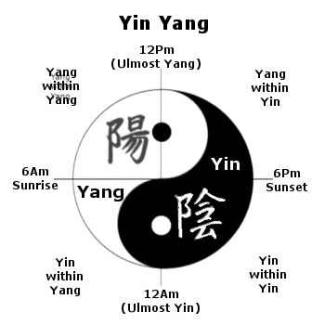
Theory of yin yang helps define the inner functioning of nature, and it provides clarification of why there are night and day, light and dark, good and evil, right and wrong, male and female, etc.
The two energies of yin and yang are of direct opposites and so one feed the other the energy it lacks. It is through this interchange that they convert from the inside out and become each other, creating the continually repeated cycle from life to death to life again.
Yin & Yang Symbol
Yin and Yang (pronounced as yong) is one of the most fundamental concepts in Traditional Chinese Medicine (TCM). In the Taoist philosophy, wholeness is the union of opposites; such as dark and light, soft and hard, female and male, slow and fast, and so forth. These opposite but complementary aspects are yin and yang.
Originally, the terms pronounced geographical aspects such as the shady is a represents cold, dark, and other passive properties) and sunny side is a represents warm, bright, and other active characteristics) of a mountain or the southern and northern bank of a river. In modern terms, they are characterizing the polar opposites exist in everything.
24 Hour Yin Yang Cycle with a 12 PM corresponds to Utmost Yang, while 12AM corresponds to Utmost Yin.
From the health standpoint, the basis of well-being is the appropriate balance of yin and yang. The imbalance of yin and yang is considering causing illness.
Yang
Yang is the general active and aggressive; characterized as anything that is moving, ascending, bright, progressing, and hyperactive, including functional disease of the body. It is like fire with heating and circulating characteristics. Yang is associated with things higher up is a more heavenly), it is the energy than matter. Yang is associated with the symptoms of face redness, fever, high blood pressure, and acute conditions. People with excess yang tend to be nervous and agitated and cannot tolerate much heat.
Yin
Yin is the general passive natured; characterizing as anything with stillness, descending, darkness, degeneration, hypo-activity, including organic disease, It is like water with a tendency to be cold. Yin uses fluids to moisten and cool our bodies, provides rest as the body slows down and sleeps. Yin is associated with substance is a matter) than energy. Things close to the ground is a more earthy) are yin. Yin is associated with the symptoms of coldness, paleness, low blood pressure, and chronic conditions. People with excess yin tend to catch colds easily, and are sedentary and sleepy.
Functioning of Yin-Yang
Yin and yang cannot exist independently of each other; nothing is either all yins or all yangs. Their existence depends on each other and complements one another. The universe consists of two opposing but mutually dependent forces that complement and supplement each other, resonate harmoniously, and maintain a constant balance. The nature of yin and yang is coexistence means neither being able to exist in isolation. Without "cold" there would be no "hot"; without "moving" there would be no "still"; without "dark,” there would be no "light."
Opposites in all objects and phenomena are in continuous motion and change: The growth and advance of the one mean the decline and retreat of the other. For example; day is yang and night is yin, but morning is considering as being yang within yang, afternoon is yin within yang, evening and before midnight is yin within yin and the time after midnight and before morning is yang within yin.
Yin-Yang balance and imbalance effects
The whole of the TMC, its physiology, pathology, diagnosis, and treatment, can reduced to the basic and fundamental theory of yin and yang. For example, if a person is experiencing too much stress, usually leads to excess of yang; appropriate treatment will be more yin activities such as meditation and relaxation.
TCM considers human life as a physiological process in constant motion and change. At normal conditions, the increase and decrease of yin and yang are keeping within a certain range, reflecting a dynamic equilibrium of the physiological processes. When the balance is affected or disturbed, disease develops.
Typical disease causing yin-yang imbalances include; excess of yin, excess of yang, deficiency of yin, and deficiency of yang.