
Diabetes Supplement Zinc

Zinc is an essential mineral present naturally in some foods and available as a dietary supplement. Zinc plays a role in immune function, protein & DNA synthesis, wound healing, and cell division.
Zinc and Diabetes
Zinc helps to improve immune function, fasten wound healing and delayed age-related macula degeneration. These are the conditions more common among diabetes and thus taking zinc supplements helps to manage diabetes and its complication better.
Diabetes can affect zinc homeostasis in many ways, increased urinary loss due to diabetes lead to decrease in total body zinc.
Zinc plays a key role in the production, storage, and secretion of insulin.
We need zinc to maintain our sense of taste and smell. Zinc is an antioxidant and it product our cells from free radicals and possibly lead to heart diseases and cancer. In addition, study confirms that people with diabetes who died by heart diseases were had low levels of zinc. Therefore, zinc can help to avoid heart diseases in diabetics.
Benefits of zinc supplements
We need zinc in numerous cellular metabolisms. It is in need for the catalytic activity of 100 enzymes and an important role in immune function, protein synthesis, wound healing, DNA synthesis and cell division. Zinc also helps to get normal growth and development during pregnancy and childhood. It is required for proper sense of taste and smell. Daily intake of zinc is in need, because the body has no specific zinc storing facility.
Recommended dose of Zinc
Recommended daily intake of zinc for a male is 2mg to 11mg and for a female is 2mg to 8mg, depending upon their age.
An analysis estimated that an average requirement of 6.8 mg/day for elderly-female and 9.4 mg/day for elderly-male.
Tolerable Upper Intake Levels (ULs) for Zinc is 40 mg/day for both male and female adults of age more than 19 years, for younger people the value will be lower so consult your healthcare professional for exact value. Therefore, it is not advisable to take zinc supplement more than 40 mg/day, but it is not applicable to those who are in zinc deficiency treatment.
Health risks of too much of Zinc
Zinc toxicity can occur in both acute and chronic forms. Acute adverse effects of high zinc intake include nausea, vomiting, loss of appetite, abdominal cramps, diarrhea, and headaches.
Intakes of 150 to 450 mg/day of zinc has to link with as low copper status, altered iron function, reduced immune function, and reduced HDL (high-density lipoproteins).
Medication that may interact with Zinc supplements
Zinc supplements have the potential to interact with several types of medications. A few examples are as below. Individuals taking these medications regularly should discuss their zinc intakes with their healthcare providers.
Antibiotics quinolone and tetracycline interact with zinc in the gastrointestinal tract and inhibits the absorption of both zinc and antibiotic. So taking it at least two hours before or four to six hours after taking a zinc supplement can minimize this interaction.
Zinc can minimize the action of penicillamine, a rheumatoid arthritis drug. So suggest taking zinc supplements at least two hours before or after taking penicillamine to minimize this interaction.
Diuretics such as Thiazide and hydrochlorothiazide can increase urinary zinc excretion by up to 60%. Prolonged use of thiazide diuretics could deplete zinc levels, so healthcare professional should monitor zinc level in patients taking thiazide.
Natural sources of Zinc
Natural sources of Zinc include meat, eggs, milk, sunflower seeds, whole grains, spinach, etc. Zinc destroys easily during processing of food so it is advisable to eat the Zinc containing food in their natural form as possible. Alcoholics and diuretics reduce zinc absorption, also stress can drop zinc level rapidly.
Chemical form of Zinc
Supplements contain several forms of zinc, including zinc gluconate, zinc sulfate, and zinc acetate. The percentage of elemental zinc varies by form. So read the label carefully.
Diabetes Supplement Vanadium
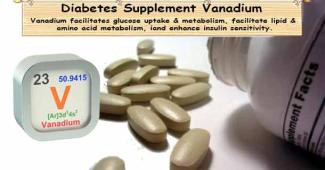
Vanadium can facilitate glucose uptake and metabolism, facilitate lipid and amino acid metabolism, improve thyroid function, and enhance insulin sensitivity.
Vanadium and Diabetes
Vanadium exists in vanadate and vanadyl forms that are most common in biological systems. Vanadyl sulfate and sodium metavanadate are in use as supplemental forms.
Pharmacological doses in human improvise lipid and glucose metabolism by enhancing glucose oxidation, glycogen synthesis, and hepatic glucose output. Vanadium performs primarily as an insulin mimetic agent, it enhances insulin activity and increased insulin sensitivity. Thus, it helps diabetics to attain their normal blood-glucose level and stop or postpone diabetes complications.
Vanadium mechanism of action
The trace element vanadium has the property similar to insulin. However, the mechanism of action of vanadium in metabolic effects is remaining poorly understood whether it is directly mimics or rather enhances insulin effects.
Although different studies confirm that activation of the insulin receptor, will affect various insulin signaling pathways and may lead to regulation of the insulin receptor and subsequent intracellular signaling pathways.
Benefits of Vanadium supplements
Many studies evaluated some benefit of the use of oral vanadium supplements in diabetes. Most focused on the type 2 diabetes, although vanadium also has a potential benefit in type 1 diabetes.
In subjects with type 2 diabetes, vanadium increased insulin sensitivity as assessed by euglycemic, hyperinsulinemic clamp studies. Increase in Glucose oxidation and glycogen synthesis, and suppress hepatic glucose output.
In type 1 diabetes, vanadium cannot affect insulin sensitivity, although daily insulin doses slowly declined. Regular supplement intake decreased FBG, HbA1c, and cholesterol levels.
Vanadium acts similar to insulin in the body, so it may help access more energy. Additionally, it believes to decrease cholesterol levels and promote bone formation.
Recommended dosage for Vanadium
There are different suggested dosages for vanadium, but it is better to go with low values to get its benefits without any unnecessary side effects.
Many expert institutions suggest taking very low vanadium dosage that is less than 1.5 micrograms of vanadium, is safe to attain its benefits.
Health risks of too much of Vanadium
High dosages of vanadium that is more than 1.8 milligrams per day may cause liver or kidney damage.
Common side effects of too much of vanadium include stomach pain, diarrhea, nausea, vomiting, and gas.
People with kidney and/or liver diseases should not recommend for vanadium supplementation.
Medication that may interact with Vanadium
Following medications may interact with vanadium, so consult your health care provider before taking vanadium supplementation.
Blood thinning drugs such as Anticoagulant or antiplatelet may interact with the vanadium, and its effects multiply and so may increase the risk of bleeding. Some of the blood-thinning medication is:
- Clopidogrel (Plavix)
- Warfarin (Coumadin)
- Heparin
- Aspirin
Vanadium may lower blood sugar levels, so people on diabetes medications are at the risk of developing hypoglycemia and thus needs to adjust (lower) their medication dosage.
Natural sources of Vanadium
Our body absorbs only about 5% of the vanadium available in the food. The best sources are mushrooms, shellfish, black pepper, parsley, dill weed, beer, wine, and grain.
Chemical form of Vanadium
Vanadium is existed in several forms, including vandal sulfate and vanadate. Vanadyl sulfate is most commonly available in nutritional supplements.
Diabetes Supplement Chromium

Many minerals are helpful in diabetes management, and it can slow down diabetes complications. One of the most important such minerals is Chromium.
Chromium and Diabetes
Chromium is an important supplement for diabetes, because its function is to convert a carbohydrate into glucose. Chromium helps in the regulation and production of insulin (hormone). Research shows that chromium is vital for effective function of insulin hormone; insulin would not work properly without chromium. In addition, it improves the body’s ability to utilize (burnt) glucose.
Thus, a chromium supplement improves glucose tolerance and helps to attain a normal blood-glucose level in blood. It enhances insulin secretion and decreases triglycerides. Chromium also appears to be directly involved in carbohydrate, fat, and protein metabolism.
Chromium mechanism of action
Chromium appears to act by enhancing insulin’s actions. Chromium’s actions may be due to an increase in the number of insulin receptors, increased binding of insulin to the insulin receptor, and increased activation of the insulin receptor in the presence of insulin.
Why is diabetes requiring chromium supplements?
There is no study confirms the evidence that diabetics have increased rates of chromium deficiency. Still micronutrient deficiencies are frequently among diabetics, because risk factors for chromium deficiency are stress, infection, and heavy exercising.
Chromium deficiency impairs the body's ability to use glucose to meet its energy needs and raises insulin requirements. Therefore, chromium supplements may help to control type 2 diabetes or the glucose and insulin responses in persons at high risk of developing the disease.
Hypoglycemia and chromium
A study to determine if chromium is involved in hypoglycemia, eight female patients with frequent hypoglycemia symptoms were supplemented with 200 micrograms of chromic chloride for three months. Chromium supplementation eliminates the hypoglycemic symptoms. Chromium supplements significantly improve insulin binding to red blood cells and insulin receptor number. This study suggests that impaired chromium nutrition may be a factor for the cause of hypoglycemia instances.
Recommended dose of Chromium
Chromium deficiency may lead to impaired glucose tolerance. Adequate intake (AI) of chromium for women is 25 micrograms and for men is 35 micrograms. There is no estimate for the tolerable upper level (UL) for chromium.
Numerous research studies confirm that high level of chromium (200 to 1000 micrograms of chromium picolinate/day) supplement intake helps to decline HbA1c, fasting blood-glucose, oral glucose tolerance, and cholesterol levels.
What are the health risks of too much chromium?
Very few serious side effects have to link with too many intakes of chromium, so there has been no Upper Intake Level (UL) established for chromium. A UL is the maximum allowable daily intake of a nutrient that is may cause adverse health effects.
There are few reports of kidney and liver damage in patients who are in chromium supplements. So it is advised to those who already have kidney or liver problems should stop taking chromium supplement instead they may have considered to take foods richer in chromium.
Chromium might affect brain chemistry and might make behavioral or psychiatric conditions worse. If you have these conditions, be careful when using chromium supplements.
Medications that may interact with chromium supplements
Below mentioned medications may interact with chromium supplements, thus alter the chromium absorption or the medication’s effect may be enhanced.
- Antacids
- Corticosteroids
- H2 blockers (such as cimetidine, famotidine, nizatidine, and rantidine)
- Proton-pump inhibitors (such as omeprazole, lansoprazole, rabeprazole, pantoprazole, and esomeprazole)
- Beta-blockers (such as atenolol or propanolol)
- Corticosteroids
- Insulin
- Nicotinic acid
- Nonsteroidal anti-inflammatory drugs (NSAIDS)
- Prostaglandin inhibitors (such as ibuprofen, indomethacin, naproxen, piroxicam, and aspirin)
Too much of chromium may decrease zinc absorption. Vitamin C and aspirin may enhance chromium absorption.
Natural sources of Chromium
Natural sources of chromium are whole grains, cheese, dried beans, nuts/seeds, mushrooms, Apple peel, banana, beef, wheat germ, brown sugar, butter, dairy products, mushrooms, oat straw, oysters and broccoli, as well as brewer's yeast, certain beers and wines.
Chemical form of Chromium supplement
Chemical forms of chromium are chromium picolinate, chromium nicolinate, chromium nicotinate, chromium (III) chloride hexahydrate, chromium amino acid chelate, GTF chromium.
Diabetes Supplements

Nutritional supplements help effectively manage diabetes and its complications. Some common diabetes nutritional supplements can be available here.
Micronutrients Diabetes
Micronutrients are vitamins & minerals that are required in micro quantities by our bodies for specific proper functioning. These micronutrients mostly function as coenzymes & cofactors for our body’s metabolic reactions. It supports cellular reactions (such as glucose, lipid, and amino acid metabolism) which are required for energy and life. Deficiency of these micronutrients can lead to serious health conditions.
The micro minerals include iron, iodine, manganese, cobalt, chromium, copper, selenium, zinc, and molybdenum. Micronutrients also include vitamins, which are required as nutrients in micro quantity by an organism.
Nutritional Diabetes Supplements
Micronutrients are in continuous investigation as prevention & treatment supplement for both diabetes type 1 and type 2 as well as for common complications of diabetes. Many diabetes institutions are not in support of nutritional supplementations that include American Diabetes Association. However, many experience diabetics believe that they benefit with diabetes nutritional supplements and taking the supplements even many experts suggest against this and mention these supplement produces only costly urine (means most of this costly supplement only removed through urine).
What can you expect from Diabetes Nutrition Supplements?
Diabetes supplements in some extents can help blood-glucose control in many ways:
- They may help effective metabolism of glucose and thus helps to support efficient blood-glucose level.
- They may help to improve the body’s sensitivity to insulin (or insulin's effectiveness) and thus helps support effective blood-glucose level.
- They may help faster recovery from wounds, illness, etc.
- They may help to prevent/manage neuropathy.
- They may help to avoid or to manage diabetes complications.
Some of the popular Diabetes Nutrition Supplements
There are many minerals and vitamins beneficial to diabetes management. The most popular diabetes nutritional supplements are:
- Chromium
- Vanadium
- Zinc
- Calcium
- Magnesium
- Vitamins B, C, D, E, H
- Alpha lipoic acid
- Co-enzyme Q10
- Brewers Yeast
Minerals are vital for the body structure’s formation (bones & tissues) and for proper physiological processes (metabolism & energy production). The above said various minerals and vitamins are helpful in diabetes management as well as stop or treat its complications.
Diabetic Coma Treatments
Treatment for a diabetic coma depends on the level of blood sugar, whether it is too high or low. If someone, whose glucose level is not low do not give them sugar.
Diabetes coma treatment
Diabetes coma treatment is always based on the diagnosis of the cause of diabetes coma, whether coma happens due to high or low blood-sugar level.
Diabetes coma management during High blood-sugar
If the blood-sugar level is too high, then need:
- Intravenous fluids to restore water (hydrate)
- Electrolytes such as Potassium, sodium or phosphate supplements to help the cells function correctly
- Insulin to help the tissues absorb glucose and bring back normal blood-glucose level
- Treatment for any underlying infections
Diabetes coma management during Low blood-sugar
If your blood-sugar level is too low, then need:
- Glucagon injection, which helps to raise the blood-sugar level quickly
Diabetic coma is relieved and the consciousness returns when blood sugar brought back to normal level.
Diabetic Coma Diagnosis
Diabetic coma diagnosis starts by testing blood-sugar level, ketones in the urine and various salt levels in the blood.
Diabetic Coma Tests
It may need various tests to measure:
- Physical test for a sign of dehydration
- Symptoms of neurological problems
- Blood-sugar level
- Ketone level
- Amount of nitrogen or creatinine, a breakdown product of creatine, an important part of the skeletal muscle
- Amount of various salts such as potassium, phosphate, and sodium in the blood
- Arterial plasma pH - A pH of 7.3 or higher defines diabetic hyperosmolar syndrome.
- Serum osmolality – normal range is 280 - 290 mOsm/kg. A serum osmolality of 320 mOsm/kg or more defines hyperosmolar syndrome.
Diabetic Coma Causes
Diabetics with prolonged blood-sugar extremes (either too high or too low blood-sugar level) may lead to a diabetic coma.
Causes of Diabetes coma
Many condition diabetes conditions lead to the cause of diabetes coma. They are:
- Diabetic ketoacidosis (DKA) - If the muscle cells become energy starved, and the body may respond by breaking down stored fats. Breaking down of fats produces a toxic acid known as ketones and this breakdown is called as ketoacidosis. If it left untreated, DKA can lead to a diabetic coma. DKA is most common among diabetes type 1, but can also affect the type 2 diabetes or gestational diabetes.
- Diabetic hyperosmolar syndrome - If the blood-sugar level rises to 600 milligrams per deciliter (mg/dL), or 33 millimoles per liter (mmol/L) it is called as diabetic hyperosmolar syndrome. Such a high level of glucose in blood makes the blood thicker like syrup. This excess sugar level is removed from the blood through the urine, which remove tremendous amounts of fluid from the body causing dehydration. If it left untreated diabetic hyperosomolar syndrome can lead to dangerous dehydration and coma. Hyperosmolar syndrome is more common among type 2 diabetes.
- Hypoglycemia - Brain needs glucose to function properly. An extreme low blood-sugar level may lead to pass out. Hypoglycemia can be caused by large quantityof insulin or too little of food or vigorous exercise or drinking lot of alcohol.
Anyone who has diabetes is at risk of a diabetic coma.
- Type 1 is more at risk of a diabetic coma caused by: Low blood-sugar (hypoglycemia), and DKA
- Type 2 is more at risk of a diabetic coma caused by: hyperosmolar syndrome.
Diabetic coma risk factors.
Some factors can increase the risk of diabetic coma they include:
- Insulin delivery system problems - If on an insulin pump, a kink in the insulin pump’s tubing may hinder insulin delivery. Lack of insulin supply can lead to diabetic ketoacidosis.
- Any illness, trauma, or surgery - When sick or injured, blood-sugar levels normally tend to rise even dramatically. This may lead to DKA in case of type 1 diabetic. Other health conditions, such as congestive heart failure or kidney disease, can increase the risk of diabetic hyperosmolar syndrome.
- Poorly managed diabetes - If you do not monitor and control the blood-sugar level properly, then it may increase the chances diabetic coma.
- Skipping insulin – skipping or forget a dose of insulin as advised by the doctor, can increase the risk of having diabetes coma.
- Drinking too much of alcohol - Alcohol produce unpredictable swing in blood-sugar level, even it can drop glucose levels for a day or two after alcohol consumption. This can increase diabetic coma risk due to hypoglycemia.
- Illegal drug use - can increase the diabetic coma risk due to severe high blood-sugar levels.
If it left untreated, diabetic coma can lead to Permanent brain damage and even Death. However, timely treatment can help to avoid any undo incidents.
Diabetic Coma Symptoms
Usually diabetic coma has signs and symptoms of the condition that is behind its cause; they are high-blood-sugar (hyperglycemia) and low-blood-sugar (hypoglycemia).
Symptoms of Diabetic Coma
Usually diabetic coma has signs and symptoms (hyperglycemia/hypoglycemia)
If have hyperglycemia, you may experience few of these symptoms:
- Too much thirst
- Urinate frequently
- Weakness or fatigue
- Drowsiness
- Nausea and vomiting
- Shortness of breath
- Pain in the abdominal (Stomach pain)
- Appetite loss
- Low pulse and low blood pressure
- Fruity-scented breath
- Confusion
If have Low blood-sugar (hypoglycemia), you may experience few of these symptoms:
- Trembling, Shaky or nervous, Poor coordination and difficulty walking
- Tired, lack of energy, feels weak, Fatigue, lethargy, or drowsy
- Sweating, cold, clammy even without any physical activity
- Hungry
- Nausea
- Rapid heartbeat
- Irritability, anxiety, restlessness, or anger
- Confused, thinking difficulty, concentration difficulty
- Blurred vision, dizziness, lightheaded, or headache
- Talking difficulty - staggering or slurred speech
Many people even sometime may experience hypoglycemia without any warning symptoms.
If you experience any of the symptoms of high or low blood-sugar, immediately test your blood-glucose level and based on the result start treatment accordingly. If the symptoms do not subside or if the symptoms worsen, request emergency help.
Diabetic hyperosmolar syndrome in type 2 diabetes may take days or even weeks to develop.
Possible diabetic hyperosmolar signs and symptoms may include:
- High blood-sugar level
- Too much thirst
- Mouth dryness
- Increased urination
- Warm, dry skin without sweat
- Fever
- Sleepiness
- Confusion, thinking difficulty
- Hallucinations
- Blurred loss
- One sided body weakness
Diabetic Coma
Coma is an unconscious state; patient cannot be able to respond for external environmental stimulus such as light, sound, etc. Coma caused by diabetes is called as Diabetic Coma.
Coma
Coma is a state of unconsciousness in which a patient cannot be able to react with the surrounding environment, not waken by physical or audible stimulations, which helps to differentiate coma from sleep. Patients can have various levels of unconsciousness/unresponsiveness depending upon how much/little of the brain is functioning.
Diabetic Coma
Diabetic coma is a reversible form of coma among diabetics.
Dangerously high hyperglycemia (high blood-sugar) or low hypoglycemia (low blood-sugar) can cause diabetic coma. If one happens to have this condition, he/she is alive but cannot be able to awake or respond properly to sights, sounds or other stimulation. If left untreated it can be fatal, fortunately one can take steps to prevent diabetic coma.
Diabetic’s type 1 is especially more prone to diabetic coma than type 2. It is impossible to confirm what cause the diabetic coma, whether it is hypoglycemia or hyperglycemia without blood-sugar test, because the symptoms of hypo/hyper glucose are almost the same. It is estimated that 2 to 15 percent of people with diabetes will suffer at least once with diabetic coma during their lifetimes because of severe hypoglycemia.
Before late 1970s, it is very difficult to diagnose, but it becomes simple with the introduction of glucose meters.
Glucose is one of the most vital elements for the human body that helps keep the metabolism in proper condition. When your glucose level in blood drops, low called hypoglycemia or if the glucose level in blood rises called hyperglycemia. It disturbed normal metabolism of the body, in particular, the brain cell starts to malfunction. These conditions result in variance in osmotic pressure on the cells causing dehydration and electrolyte imbalance leads to diabetic coma. These conditions can be reversible easily if diagnose in time and treated before it is too late.
Uncontrolled blood-sugar level is the major contributing factor for diabetic coma. Some of the conditions caused by blood-glucose-level extremes such as Hypoglycemia, ketoacidosis, and diabetic hyperosmolar syndrome can lead to diabetic coma and even death if not properly treated in time.
About Us
Healthy-ojas is a private organization, our goal is to promote health and help people to enjoy their life to the fullest, and to help treat those who are affected by illnesses.
Mission Statement
The mission of Healthy-ojas is to provide accurate and detailed information about health conditions, and its treatment by both modern allopathic medicine and traditional complementary & alternative medicines (CAM), such as herbal remedies, yoga poses, acupressure, and reflexology massages.
We aim to provide the most authoritative and trusted reference information on common health conditions, which are easily understandable. We collect information from most authenticated resources in the web after stringent analysis of the information. We provide up to date information for free of charge.
We are committed to improving our services to achieve the highest quality of information for our audience.
About author
Healthy-ojas is primarily written by me Thiruvelan, Bachelor in Engineering (BE, Instrumentation & Control Engineering). I have ten years of experience in writing articles related to health and wellness. I am also holding M.Sc. in Yoga.
We provide up to date information for free of charge, the information is from most authenticated books and other resources such as clinical studies in the web after stringent analysis of the information. See disclaimer for further information.
Author e-mail: r.thiruvelan(at)yahoo.com
Peer review
Peer review is the evaluation of content by other people in the same field to maintain/enhance the quality of the content. It helps to find errors in the content and able to makes the content more impartial.
Healthy-ojas is Peer reviewed by Mr. S. Ramasamy and Mrs. V. Manjula. Both of them does not have any professional standing in any field of medicine. But have personal experience in the field of medicine and alternative treatments.
Intended Audience
Healthy-ojas intention is providing quality information written in an easy to understand format for the general public as well as to health care professionals. And we are always striving for quality and reliable information expected by you all.
Source of fund
Healthy-ojas is an independent entity. We are not funded or supported by any third party. We do, however, host Google sponsored ads. We do not have control over Google ads content, and our editorial content are free of any commercial influence. Please see our advertising policy and privacy policy for more information.
Linking policy
For your convenience, Healthy-ojas provides links to third party websites and we want you to understand that Healthy-ojas does not assume any responsibility for the: (1) content of, (2) technology implemented by, or (3) privacy practices of these third party websites. You should review the privacy policy and terms of use for each of these websites to make sure they are acceptable to you. The link to a third party website provided on this website does not imply endorsement of or responsibility for such linked website by Healthy-ojas and we are not responsible for any information you submit to them.
Healthy-ojas does not guarantee that the functions contained on this website will be uninterrupted or error-free, that this website or its server will be free of viruses or other harmful components, or that defects will be corrected even if Healthy-ojas is aware of them.
Please understand that Healthy-ojas disclaims all responsibility for any loss, injury, claim, liability, or damage of any kind resulting from, arising out of, or in any way related to: (1) any errors in or omissions from this website, including but not limited to technical inaccuracies and typographical errors; (2) any third party websites or content therein directly or indirectly accessed through links in this website; (3) the unavailability of this website or any portion of this website; (4) your use of this website; or (5) your use of any equipment or software in connection with this website.
Copyright Policy
Healthy-ojas grants you a non-exclusive, non-transferable, limited license to view this website, and to download and/or print insignificant portions of materials retrieved from this website provided: (1) it is used only for informational, non-commercial purposes; and (2) you do not remove or obscure the copyright notice or other notices. Except for this grant, no part of this website may be reproduced, republished, copied, transmitted, or distributed in any form without our written consent. Please understand that the above grant does not include any linked websites.
Unless otherwise noted on this website, all right, title and interest (including all copyrights, trademarks and other intellectual property rights) in this website belongs to Healthy-ojas. The names, images, pictures, logos and icons are proprietary marks of Healthy-ojas. Except as expressly provided above, nothing on this website shall be construed as conferring any license or right under copyright, trademark or other intellectual property rights.