
Low blood pressure Range
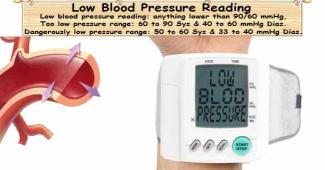
Hypotension reading is much harder to quantify; let us see numbers for low blood pressure, too low blood pressure, and dangerously low blood pressure range.
Blood pressure is the force of blood pushing against the walls of the arteries as the heart pumps. If this reading is, lower than certain BP range is considering as hypotension reading.
Blood pressure
Before going into the details of hypotension range of reading, we first know what blood pressure is and what this reading provides us.
In a blood pressure reading there are two numbers one over or next to the other, they are:
- Systolic pressure: The first number in a pressure reading refers to the amount of pressure in the arteries when the heart pumps blood to facilitate blood circulation to the entire body.
- Diastolic pressure: The second number in a pressure reading refers to the amount of pressure in the arteries when the heart is at rest between beats.
Although one can get an accurate blood pressure reading at any given time, the pressure is not static. Pressure is usually lowest at night and rises sharply on waking.
Pressure can vary considerably in a short time, sometime from one heartbeat to the next, depending on body position, breathe rhythm, stress, physical condition, medications you take, what you ate. & drank, and even time of day.
Low blood pressure reading
Hypotension is much harder to quantify; current guidelines identify normal pressure as 120/80 mmHg (healthy BP 110/70). Some medical experts define low blood pressure readings as a value that is lower than below said values:
- systolic pressure 90 mmHg or
- diastolic pressure 60 mmHg
Pressure reading with just only one number (systolic or diastolic) is in the low range is considered as low blood pressure. For example, if one has a systolic pressure of perfect 120, but the diastolic pressure of 50 is considering as hypotension.
Too low blood pressure reading
If the blood pressure drops well below low blood pressure range to a level of:
- Systolic pressure below 60 mmHg or
- Diastolic pressure below 40 mmHg
Then it is considering as too low blood pressure.
Dangerously low blood pressure
If the blood pressure fall below too low blood pressure range, which is dangerous to your health is considering as highly (dangerous) low blood pressure. The blood pressure reading that is considering being high-low blood pressure if:
- Systolic pressure drops below 50 mmHg or
- Diastolic pressure drops below 33 mmHg
A sudden fall in pressure can be more dangerous; a change (drop) of 20 mm Hg from 130 to 110 systolic can cause dizziness and fainting. It is because the brain fails to receive an adequate supply of blood.
Natural CAM Treatment for Cholesterol
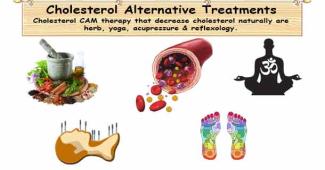
Alternative medicine practitioners believe that natural treatment may support conventional high cholesterol treatment by stimulating intestinal organs responsible for the illness.
How you might respond to alternative medicine treatment depends on many things, including your state of health, how you use it, or your belief in it.
3 Types of CAM Treatment
What is CAM? Complementary and alternative medicine (CAM) refers to therapies other than conventional medicine. Complementary refers to therapies used in conjunction with conventional medicine that complements the treatment.
What is Alternative medicine? Alternative medicine refers to therapies used in place of conventional medicine.
CAM use among adults is greater among women and those with higher levels of education and higher incomes.
The National Center for Complementary and Alternative Medicine, a federal scientific agency categorizes CAM into three broad groups that include:
- Natural products – This include dietary supplements such as vitamins, minerals, herbs, probiotics, special diets, and functional foods.
- Manipulative practices - massage, chiropractic, osteopathy, and reflexology.
- Mind-body medicine - include yoga, meditation, hypnosis, Tai Qi, and qigong.
Reference: NCCAM Special Report.
In the United States, approximately 38 % of adults (about 4 in 10) and approximately 12 % of children (about 1 in 9) are using CAM.
Reference: The Use of Complementary and Alternative Medicine in the United States.
According to a report from the Fraser Institute, 50% to 79% of Canadians had used at least 1 CAM sometime in their lives, based on surveys from 1997, 2006 and 2016.
Reference: Complementary and Alternative Medicine: Use and Public Attitudes 1997, 2006, and 2016.
68.9% of those interviewed used at least one form of CAM and 44.1% visited a CAM practitioner. CAM users were: age 18-34; female; employed; well-educated; private health insurance coverage; and higher-than-average incomes.
Reference: Complementary and alternative medicine use in Australia: a national population-based survey.
Most commonly used CAM in 2016 were massage (44%), chiropractic (42%), yoga (27%), relaxation techniques (25%), and acupuncture (22%).
4 Effective Cholesterol Alternative Treatments
Here we have provided you a few cholesterol natural treatments considered to be useful in high cholesterol treatment. The proper combination of these medicinal systems called complementary or integrative therapy may be more helpful.
Co-administration of conventional drug and herbal medicine may cause potential interactions that lead to adverse events. So get doctor’s consent before starting herbal treatment.
Cholesterol Herbs - also called botanical medicine that utilizes plants parts such as seeds, berries, roots, leaves, bark, or flowers to lower blood cholesterol and to help dissolve block.
Herbal medicine has its origins in ancient cultures including those of the Egyptians, American Indians, and Chinese.
Herbal medicine contains phytochemical nutrients evoke responses in our body to balance, heal and restore health. Additionally, it nourishes small intestine, liver, heart, and kidney; organs responsible for the illness or under risk towards cholesterol complications.
For more information visit cholesterol herbal treatment, also visit Cinnamon, Arjuna, Coriander, Holy Basil, Red Yeast Rice, Fenugreek, Licorice, Hawthorn, and Alfalfa.
Yoga should be learned under the guidance of a qualified yoga professional. And you should not push yourselves beyond your physical capacity.
Cholesterol Yoga - Yoga refers to be the traditional physical and mental disciplines with healing power originated in India some 5000 years ago.
Yoga poses can balance body, mind, and spirit. Yoga helps to regulate the nervous system, increase vagal tone, and the body’s ability to successfully respond to stress. The vagal tone starts at the base of the skull and travels throughout the body, touching the respiratory, digestive, and nervous systems.
Yoga was the most commonly used complementary health approach among U.S. adults in 2012 (9.5%) and 2017 (14.3%).
Mostly, inflammation (allergy), digestion problems or liver functional problem is the most likely cause for high-cholesterol levels. Yoga supports cholesterol treatment by correcting these problems. For more detailed information on yoga, visit cholesterol yoga.
Acupressure is proved to be safe. But if you are interested in acupuncture then contact a qualified acupuncture expert, because improper acupuncture treatment might hurt you.
Cholesterol Acupressure - According to Traditional Chinese Medicine, a block in the flow of chi (vital energy) results in disease. To release this blockage or to restore normal energy flow, specific acupressure points should be stimulated.
According to Chinese medical theory, there are four patterns of high-cholesterol. They are damp phlegm lungs/spleen, blood stasis, spleen/stomach deficiency, liver/kidney deficiency.
By putting firm pressure on the right acupressure points, you can better manage various diseases including high cholesterol. To learn more about acupoints for high cholesterol treatment, visit acupressure cholesterol healing.
Reflexology is generally considered safe. Aged people with neuropathy need to massage with correct gentle pressure, otherwise weak blood vessels might get damaged.
Cholesterol Reflexology Massage - The body organs have reflex points on the foot and hands. By manipulating these points with gentle firm massage, you can stimulate the reflex organ to work to its full efficiency.
By massaging organs associated with high cholesterol to help manage blood cholesterol, additionally bring back wellness and prevent/heal cholesterol complications such as heart attack. To learn more about reflex points for high cholesterol treatment, visit reflexology cholesterol massage.
How can you implement cholesterol natural treatment?
Always don’t give-up your conventional treatment while trying natural alternative medicine.
Stopping convention treatment (medicine) to try alternative medicine is a dangerous idea in case of familial hypercholesterolemia and it might lead to very high blood cholesterol and increased risk towards a heart attack. You must consult your health care professional before trying any of these alternative medicines.
An alternative therapy effective for your friend or relative may be ineffective for you.
While you are on the conventional treatment, you can try alternative medicine to better manage your blood cholesterol level.
For example, you can first add yoga along with your conventional treatment. Once you are satisfied with the cholesterol-lowering result, you can add more natural treatment such as acupressure and reflexology until your blood cholesterol reaches your target range.
In the case of high cholesterol, you can add more natural treatments (herb, yoga, acupressure & then reflexology) until you reach the target cholesterol number, then you can reduce medication dosage and even eliminate them.
However, if your high cholesterol is due to familial hypercholesterolemia, then you must be more vigilant and accordingly, you need to take corrective measures.
Alternative medicine & Cholesterol complications
Alternative treatments not only help to manage cholesterol level; furthermore, it is useful for cholesterol complications such as Atherosclerosis, Angina, Coronary heart disease, Heart attack, Heart failure, and Stroke or Brain attack. Also, it can strengthen the heart, stimulate liver function, improves digestion, and detoxify your system. That is it improves your overall wellness – you feel healthy, energetic, and young.
Niacin
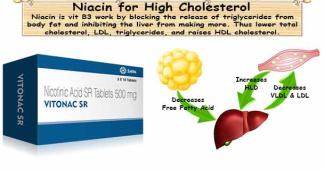
Niacin known as vitamin B3 is present in dairy products, poultry, fish, lean meats, nuts, and eggs. Legumes and enriched bread and cereals also supply some niacin.
What is Niacin? How does it work?
What is Niacin? Niacin (nicotinic acid) is a vitamin B3 essential for our body to turn carbohydrates into energy. Niacin also helps to keep our nervous system, digestive system, skin, hair, and eyes healthy. It reduces the production of triglycerides and VLDL. It leads to decreased LDL cholesterol, increased HDL cholesterol, and lowered triglycerides. You should take this medicine only under a doctor’s supervision.
Nicotinamide, another form of the vitamin niacin, does not lower cholesterol levels and should not use in the place of nicotinic acid.
How does Niacin work? Niacin works by blocking the release of triglycerides from storage (body fat) and by inhibiting the liver from making more from blood sugar by blocking hepatocyte diacylglycerol acyltransferase 1 and 2 (DGAT1 and DGAT2), distinctly different enzymes for triglyceride synthesis. Results in decreased triglyceride synthesis and hepatic atherogenic lipoprotein secretion. It thus improves all lipoproteins; lower total cholesterol, LDL, triglycerides, and raises HDL cholesterol.
Available niacin brands
Common Niacin drugs available in the market are:
Niacin brand names include Niacor® - immediate release, Niaspan® - sustained release, Slo-Niacin®, Nicolar, Nicotinex Elixir, Novo-Niacin, and several others.
Niacin drug types that are available in three formulations:
- IR or immediate release,
- SR or sustained release or timed release
- ER or extended release forms.
The doctor prescribes immediate release form niacin at the starting; discussing with the doctor, which one is best suitable for you.
What can expect from niacin drug medication? Niacin has shown to benefit all aspects of the lipid profile by lowering LDL cholesterol by 15% to 25%, lowering triglycerides by 20% to 50%, and raising HDL cholesterol by 15% to 30%.
Studies in patients with various disorders of lipid metabolism show that niacin significantly raises HDL-C and lowers total cholesterol, low-density lipoprotein cholesterol (LDL-C), triglycerides, and lipoprotein(a).
How do you take niacin drugs? Niacin is usually started on a low dosage and gradually increases it to an average daily dose of 1.5 to 3 grams for the immediate release form, and 1.5 to 2 grams for the other forms. Niacin is usually good to take at bedtime with a low-fat snack. Take this medication with a full glass of cool water; taking with a hot drink may increase your risk of side effects such as flushing.
How much niacin do you need to lower your cholesterol? Niacin is essential for normal function of the nervous system and the maintain healthy skin and mucous membranes. Without niacin, your body cannot convert food into glucose to produce energy.
The Food and Nutrition Board has set the recommended daily allowance (RDA) for niacin at 20 mg/day and the upper safe limit (UL) at 35 mg/day. However, to treat high cholesterol, doctors prescribe 2000 mg/day niacin that is more than 50 times the UL.
Many patients argue that high dose niacin causes severe side effect and not easy tolerable. And many experienced patients suggest taking vitamin D (through lots of sunshine), 2000 mg vitamin C per day in the morning and evening (4000 total), and 100 mg/day of thiamine in the morning and evening (200 mg/day).
Niacin alone is not the best way to solve your problems with cholesterol and triglycerides. You should also be getting optimal doses of vitamin D (exposing to lots of sunshine), 2000 mg vitamin C twice daily, 100 mg of thiamine twice daily, and 250 mg extended release niacin twice or thrice per week. These doses are the upper limits recommended by the food and nutrition board. Thus 95% of the population can handle these doses without side effects.
Who can use niacin drugs?
Niacin is a B vitamin that should take only under physician supervision. Before taking niacin, consult your doctor if you are allergic to any drugs, or if you have liver, kidney, or heart disease, uncontrolled angina (chest pain), stomach ulcer, diabetes, gout, or a muscle disorder such as myasthenia gravis.
If you have any of these conditions, then you may need to adjust the dosage or not able to use it.
12+ Possible side effects of niacin
Rapid release niacin as little as 35 mg with a hot coffee on an empty stomach first thing in the morning can cause flushing. Avoid taking niacin with hot coffee.
Some of the common side effects of niacin are:
- Flushing is a very common side effect of niacin. Flushing occurs in 80 % of patients. Flushing or hot flashes may be due to blood vessel’s dilation. Flushing may be less frequent with controlled release Niaspan.
- Nausea, indigestion, gas, vomiting, diarrhea, and the activation of peptic ulcers.
- Itching, paresthesia, and nausea each occur in about 20 percent.
- Elevation of liver enzymes is relatively common on niacin and may progress to liver damage. Therefore, regular monitoring of liver tests is mandatory.
- Niacin may cause insulin resistance and raise fasting glucose levels. Important if diabetes: Niacin may increase the blood-glucose level, so diabetic should be careful.
- Niacin may increase plasma levels of uric acid and precipitate acute gouty arthritis. The drug should avoid in patients with a history of gout.
- Nervousness, Panic, anxiety, rapid heartbeat, and fainting.
- Tooth and Gum Pain
- Decreased Thyroid function.
- Blurred vision, lazy eye
- Lower blood pressure - Important if high blood pressure: Effect of hypertension medication drug may increase while on niacin.
- Headache
The extended release form may cause fewer flushing than the other forms. Patients who take niacin should closely monitor by their doctor to avoid complications from this medication drug. Self-medication should avoid because of the possibility of missing a serious side effect if not under a doctor's care.
Fibrates
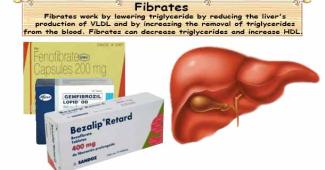
Fibrate is commonly prescribing treating high cholesterol and triglycerides. This cholesterol drug decreases triglycerides by reducing liver's production of very-low-density lipoprotein (VLDL) and speeding up the removal of triglycerides from the blood.
What are Fibrates? How does it work?
What are Fibrates? Fibrates is a class of medication that reduces the liver's VLDL production and speeds up the removal of triglycerides from the blood. This drug lower blood triglyceride level. Fibrates are modestly effective in increasing HDL cholesterol. However, fibrates are not effective in lowering LDL cholesterol. When used with statins, fibrates may increase the risk of muscle problems.
How do Fibrates work? Fibrates work by lowering triglyceride by reducing the liver's production of VLDL (the triglyceride-carrying particle in the blood) and by increasing the effect of the enzyme responsible for the removal of triglycerides from the blood. Fibrates can decrease triglycerides and increase HDL.
What can you expect from Fibrates? Fibrates can lower triglycerides by about 20 to 50 percent with increases in HDL cholesterol of 10 to 15 percent.
How do you take Fibrates drugs? Usually, Fibrates prescribes in two daily doses 30 minutes before the morning and evening meals.
Who can use Fibrates drugs?
Fibrates are suitable for heart disease patients with elevated triglycerides and low HDL. Fibrates might reduce heart attack risk in such patients.
Who should not use fibrates? Those who are allergic to fibrates or have liver disease (such as biliary cirrhosis or gallbladder disease) or severe kidney disease, should not take these drugs.
Available Fibrates brands
Common Fibrates cholesterol drugs available on the market are:
- Bezafibrate (Bezalip)
- Fenofibrate (Lofibra, Tricor)
- Gemfibrozil (Lopid)
6+ possible side effects of Fibrates
Most patients tolerate Fibrates. Some of the rare side effects are
- Nausea, vomiting, stomach upset, stomach pain, and diarrhea.
- Headache,
- Tiredness,
- Liver irritation,
- Gallstones
- Anemia
Fibrates can cause muscle damage particularly when taken together with statin medications.
Cholesterol Absorption Inhibitors
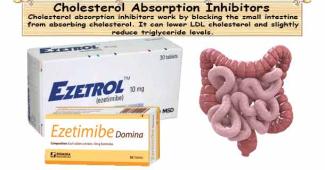
Cholesterol-absorption-inhibitors are a class of medications that prevents the absorption of cholesterol from the small intestine into the circulatory system.
What is Cholesterol Absorption Inhibitors?
What is Cholesterol Absorption Inhibitors? Cholesterol-lowering medication can lower LDL cholesterol and slightly reduce triglyceride levels without affecting the absorption of fat soluble vitamins.
How do Cholesterol Absorption Inhibitors works? Cholesterol absorption inhibitors work by blocking the small intestine from absorbing cholesterol.
There are two pathways of cholesterol absorption in the upper intestine: dietary (from food) and biliary (from bile). Food derived cholesterol is available as lipid emulsions in combination with bile salts, to form bile salt micelles from which the intestinal enterocyte can then absorb cholesterol.
Cholesterol-absorption-inhibitors are a cholesterol medication block the absorption of micellar cholesterol, thus reducing the uptake of dietary cholesterol. It depletes the liver stored cholesterol, so the liver increases hepatic LDL receptor activity and thereby increases clearance of circulating LDL. This cholesterol-lowering medication can lower LDL cholesterol and slightly reduce triglyceride levels.
What can you expect from Zetia drug medication? It lower LDL cholesterol by about 15 to 25 percent and triglycerides by 8 percent. When combining with a statin, Zetia might lower LDL cholesterol more than double that of statin alone. For the better result, you have to be strict with your lifestyle changes, such as healthy diet and increased consistent physical activity.
How do you take Zetia drugs? Take this medication drug at the same time each day with or without food. If you are taking Sequestrants, take at least two hours before or four hours after taking Zetia.
Who can use Zetia drugs?
Zetia is suitable for those who are not able to reach their cholesterol target even after taken a maximum dosage of other medications. Your doctor prescribes it if you are unable to tolerate other cholesterol medication drugs because of the liver, muscle, or other side effects.
If you need to lower LDL and triglyceride levels, then Zetia is the best option. Suggest Zetia to those who are willing to follow lifestyle changes such as healthy diet and proper physical activity; otherwise, it will not produce expected result.
Available cholesterol-absorption-inhibitor brands
Common cholesterol-absorption-inhibitor cholesterol drugs available on the market are:
- Ezetimibe (Zetia)
Zetia can be useful in combination with any of the statin drugs.
7+ Possible side effects of Zetia drugs
The most common side effects related to the use of Zetia include:
- Nausea, stomach irritation, abdominal pain, constipation, or diarrhea,
- Dizziness,
- Headache,
- Back pain, joint pain,
- Sinusitis.
- Hypersensitivity reactions include life-threatening angioedema (swelling of the skin and underlying tissues of the head and neck) and skin rash rarely occur.
- Pancreatitis, muscle damage (myopathy or rhabdomyolysis) and hepatitis have also reported.
Stop the medication drug and contact the doctor immediately if experience: Muscle tenderness or soreness, unexplained muscle pain, general malaise, fatigue and weakness, and Fever.
Kidney Disease
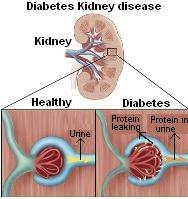
Diabetes is the most common cause of kidney failure called nephropathy, accounting nearly 44 percent of all cases.
Diabetes nephropathy overview
Kidneys are amazing organ, which have millions of tiny blood vessels that act as filters. Their prim job is to filter out waste products from the blood. Diabetes can damage the kidneys thus it losses its ability to filter out waste produce and cause them to fail permanently.
Diabetes is the leading cause of kidney failure in the developed world and accounts for approximately 35% to 40% of new cases each year. Over a lifetime, about 50% of people with type 1 diabetes develop microalbuminuria.
In the kidneys, millions of tiny blood vessels with holes in them act as filters. As the blood flows through the blood vessels, small molecules (smaller-sized particle) such as waste products pass through the holes and leave as waste products through urine. Useful substances, such as protein and red blood cells, are larger molecules (larger-sized particle) could not pass through the holes in the filter, and stay’s in the blood.
Diabetes can damage this system; high levels of blood-glucose make the kidneys filter overloads with too much of blood. This extra work produces strain to the filters, in a due course they start to leak and useful protein is lost in the urine. Small amount of protein appearing in the urine is called microalbuminuria. When kidney disease is diagnosed at this stage, several treatments may help keep kidney disease from getting worse.
Bile Acid Sequestrants
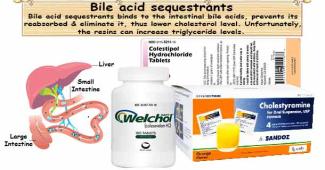
The bile acid sequestrants are a group of medications that binds with bile in the gastrointestinal tract, which helps the lower cholesterol levels.
What is Bile acid sequestrants? How does it work?
What is Bile acid sequestrants? Bile acid sequestrants help to lower LDL cholesterol level in the blood circulation. These medicines usually prescribed along with other cholesterol-lowering medicine e.g. Statins.
How does Bile acid sequestrants? It binds to the intestinal bile acids, prevents its reabsorbed, and eliminate it. Therefore, the liver has to use stored fat to synthesize bile acid to make up the losses. Thus, lower cholesterol level in the blood circulation. Unfortunately, the resins can increase triglyceride levels.
What can expect from bile-acid-sequestrates drug medication? Sequestrants can lower LDL cholesterol by about 15 to 30 percent. Raise HDL cholesterol by 3% to 5%. May increase triglycerides. Even small doses of sequestrants can reduce LDL cholesterol. Sometimes, the doctor may prescribe bile acid sequestrants along with statin for patients with heart disease to increase cholesterol reduction. This combination can add up benefits of this both medication types to lower LDL cholesterol by over 40 %.
How do you take bile-acid-sequestrates drugs? These drugs are available as powders or tablets. The powders must mix with water or fruit juice and taken once, twice, or rarely three times a day with meals. Tablets must take with a lot of fluids just to avoid gastrointestinal symptoms. It may interfere with the absorption of other drugs thus, should take other medication drugs at least one hour before or four to six hours after.
Who can use Bile acid sequestrant drugs?
Bile acid sequestrant is suitable for those who have elevated cholesterol (particularly total cholesterol, and LDL cholesterol levels) and if unable to tolerate other cholesterol medications, because of the side effects of liver or muscle.
The bile acid sequestrant drugs are one of the earliest classes of medications used to lower cholesterol levels. Presently, doctors avoid prescribing it, because of their various side effects.
Available Bile acid sequestrants brands
Common bile-acid-sequestrants cholesterol drugs available on the market are:
- Cholestyramine (Questran®, Questran® Light, Prevalite®, Locholest®, Locholest® Light)
- Colestipol (Colestid®)
- Colesevelam HCl (WelChol®
4+ Side effects of Bile-acid-sequestrates
The most common side effects of Bile acid sequestrants are:
- Gastrointestinal side effects predominate; they are vomiting, heartburn, bloating, abdominal pain, an excess of intestinal gas (flatulence), constipation, and diarrhea.
- Interfering with vitamin absorption, thus could cause vitamin deficiencies.
- Gallstones
- Weight loss
These symptoms will be likely to disappear after a week or so. If problems with constipation develop and last more than one week, add stewed prunes, prune juice, bran, and more water to the diet. The increase in your physical activity may also help this problem.
Diabetes Gastroparesis
Diabetic gastroparesis is a disorder of the stomach that takes too long to empty its contents. The cause may be by vagus nerve damage; this may be due to diabetes (with high blood-glucose level).
Gastroparesis overview
Gastroparesis, otherwise called as delayed gastric emptying, literally it means “stomach paralysis.” Gastroparesis is a disorder of the stomach that takes too long to empty its contents.
It normally has a strong muscular contraction in a peristaltic wave and squeezes the food down into the small intestine for further digestion. However, in gastroparesis, the muscles in the stomach contracts poorly or does not contract at all, preventing stomach from emptying its content as expected. It develops into digestion problems, causing nausea and vomiting, and plays havoc with blood sugar levels and nutrition.
Vagus nerve in the stomach stimulates stomach muscles to move food through the digestive tract. Gastroparesis is due to vagus nerve damage and thus muscles of the stomach and intestines do not work normally or does not work at all. Food then moves slowly or stops moving through the digestive tract. This vagus nerve damage may be due to long-term and high level of blood-glucose level in blood (badly controlled diabetes).
Statins
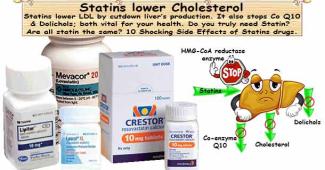
Statins are a class of medication frequently prescribed to lower blood cholesterol levels as well as to prevent heart attack and stroke. The statins drug works by blocking the liver to make cholesterol.
What is Statins? How does it work?
Statin drugs lower the LDL cholesterol by reducing its production inside the liver. It is the most widely prescribed drugs of all time. Pharma claim, people who take statins experience no or very few side effects. However, many actual users feel statin side effects outweigh its benefits.
How do Statins work? The process of cholesterol synthesis begins with acetyl-CoA, a building block of life. Three of this acetyl-CoA combine to form HMG with the help of HMG-CoA reductase enzyme. A statin drug is inhibiting this enzyme; this inhibits the cholesterol production as well as Co-Enzyme Q10 and dolichol.
What is Co-Enzyme Q10? Co-Enzyme Q10 is a cellular nutrient synthesized in the mitochondria. You need Co-Q10 for the heart, cell membranes (for membrane integrity), nerve conduction, and formation of elastin & collagen. CoQ10 is essential for the production of energy in the body. Co-Q10 deficiency leads to muscle wasting (weakness & severe back pain), heart failure, neuropathy, and inflammation of the tendons & ligaments.
What is Dolichols? Dolichols role is even more complex; it is responsible for the process of cellular activity involving message transport, neuropeptide formation, and mitochondrial DNA error correction. It is now suspected that insufficient dolichols associated with hostility, aggression, irritability, paranoia, homicidal ideation, depression and suicide. The decline in dolichol numbers causes the premature aging and death of cells, as well as metabolic disorders and loss of proper organ functioning.
What can you expect from statins drug medication? Statins can lower LDL cholesterol levels by about 20 to 55 percent more than other types of medications. It can moderately reduce triglycerides and raises HDL. You can expect results from the statins medication in four to six weeks.
After about six to eight weeks, the doctor can do the check of LDL cholesterol, while on the medication drug. The second measurement of LDL cholesterol level will have to average with the first. This value helps the doctor to decide whether the dose of the drug should change to help meet the goal.
How do you take Statins drugs? Usually take statins drug medications as a single dose in the evening meal or at bedtime, because normally the body makes more cholesterol in the night than during the day.
Do you truly need Statin treatment?
Why kill the fireman instead of the fire? Your body uses cholesterol that acts as a band-aid to repair arterial inflammation. Cholesterol is to heal and not the cause of inflammation!
However, if the cholesterol buildup (band-aid) breaks off might block the arteries.
The American Heart Association said taking a Statins was now recommended for:
- People with cardiovascular disease, including angina, a previous heart attack or stroke.
- Individuals who have high LDL cholesterol (more than 4.9 mmol/L or 190 mg/dl).
- People with diabetes between the ages of 40 and 75 years.
- For those who has increased chance to have a heart attack or stroke or to develop cardiovascular disease in the next ten years.
Patients and their doctors tend to focus only on cholesterol level. A possible consequence is that Statins are now the most prescribed medicines. The guidelines released in Nov 2013 by the American Heart Association has placed less emphasis on cholesterol numbers and more on their overall risk.
Are statins useful for people with low risk? Statins treatment for a lower risk individual offers limited or no benefit and may result in more harmful side effects.
Available Statins brands
Common statins drugs available on the market are:
- Atorvastatin (Lipitor),
- Fluvastatin (Lescol),
- Lovastatin (Altoprev, Mevacor),
- Pravastatin (Pravachol),
- Rosuvastatin (Crestor),
- Simvastatin (Zocor).
Low-cost generic versions of many statin medications are also available.
Are all the statin drugs the same? Whether it is atorvastatin, simvastatin, or Crestor, the simple answer is they are all the same. But the difference in price is due to whether it is generic or branded drug.
10 Shocking Side Effects of Statins drugs
People taking multiple medications, women, age over 65, drinkers and diabetics, kidney or liver disease are considered to be at higher risk for statins side effects.
Studies show about 10% of people can have statins side effects. However, statins critics have argued that pharmaceutical companies fund most of these statin studies, thus low percentage side effects.
Side effects of statins are:
- Muscle Pain and Weakness – It is the most common side effect, most likely due to the Co-Q10 depletion, a nutrient for muscle function. Muscle pain may be felt as soreness, tiredness, weakness in the muscles.
- Liver damage - Occasionally, statin use could cause liver inflammation that increases levels of certain enzymes. Contact your doctor and order a liver enzyme test if you have unusual fatigue, weakness, loss of appetite, upper abdomen pain, dark urine or yellowing of skin/eye.
- Raises blood sugar - Statin use might raise your blood sugar level, which may lead to type 2 diabetes. Already FDA has issued a warning on statin labels regarding diabetes risk.
- Neuropathy - Peripheral neuropathy is a weakness, tingling, and pain in the hands and feet, as well as difficulty walking. Statins use for one year raised the nerve damage risk by about 15 %.
- Heart Failure - Co-Q10 is important for proper heart muscle functioning. Co-Q10 can deplete by statin drug use, thus affects proper working of the heart muscle.
- Dizziness – Studies shows Statins has blood pressure lowering effect that might possibly cause dizziness.
- Cognitive Impairment - Statins use seems to cause cognitive problems, especially elderly patients. That could reverse completely within a month after discontinuation of the statins. FDA already issued a warning on statin label regarding risk to memory loss or confusion.
- Cancer - Statins depress the immune system, an effect that can lead to infectious diseases and even cancer.
- Pancreatitis - Prescribers of statins (particularly simvastatin and lovastatin) should take into account the possibility of acute pancreatitis in patients who develop abdominal pain within the first weeks of treatment with these drugs.
- Depression - Several studies have noted a correlation between Statins use with depression, suicide and violence, most likely due to the dolichols depletion.
Other side effects of statins are sleep problems, sexual function problems, fatigue, swelling, shortness of breath, vision changes, changes in temperature regulation, weight change, hunger, breast enlargement, dry skin, rashes, nausea, upset stomach, bleeding, and ringing in ears or other noises.
Retinopathy prevention tips
Diabetic retinopathy and macular edema can be prevented and protect your vision by taking some simple precautionary measures.
How do you prevent/stop a progression of retinopathy?
You can protect your eye vision from retinopathy and macular edema by following some simple steps; they are:
- The first step to prevent onset and progression of retinopathy is controlling your blood-glucose level as close as possible to the normal range.
- If hypertensive, you need to manage it near normal range by lifestyle change or with medication.
- If Pregnant your chance of retinopathy is more, thus frequently eye exam and take necessary care to prevent retinopathy.
- If high cholesterol, try to maintain it near normal, which helps to prevent retinopathy, to some extent.
- Smoker should quit smoking to control the blood pressure and indirectly help to prevent retinopathy.
- Type 2 diabetes and user of the medicine rosiglitazone (Avandia, Avandamet, and Avandaryl); discuss your doctor to change to some other medication to protect yourself from retinopathy.
- Benefit of dietary omega-3 fatty acids in protecting against the development and progression of retinal disease.
- Careful about Stress, if stress your body produces hormones that prevent diabetes medication to work properly and make the things worse. Learn relaxation techniques to overcome stress.
- Careful on vision change - there may be an immediate vision change, if so go for dilated eye exam test for earlier diagnosis and treatment.
If you have, diabetes gets a comprehensive dilated eye exam at least once a year and remembers:
- Proliferative retinopathy can cause vision loss without any symptom.
- Macular edema develops without a symptom at any stage of retinopathy.
- Both proliferative retinopathy and macular edema develops at any time, and still you can see fine. However, you are at high risk for vision loss.
- Eye care professional can diagnose macular edema or any stage of diabetic retinopathy, whether you have symptoms or not. Early detection and treatment can prevent vision loss.
If have diabetic retinopathy, then may need an eye exam more often. People with proliferative retinopathy can reduce their risk of blindness by 95 percent with timely treatment and appropriate follow-up care.