Check your blood pressure stage (Normal, Elevated, Stage 1, Stage 2, or Hypertensive Crisis) using AHA/ACC guidelines. Includes BP chart & tips.
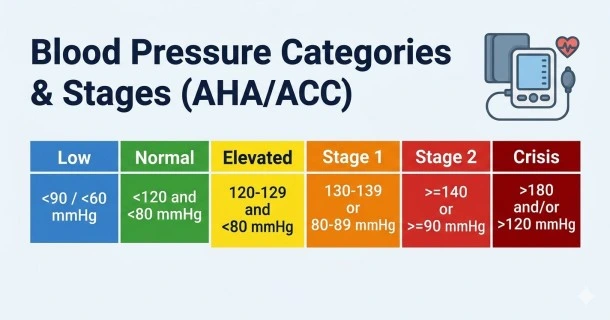
Blood Pressure Categories Chart (AHA / ACC Guidelines)
Blood pressure readings consist of two numbers measured in millimeters of mercury (mmHg): systolic pressure (the top number, measuring arterial pressure when the heart contracts) and diastolic pressure (the bottom number, measuring pressure when the heart rests between beats).
| Blood Pressure Category | Systolic (Top Number) | And / Or | Diastolic (Bottom Number) |
|---|---|---|---|
| Low Blood Pressure (Hypotension) | Less than 90 mmHg | and / or | Less than 60 mmHg |
| Normal Blood Pressure | Less than 120 mmHg | and | Less than 80 mmHg |
| Elevated Blood Pressure | 120 to 129 mmHg | and | Less than 80 mmHg |
| High Blood Pressure (Stage 1 Hypertension) | 130 to 139 mmHg | or | 80 to 89 mmHg |
| High Blood Pressure (Stage 2 Hypertension) | 140 mmHg or higher | or | 90 mmHg or higher |
| Hypertensive Crisis | Higher than 180 mmHg | and / or | Higher than 120 mmHg |
What If Systolic and Diastolic Numbers Are in Different Categories?
When your top and bottom blood pressure numbers fall into two different categories, medical guidelines classify your reading under the higher category.
- Example 1 (134/76 mmHg): Although 76 mmHg is a normal diastolic reading, a systolic pressure of 134 mmHg places the reading in Stage 1 Hypertension.
- Example 2 (124/92 mmHg): Even though 124 mmHg is only in the elevated range, a diastolic pressure of 92 mmHg classifies the reading as Stage 2 Hypertension.
Understanding Isolated Systolic and Isolated Diastolic Hypertension
- Isolated Systolic Hypertension (SBP ≥ 130 mmHg and DBP < 80 mmHg): The most common form of high blood pressure in adults over age 50, typically caused by natural age-related stiffening of large arteries.
- Isolated Diastolic Hypertension (SBP < 130 mmHg and DBP ≥ 80 mmHg): More common in younger and middle-aged adults, often linked to increased peripheral vascular resistance, weight gain, or stress.
How to Measure Blood Pressure Accurately at Home
A single high reading does not automatically mean you have chronic hypertension. Follow these steps for an accurate home reading:
- Rest First: Sit quietly for at least 5 minutes before taking a measurement.
- Avoid Stimulants: Do not drink caffeine, exercise, or smoke for 30 minutes prior to measuring.
- Check Posture: Keep your back supported, feet flat on the floor (legs uncrossed), and your cuffed arm resting on a flat surface at heart level.
- Take Two Readings: Record two measurements 1 minute apart and log the average.
Blood Pressure Category & Stage Checker
Enter your top (systolic) and bottom (diastolic) blood pressure numbers in mmHg to check your official AHA/ACC blood pressure category.
Pressure when heart beats
Pressure when heart rests between beats
Frequently Asked Questions (FAQ)
Is 130/80 considered high blood pressure?
Yes. Under current American Heart Association (AHA) and American College of Cardiology (ACC) guidelines, a reading of 130/80 mmHg is the starting threshold for Stage 1 Hypertension.
What blood pressure reading requires emergency care?
Any reading higher than 180/120 mmHg is classified as a Hypertensive Crisis. If retesting after 5 minutes still shows numbers above 180/120 mmHg, or if you have symptoms like chest pain, shortness of breath, numbness, or vision changes, seek emergency medical care immediately.
Does normal blood pressure change by age?
No. For adults of all ages (including seniors over 65), a normal healthy blood pressure remains below 120/80 mmHg, though a physician may set individualized treatment targets based on overall health.