
Reflexology terms & techniques
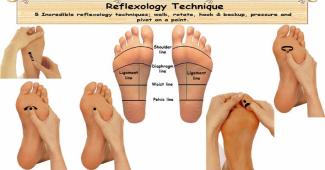
Standard reflexology terms are transverse zones, foot aspects, and crystal deposits. Reflexology manipulation techniques are walking, rotating, hook & back up, pressing, and pivot on-a-point techniques.
5 Transverse lines in Reflexology
Five transverse lines are on the plantar aspect, they are
- The shoulder line located below the bases of the toes. Head, occipital, pituitary, inner and outer ear, teeth, jaw, sinus, eye, Eustachian tube, throat, and shoulder reflex points or areas are above this shoulder line.
- Diaphragm line is below the metatarsal base. The skin is darker around the metatarsals. Lungs, thyroid, esophagus, hiatus hernia, pancreas, and gallbladder reflexes are present between shoulder and diaphragm line.
- The Waistline differs from person to person; located in the narrowest foot spot similar to a waist! Kidney, adrenal, stomach, liver, spleen, transverse colon, hepatic and splenic flexure reflexes and part of small intestines are present between diaphragm and waistline.
- The pelvic line is between anklebones to heel base on either side of the foot. Ascending and descending colon, part of the small intestines and bladder are present between the waist and pelvic line.
- Ligament line runs down from the junction between big and first toes.
Aspects of the foot
According to reflexology, the foot comprises four elements.
- Dorsal is the upper-side foot.
- Plantar is the underside foot (sole). When standing, it rests over the ground.
- Medial is the inner side foot. The area between the big toe and the heel.
- Lateral: the outside side foot. The area between the little toe and heel.
Blockage by crystal deposits
Crystals is a sugar/sand-like grains on the reflexes. It indicates uric acid or calcium deposits in the respective part of the body. An experienced reflexologist can diagnose congestion in reflex areas; by the existence of crystal deposit in the nerve endings on foot. Disperse these deposits by work over the crystals. If there is any pain/discomfort, lower the applied pressure. The presence of crystals, pain, or discomfort indicates an out of balance. It suggests the present problem or future problem.
If the lungs become weak, their normal muscular function drops. In the specific reflex, the existence of crystals indicates the weakness. A minimal blockage is enough to cause a noticeable lack of lungs circulation. Due to this, there is a lack of fresh blood, oxygen, and nutrients delivery.
By applying gentle pressure, crystals can break, dissolve, and expel from the body. If there are an excess of crystals, it takes longer to break. A sensitive reflex point indicates weakness or imbalance of an organ or gland. Reflexology can strengthen organs; thus, help to avoid forthcoming illness.
5 Incredible reflexology techniques
Below are the five most frequently used methods in reflexology:
Walk technique
Thumb walk is the most used reflexology movement. Use thumb or finger to walk forward in a crawling action similar to a worm. During walking, taking one step at a time called a bite. Walking helps to locate the crystals (blockage) in a reflex; additionally, it disburses (unblock). Before doing thumb-walk; make sure that the nails are short without rough edges.
Flexing and straighten the first joint of the thumb or index finger, forms a walking movement. Walking has different names; they are, thumb walk (walking by thumb), finger walk (walking by finger), and bites. Thumb walk is a brief pressure, followed by a short relaxation without losing skin contact. Pressure and relaxation applied with tiny intervals help treat every reflex point.
Circle or Rotating technique
Using the thumb or finger, make a circular or rotating movement with firm pressure. Apply tiny rotating motion to the reflex point for three times, and then make a tender circle with inward pressure. Do not rub the skin; instead, using the tissue under the skin to form a ring.
The rotation technique helps to break the underlying crystal (uric or calcium deposit) formed around the nerve endings. This technique stimulates the reflex and starts the body's self-healing process.
Hook & Backup
The hook & backup is an advanced technique. Thumb-walk to reach specific reflex and then hook & backup the point. Hook method should have to do using the thumbs. Use the flat surface of the thumb, to apply pressure.
Flex the thumb to apply pressure in a vertical (90-degree) angle to the reflex point. Pull the thumb back to the center of the hand; do not forget to apply gentle pressure. Do this by dragging the tissue beneath the skin.
The hook & backup technique is suitable for deep reflex points hidden under the tissues such as the pituitary, pineal, ileocecal valve, appendix, and sigmoid colon.
Pressure
Press technique is to apply a firm pressure; should not push hard or dig. While pressing, do one or two minutes of breathing awareness.
How to do breathing awareness? Close the eyes and concentrate on the breathing (inhale & exhale); this brings quietness to the body and mind.
Pressing produces warm and lower congestion. Warmth shows the increased energy flow; this improves the performance of the specific organ reflex.
Pivot-on-a-point technique
On the reflex point, place flexed thumb as a pivot; then rotate the foot using another hand. The pivot-on-a-point method is useful for work on the diaphragm, solar plexus area, and adrenal glands.
Ayurveda Herbal
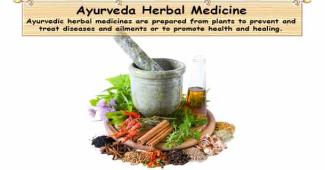
Ayurvedic herbal medicines are prepared from plants, use of herbs to prevent and treat diseases and ailments or to promote health and healing.
Herbal remedies/medicines
A great variety of plants is the use for medicinal treatments, either the dried plant or a specific part of it:
- roots,
- leaves,
- fruits,
- flowers,
- seeds
It is generally formulating into suitable preparations:
- compressed as tablets or made into pills,
- used to make infusions (teas), extracts, tinctures, etc.,
Activities of herbal medicines often describe in general terms such as:
- Carminative - Inducing the expulsion of gas from the stomach and intestines,
- Laxative - stimulates evacuation of the bowels,
- Demulcent - having a softening or soothing effect, especially to the skin,
- Expectorant - Promoting the secretion or expulsion of phlegm, mucus, or other matter from the respiratory tract,
- Sedative - reducing or relieving anxiety, stress, irritability, or excitement,
- Antiseptic - Capable of preventing infection by inhibiting the growth of microorganisms,
- Astringent - causes contraction of body tissues and canals.
Herbalists often claim that the mixture of multiple constituents leads to synergism between the active moieties. Similarly, many consider that since plants are natural materials, they are safer and will produce fewer side effects than synthetic drugs.
Are Herbal remedies safe? Remember that herbs are medicines, thus it has some side effects. Herbal remedies can also interact with other medicines you are taking. It is best to avoid or get registered herbal practitioner’s advice before taking herbal remedies, if the treatment is for pregnant women, breast-feeding mother, child, or older people.
Natural herbs details for diseases
Vikruti - Health condition
The basic constitution prakruti can deviate by improper diet, lifestyle, and emotion called vikruti. If this basic body type deviates (vikruti) due to lifestyle stress is consider as defect or diseased state.
Determine Your Current Condition (Vikruti)
When determining your vikruti, identify problems by focusing on symptoms occurring consistently within the few weeks.
The Vikruti is a guideline to proper Ayurvedic treatment.
The emotion and perception tends to fluctuate more than the physical characteristics do, and you need to take the test multiple times to get a true picture.
Vata imbalances reflect as drying, airy, disruptive powers of the wind. Pitta imbalances reflect as burning action of fire. Kapha imbalances reflect as heaviness and stagnation of water. Location of the symptoms can also be a clue although all doshas found in every cell, still specific dosha dwells most within certain boundaries.
Vata primarily dwells in the lower abdomen, particularly in the colon; intestinal gas, pain, or constipation is the symptom of vata imbalance. Pitta primarily dwells in the middle of the body, particularly in the small intestine; burning sensation (heartburn or ulcer) is the symptom of pitta imbalance. Kapha primarily dwells in the upper part of the torso, particularly in the chest; congestion is the symptom of kapha imbalance. However, it is not the fixed rule, because doshas found in every cell and even it can produce symptoms to distant sites, other than where is actually dwell.
Points: When you take the vikruti test, put points based on the intensity and frequency of the symptoms in the last fortnight. Use the following points:
- 3 points for strong frequent symptoms
- 2 points for moderate symptoms
- 1 point for weak infrequent symptoms
- 0 points for no symptoms
You may need to ask your friends and relatives for their impressions about you then and now. You may astonish to hear from your friend/relative a different view about yourself.
Vikruti: Mental-Emotional-Behavioral Symptoms

Vikruti: Physical Symptoms and Illnesses

Compare the resultent points with your constitution (prakruti), closer to the vikruti better your health. If there is larger difference, then higher the deviation and stronger the disease condition.
The person 'A', who is consistently under pressure, his vikruti score were:
- Vata: 20 points from mental symptoms, 16 points from physical symptoms and the total is 36 points.
- Pitta: 15 points from mental symptoms, 20 points from physical symptoms and the total is 35 points.
- Kapha: 10 points from mental symptoms, 6 points from physical symptoms and the total is 16 points.
That is, his vikruti is 36V, 35P & 16K.
The prakruti of patient A; pitta is almost double of the vata. However, his vikruti has vata and pitta of same level. That means vata is deviated and it suppress the pitta causing indigestion. Additionally, the kapha marginally drops may be due to aggravated vata. Thus, the Ayurvedic treatment emphasizes to pacify aggravated vata.
Constitution - Body Type

In Ayurveda, body and mind type combination determine once constitution called Prakriti with unique physical, mental and psychological nature.
Basic Constitution Prakriti & Its Deviation Vikriti
Each person possesses a unique combination of the three doshas; this combination determined by genetics (prakriti – the constitution you get during conception). Your constitution (prakriti) is permanent for your entire lifetime.
Determine Your Mind-Body Constitution (Prakruti)
The prakruti is a guideline to natural state and potential. The emotion and perception tends to fluctuate more than the physical characteristics do, and you need to take the test multiple times to get a true picture. In Ayurveda, a physician would take pulse three times before determining the prakruti.
You may need to go back and think about how you were when younger, even so back as your childhood. You may need to ask your friends and relatives for their impressions about you then and now. You may astonish to hear from your friend/relative a different view about yourself.
Points: When you take the prakruti test, put points based on the intensity and frequency of the symptoms in your childhood. Use the following points:
- 3 points for strong frequent symptoms
- 2 points for moderate symptoms
- 1 point for weak infrequent symptoms
- 0 points for no symptoms
The dosha with the highest number is the predominant dosha in your prakruti.
Prakruti: Body Characteristics and Functions

Prakruti: Mind-Emotions-Behavior

The prakruti test scores will let you know the constitutional dosha combination.
- If the score for one dosha is much higher (twice as higher) than the second highest dosha (e.g. 42V, 82P & 20K – pitta is twice that of vata), you are likely a rare single-dosha type.
- If the scores for all the doshas are nearly equal (with some variation), you are a rarer three–dosha type. E.g. 45V, 49P & 50K – vata, pitta and kapha are in equal range; thus the person is tri-dosha type vata-pitta-kapha (VPK).
- Most commonly, the scores are almost equal for two doshas. This suggests a two-dosha type, with qualities of the two dominating doshas nearly equally. However, one dosha usually predominates slightly; this may be the fine distinction between pitta-vata and vata-pitta. E.g. 60V, 64P & 20K – vata and pitta are almost equal; however, pitta is slightly higher so pitta-vata type. If it is 64V, 60P & 20K – then the person is vata-pitta type. Nevertheless, there is no big difference between vata-pitta and pitta-vata.
For example, a person ‘A’ prakruti scores were:
- Vata: 26 points from mental symptoms, 16 points from physical symptoms and the total is 42 points.
- Pitta: 34 points from mental symptoms, 48 points from physical symptoms and the total is 82 points.
- Kapha: 8 points from mental symptoms, 12 points from physical symptoms and the total is 20 points.
That is, his prakruti is 42V, 82P & 20K; thus, this person has single dosha prakruti of pitta.
Voice Diagnosis

Ayurvedic sound diagnosis called sabda paryksa examines voice and other sounds of the body such as breathe intestine and joints to assess health.
Ayurvedic voice diagnosis - Sabda paryksa
This includes the sound, pitch and volume of the voice. The meaning of sabda can be extended to include the other sounds of the body; breath, intestines and joints, which reveal the predominance and quality of any dosha.
Vata has a dry, hoarse and high-pitched or quiet voice. They are fast talker, jumps from topic to topic with erratic rhythm and focus. Vata is very sensitive to excess noise.
Pitta has a loud and sharp voice. Focused, persuasive, dominates conversation, argumentative, challenging and due to their impatience they tend to finish other people’s sentences.
Kapha has a moist, soft, deep and calm voice. A sweet melodious voice is pleasant to listen.
Stool Diagnosis
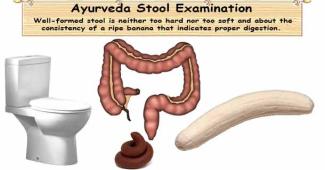
Mala (stool) examination is to indicate the abnormality of the dosha i.e. vata, pitta and kapha. Stool is important to generate prognosis of a disease.
Ayurveda mala pariksha - Stool examination
Well-formed stool that is neither too hard nor too soft (about the consistency of a ripe banana) indicates proper digestion healthy system. It should float rather than sink in water. It should not have a foul odor. You should be able to pass your feces once or twice per day without straining. If you notice hard, dry stools, gray or blackish stool, greenish, liquid stool, whitish, sticky stool, mucus in stool indicates imbalance in the system.
- A hard and dry stool indicates vata vitiation. They may only pass stools once a day or every other day that too painful due to poor peristalsis. Stool may have much gas without bad smell. Dark colored stool due to liquid concentration by agni.
- Yellow colored, loose, and foul smelling stool indicates pitta vitiation. They may have regular bowel movement, generally rapidly-excretion twice per day. Stool may have foul-smell. Yellow, green colored stool may be due to excessive stomach acid and bile.
- In the indigestion, state indicates ama state (body-generated toxin) predominance of kapha. They may have regular bowel movement, generally slow-excretion once or twice per day. Sweet smelling stool is due to intestinal fungal infection with largely dairy and carbohydrate consumption. Pale colored stool due to low agni and sluggish liver.
- Not well-formed stool indicates indigestion.
- If the jathar agni (digestive fire) is high, then the stool will be hard because agni will burn out water content.
- If the jathagni (digestive fire) is low, then the stool will be watery because of lack of agni.
- Stool with foul smelling, cold, and spitted into small pieces indicates digestive imbalance.
- Extremely offensive smelling stool with the presence of shine indicates sign of incurability.
- A black, very hot, very clear, or very yellow colored stool indicates evil and impedes death. However, some medication can temporarily change the color; for example, some iron supplementation can change the stool to black color.
- Stools appear to be as honey, pus or fleshy, alkali, and excess watery with different colors or putrefying smell indicates incurable disease.
- In case of diarrhea with a dead-body like smell indicates incurable condition.
Stool sample put in a tumbler full of water,
- If it floats for more than 10 minutes indicates the person has vata disorder.
- If it sinks immediately with mucus in stool indicates kapha dominant and ama (affected with toxic).
- If it disintegrates into pieces and in dark yellow colored indicates pitta disorder.
Urine Diagnosis
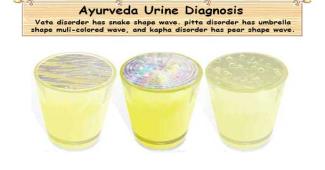
The urinary system removes water, salt and nitrogenous wastes. It also helps maintaining the normal concentration of electrolytes within the body fluids. It helps regulating the volume of body fluid and aids in the control of red blood cell production and blood pressure. In this way, urine maintains the balance of the three humors; vata, pitta, and kapha as well as water.
Ayurveda Urine Diagnosis - Mutra Pariksha
For Ayurvedic urine examination, collect early morning midstream urine in a clean vessel.
- Observe the color, normal urine is yellow, straw colored. Urine color can affect by the diet, supplements or herbs you take. B vitamins can make urine yellow; beetroots and other red foods can color the urine a darker hue, anthraquinone laxatives can give an orange tint to the urine. If the color is blackish-brown indicates a vata disorder; dark-yellow colored indicates pitta disorder; cloudy urine indicates a kapha disorder.
- Foods eaten can change the urine odor. For example, asparagus, cabbage, cauliflower, or garlic can give a strong smell. Urine of the vata individuals has bitter and astringent odor. Urine of the pitta individuals has pungent, rotten, and acrid odor. Urine of Kapha has sweet odor.
- Drinking coffee, tea, some herbs and diuretic drugs can increase the frequency and volume of urine. Vata has low volume, increased frequency and tendency to urinate at night. Pitta has high volume and less frequency. Kapha has high volume, normal frequency, and tendency to urinate at night.
- Temperature of the urine is cold in vata, hot in pitta, and cool in kapha.
- When there is constipation or the body has less intake of water, urine will be dark yellow.
- Red colored urine indicates a blood disorder.
Urine examination for illness
Ayurveda utilize a diagnose method using oil as an interpretation of the state of the doshas.
Using a dropper put a drop of sesame oil in to the urine sample and examining it in the sunlight.
- If the oil drop spreads immediately in the urine sample indicates the illness is probably easy to cure.
- It the oil drop moves to the middle of the urine sample and spread indicates the illness is probably difficult to cure.
- If the drop sinks to the bottom of the urine sample indicates the illness may probably impossible to cure.
- If the drop spreads in a snake-like shape with wave movements on the urine surface indicates vata disorder.
- If the drop spreads in a umbrella shape with multi-colored like a rainbow indicates pitta disorder.
- It the drop spread into pear shape on the urine surface indicates kapha disorder.
- Normal urine has uremic smell. Urine with foul odor indicates presence of toxins in the system.
- Acidic smelling urine with burning sensation indicates excess of pitta.
- Sweet smelling urine indicates possibility for diabetes.
- Gravel in the urine sample indicates the possibility for stones in the urinary tract.
- Dark yellow colored urine indicates jaundice; darkish yellow or brown colored urine indicates fewer, which is a pitta disorder.
- Tea, coffee and alcohol are the substance stimulate urination and aggravates pitta.
- Scanty urine indicates water retention in the body accumulated in the tissues. This affects the blood and increases the blood pressure; thus, urine production is important to maintain blood pressure and volume.
Eye Diagnosis

Ayurveda diagnosis of eye called netra pariksha helps to assess dosha, physical and mental health of the individual.
Eye Diagnosis (Netra pariksha) – Dosha
Vata eyes look small, nervous, drooping eyelids, and dry. Eyelashes are scanty. The sclera (white area of eye) is often dull or muddy. The iris is dark, grey-brown or black. The eyebrows will be thin and irregular.
Pitta eyes look moderate in size, sharp, lustrous and sensitive to light. The Sclera has yellow or red spots. The lashes are scanty and oily. The iris is red or yellowish. They have a tendency to be nearsighted. They have sharp and piercing eyes. The eyebrows and eyelashes are balanced.
Kapha eyes look big, beautiful and moist. The eyelashes are long, thick, and oily. The Sclera (white of the eye) is perfect white. The iris is pale, blue or black. Their eyebrows are lush and bushy, often joining in the middle. The eyelashes are thick, oily and long.
Eye Diagnosis – health
Eye diagnosis help to assess physical and mental health:
- Excessive blinking indicates deep-seated nervousness and anxiety or fear.
- A drooping upper eyelid indicates a sense of insecurity, fear or lack of confidence, deranged vata.
- Prominent eyes indicate thyroid gland dysfunction.
- Pale conjunctiva indicates anemia; yellow indicates weak liver or jaundice.
- A small iris indicates weak joints.
- White ring around the iris indicates excessive salt or sugar intake. In the middle-aged, this may be a sign of body stress.
- The white ring is very prominent and very white in iris (especially in the middle-aged) indicates joint degeneration. The joints will pop, crack, and likely for arthritis and joint pain.
- Brownish-black spots in the iris indicate unabsorbed iron in the intestine.
Tongue Diagnosis
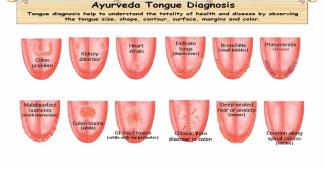
Tongue diagnosis helps to understand health. Also, to understand the disease by observing the tongue size, shape, contour, surface, margins, and color.
What is tongue diagnosis?
Tongue diagnosis is observing the tongue size, shape, contour, surface, margins, and color to assess the present health.
Look your tongue and observe the size, shape, color, etc. Pale tongue indicates an anemic condition or lack of blood in the body. Yellow-colored tongue indicates excess bile in gallbladder or liver disorder. Blue colored tongue shows a heart defect. If you see tongue impressions along the margin of the tongue suggests poor intestinal absorption.
Tongue diagnosis - Shape
Vata individuals have small, short, thin, dry, cracked, and trembling. Indentations, sunken concave spots, scalloped and teeth mark indicating mal-absorption and low agni due to the erratic digestive power of visamagni. Cracked edges depressed at the back of the tongue showing low ojas. Broken in the front indicates lung dryness. Vata individuals are often anxious and difficult to extend their tongue. The extremely short tongue is a sign of low ojas. It reflects the dry, rough, mobile, light, and deficient qualities of vata.
Pitta individuals have long, narrow, pointed, inflamed, ulcerated, red small projections, swollen, and red edges. Pitta individuals often extend their tongue with force like an arrow. It reflects the sharp, penetrating, liquid, and hot qualities of pitta.
Kapha individuals have large, swollen, thick, soft, wet, and wet edges. Tongue with teeth marks indicating mandagni. The swollen tip indicates heart congestion. Swollen in the center suggests lung congestion. The kapha individuals often flop their tongue out of the mouth though it is too large. It reflects the unctuous, fluid, soft, slimy, smooth, and cold qualities of kapha.
Tongue diagnosis - Color
Vata individuals having pale tongue reflects poor nutrient metabolism due to a low nutrient absorption or blood deficiency. A purple-blue tongue reflects stagnation of circulating vyana vayu from cold.
Pitta individuals are having red, reflecting high pitta in absorbed nutrient or blood. An orange tongue (especially sides) is due to high pitta consuming blood. A purple-red (in extreme causes black-red) is expected to high pitta condensing absorbed nutrient and blood resulting in viscous and sluggish circulation.
Kapha individuals have pale tongue due to the cold that restricts circulation. A pale-blue color tongue indicates congestive heart disorders due to aggravated avalambaka kapha.
Tongue diagnosis - Coating
Diagnose tongue coatings their
- Colors such as white, yellow, dirty yellow, pale yellow, or black
- Depth such as thick, or thin
- Textures such as dry, wet, or greasy
The tongue coating is an easy diagnosis of the treatment efficacy and the disease movement. If a coat propagates from thick to thin and from yellow to white, indicate beneficial sign and vice versa. If the tongue becomes dry, it is a negative sign.
Vata individuals have dry, non-existent or thin, white coat.
Pitta individuals have a yellow or dirty yellow coat. Greasy coat indicates the pitta mixed with toxins. A dry yellow coat shows the pitta and vata mixed. Absence of coating with red, shiny tongue suggests the heat of excess pitta; this causes weak and deficient metabolizing of available nutrients too quickly.
Kapha individuals have a white (thick or thin), wet, or clear coating. A thick white greasy coat indicates kapha mixed with ama. A pale yellow coat shows kapha combined with pitta.
Bad breath shows low Agni (digestive ability) or toxic accumulation; check intestine points on the tongue for the root problem.
Tongue diagnosis - Location
Vata dosha condition can usually observe at the back of the tongue associated with the state of the colon.
Pitta dosha condition can observe in the middle portion of the tongue associated with the stomach and small intestines. The sides of the tongue relate to the liver, and many pitta imbalances can see here.
Kapha dosha condition can observe in the front portion associated with the lungs, chest, and heart.
Much like reflexology, every organ in the body can locate on a specific region in the tongue. We know tongue help enjoy the taste of various foods. Similarly, it is the mirror of the body's digestive system; the tongue can reflect the health of multiple organs in the body.

Discoloration and or different sensation in a particular area of the tongue indicate organ disorder corresponding to that specific area.
Tongue to diagnose dosha imbalance
Tongue helps to diagnose how harmonized the dosha is or whether it is out of balance. Divide the tongue into three parts (33.3% each); the inner region near throat is vata, the middle is pitta, and the outer tip is kapha. Excessive tongue coating in any of these specific areas shows an imbalance of that dosha.

Tongue diagnosis - Crack
The central crack in the tongue indicates prana flow through the heart or spine. If the crack extends to the tongue tip shows a congenital (born with) heart weakness. A deviated break indicates spinal curvature. A tongue crack with swelling in the two sides is due to high kapha.
Cleansing the Tongue
Keeping the tongue clean helps to keep every organ healthy. How do you keep your tongue clean? One of the best ways to keep the tongue clean is scraping once or twice it daily. Use tongue scraper to remove overnight and day buildup of bacteria and toxins in the tongue. Extend your tongue, place the tongue scraper as interior as comfortable without nausea, and gently press & pull forward to remove tongue coatings. Rinse the mouth with water. It is better to do tongue cleaning done in the morning when you are in an empty stomach. Scraping the tongue is an excellent way to start the day; as a result, it improves the health of the internal organs by stimulating all the pranic nadis that terminate in the tongue.
Pulse Diagnosis
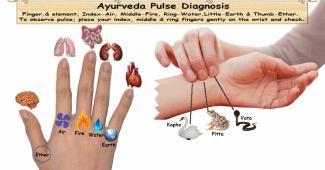
The first Ayurvedic classic to describe pulse examination is Saarangadhara Samhita (13th century A.D.). Ayurvedic physician touches your wrist to sense pulse to probe deep into general state of health, illness and even bad prognosis. The wrist pulse on the right hand is for the men and on the left hand for the women.
During pulse examination, Ayurvedic doctors look for various factors, they are:
- Gati (Movement)
- Vega (Rate)
- Tala (Rhythm)
- Bala (Force)
- Akruti (Volume and Tension)
- Tapamana (Temperature)
- Kathinya (Consistency of the Vessel Wall)
Investigation reveals the prakrti and vikrti of the patient.
Pulse diagnosis
Before checking your own pulse, you have to flex your right arm and wrist. Locate the radial stylus; the bump located outside wrist bone just under the thumb. Bring your left hand from underneath of the right hand and place your index finger just below this bump, where you will find the radial artery. Now place first three fingers and press until sense throbbing in all the three fingers distinctly. Then decrease the pressure slightly to sense varying pulse movements. Deep and superficial impulses indicate the tridosha conditions; three basic metabolic principles governing bodily activities in balanced state and causes disease in a disturbed state.
Pulse diagnosis Prakruti
When the constitution of vata predominates, the index finger pulse is most noticeable; pitta predominates, the middle finger pulse is most noticeable; kapha predominates, the ring finger pulse is most noticeable. All three pulses are present in everyone, but most prominent one, two or rarely three signals the particular body type. This examination is better performing thrice with few seconds of interval.
Pulse diagnosis is the ancient art and science of diagnosing person’s physical, mental and psychological status. Nadi or pulse is the vital energy flow through bodily channel, which enable to feel status of health not just counting the beats. The entire health and functioning of the mind body constitution; doshas balance or imbalance, health of various organs, and prior warning signs can determine from the pulse reading. This help to re-establish dosha balance, prevent disease, correct problems, and maintain health.
Early morning is the ideal time for pulse examination, specifically when you are in empty stomach. However, in case of emergency practitioners can examine at any time of the day or night.
Observe radial pulse with index, middle and ring fingers; pulse from left and ring hand provides two different indicators, thus check pulse on both hands. Avoid taking pulse after exertion, bathing, eating, sex or massage, because it can influence pulse largely.
You may also take pulse from
- Temporal artery – is just above the temple on the side of the head.
- Carotid artery – is on the side of the neck above the clavicle.
- Femoral artery – is on the inside front of the leg where it joins the pelvis.
- Brachial artery – is on the inside of the arm above the elbow.
- Posterior tibial – is on the foot behind the ankle.
- Dorsalis pedis – is on the top of the foot.
The index finger belongs to the element air help monitor vata dosha. The middle finger belongs to the element fire help monitor pitta dosha. The ring finger belongs to the element water help monitor kapha dosha.
- The index finger position is the place of vata dosha. When vata is the predominant constitution, you can feel a strong pulse here. The pulse character will be irregular, low force, fast, feeble, cold, light, thin, disappears on pressure. This character resembles the movement of cobra (snake). Pulse rate is 80 to 100 beats per minute.
- The middle finger position is the place of pitta dosha. When pitta is the predominant constitution, you can feel a strong pulse here. The pulse character will be regular, high force, prominent, strong, high amplitude, hot, forceful, lifts palpating finger. This character resembles the movement of frog. Pulse rate is 70 to 80 beats per minute.
- The ring finger position is the place of kapha dosha. When kapha is the predominant constitution, you can feel a strong pulse here. The pulse character will be regular with moderate force, deep, slow, broad, wavy, thick, cool or warm, regular. This character resembles the movement of swan. Pulse rate is 50 to 60 beats per minute.
To observe your own pulse; flex your arm & wrist, place your index, middle & ring fingers gently on the wrist (just below wrist bone), and check the pulse. Then slightly decrease finger pressure to sense varying pulse movement.
Pulse diagnosis in right wrist
Pulse diagnosis is not only helps to assess constitution; it is also useful to sense status of the body's organs by examining the superficial and deep pulsations. The pulse not only corresponds to the heartbeat; additionally, it reveals most important meridians of the all-vital organs.
- The index finger on the right wrist feels the activity of the large intestine with a superficial touch and activity of the lungs with a firmer deeper touch. A prominent throbbing on the right side with superficial touch indicates vata aggravation in the large intestine. A strong throbbing with firm deeper touch indicates congestion in the lungs.
- The middle finger on the right wrist senses the activity of the gallbladder with a superficial touch and activity of the liver with deeper touch.
- The ring finger senses the pericardium (outer covering of the heart) with a superficial touch and relationship of vata-pitta-kapha with deeper touch.
Pulse diagnosis in the left wrist
- The index finger on the left wrist feels the activity of the small intestine with a superficial touch and activity of the heart with deeper touch.
- The middle finger on the left wrist senses the activity of the stomach with superficial touch and activity of the spleen with deeper touch.
- The ring finger senses the activity of the bladder with a superficial touch and activity of the kidney with deeper touch.
There are variations in the pulse at different times of the day, such as urination, during hunger or feeling anger.
Proficiency in pulse diagnosis is a skillful art and science gain by long practice, alertness and guidance from the preceptor.