
Insomnia Home Remedies
Insomnia home remedies are easy to follow insomnia tips, which provide insomnia relief. Learn insomnia home remedies.
Acute insomnia can treat effectively by following insomnia guidelines or insomnia home remedies.
Insomnia Home Remedies
- Improving your daytime habits: Regular day exercise can help sleep.
- Keep your room dark during sleep hours, because our body is sensitive to light & dark.
- Napping can affect your sleep: avoid daytime nap to get good sleep at night.
- Alcohol, caffeine, and smoking: avoid these it disturbs your sleep.
- Keep the noise level down.
- Room temperature and ventilation should be suitable to our body condition.
- Reserve your bed for sleeping, do not use it for reading, discussing, etc.
- Keep a regular bedtime schedule, including weekends. Our body has a clock inbuilt.
- Avoid too much food, especially fatty, rich food.
- Develop a relaxing mood at bedtime. Avoid hot discussion at bedtime.
- Listening to soft music or radio broadcast.
- Do meditation or other mind calming exercise before bedtime.
- Take the TV out of the bedroom.
Insomnia Treatments
Lifestyle modification often can help relieve acute (short-term) insomnia. These modifications may make it easier to fall and stay asleep.
Insomnia Treatment
Counseling called cognitive-behavioral therapy (CBT) can help to come out of anxiety, which is linking to most of the chronic (ongoing) insomnia. In addition, anxiety tends to extend insomnia.
Several medicines can help to stop insomnia and re-establish a regular sleep schedule. However, if the insomnia is the symptom or side effect of another problem, then it is important to treat the underlying cause (if possible) to get relief from insomnia.
Insomnia treatment tips
If having insomnia, avoiding certain substances that make it worse, such as:
- Caffeine, tobacco, and other stimulants taken during bedtime can affect normal sleep cycle.
- Some over-the-counter and prescription medications can affect sleep (example - some cold and allergy medicines).
- An alcoholic drink during bedtime may help to fall asleep easily. However, alcohol disrupts to sleep and makes it lighter than normal. This affects sleep by waking up during the night.
Try to adopt sleep hygiene or good bedtime habits that make it easier to fall asleep and stay asleep. Follow routine sleep habits that help to relax before bed. Such as read a book (but not in bedroom), listen to soothing music, or take a hot bath.
Try to have some daily exercise at least five to six hours before going to bed and do not eat heavy meals or drink a lot before bedtime.
Make your bedroom sleep-friendly by avoiding bright lighting; try to limit possible distractions, such as a TV, computer, or pet. Make sure the temperature of the bedroom is cool and comfortable.
Go to sleep and wake-up at the same time each night & day, even on weekends. This helps the inner clock to follow a certain regular schedule.
Insomnia Cognitive-Behavioral Therapy
CBT for insomnia treatment corrects the thoughts and actions that can disrupt sleep. This therapy encourages good sleep habits to relieve from sleep anxiety.
For example, relaxation training and biofeedback are useful to reduce anxiety. These strategies help better control the breath, heart rate, muscles, and mood.
CBT helps to replacing sleep anxiety with positive thinking and teaches what to do if unable to fall asleep within a reasonable time.
CBT treatment begins by talking with a therapist to help consider the thoughts and feelings about sleep. It may encourage to describe thoughts racing through the mind in terms of how they look, feel, and sound. The goal is for the mind to settle down and stop racing.
CBT limits the time spends in bed while awake and setting a sleep schedule. At the beginning, the total time in bed is shortening, which may make even more tired because the allotted time in bed will take up by problems falling asleep. However, the resulting tiredness helps to get to sleep more quickly. Over time, the length of time spent in bed is increasing until get a full night of sleep.
For effective CBT, it needs to see a therapist who is skilled in this approach weekly for two to three months. CBT combined with prescription medicine produces a positive result for many people who have chronic insomnia. It also may provide long-term relief than medicine alone.
For people with insomnia and major depressive disorder, CBT combined with anti-depression medicines shown promising to relieve both conditions.
Insomnia Medicines
Many prescription medicines are available for the treatment of insomnia. Some are for short-term use, while others are for long-term use.
Rare side effects of insomnia medications may include sleep-eating sleep walking, or driving while asleep. If you have side effects from an insomnia medicine, or if it does not work well, tell the doctor. He or she may prescribe a different medicine that helps you better.
Some insomnia medicines may be habit forming, so be careful.
Over-the-Counter Insomnia Medications
Some over-the-counter (OTC) products claim to treat insomnia. These products include melatonin, L-tryptophan supplements, and valerian teas or extracts.
The Food and Drug Administration does not regulate “natural” products and some food supplements. Thus, the dose and purity of these products can vary.
Some OTC insomnia products that contain antihistamines are marketing as sleep aids. Although these products may make you sleepy, talk to the doctor before taking them.
Antihistamines pose risks for some people. In addition, these products may not offer the best treatment for insomnia.
Insomnia Test
Insomnia diagnosis is usually starting on the ongoing medical conditions, sleep history, and physical exam. In addition, sometimes sleep-study may recommend, if the cause of insomnia is unclear.
Insomnia diagnosis test
Insomnia diagnosis is usually based on the; medical history, sleep history, insomnia modalities (conditions that worsen or alleviate insomnia), physical examination, and sleep study.
Medical history of Insomnia test
To find out insomnia cause, doctor may ask about:
- new or ongoing health problems
- painful injuries or health conditions, such as arthritis
- having medicines, either over-the-counter or prescription
- symptoms or a history of depression, anxiety, or psychosis
- have any very stressful life events, such as divorce or death
Doctors may also like to know
- Work and leisure habits
- use of caffeine, tobacco, and alcohol
- Long-distance travel history.
- Whether have other family members have sleep problems.
Sleep history for insomnia diagnosis
To get a better picture of the sleep problem, doctor will ask details about the sleep habits. Before visiting doctor, think about how to describe the problems, including:
- How often have trouble sleeping and how long have had the problem
- When to go bed and get up on workdays and days off
- How long it takes to fall asleep, how often wake up at night, and how long it takes to fall back asleep after night wakes up.
- Whether snore loudly and often or wake up gasping or feeling out of breath
- How refreshed during wake up, and how tired during the day
- How often doze off or have trouble staying awake during routine tasks, especially driving.
What causes or worsens insomnia?
Doctor also may ask:
- Whether worry about falling asleep, staying asleep, or getting enough sleep?
- What you eat or drink and whether you take medicines before going to bed?
- What are the routine habits before going to bed?
- What are the noise level, lighting, and temperature at the bedroom?
- What are distractions, such as a TV or computer in the bedroom?
To help the doctor diagnose insomnia, consider keeping a sleep diary for one or two weeks. Write down time to go to sleep, wake up, and take naps. For example, one went to bed at 10 p.m. woke-up at 3 a.m. and not able to fallback asleep, and napped after work for two hours in the daytime.
Furthermore, write down how much sleep each night, as well as how sleepy at various times during the day.
Physical exam for insomnia test
Doctors will do a physical exam to rule out other medical problems that might cause insomnia. Doctor may also advice to take blood tests to rule out thyroid problems or other conditions that can cause sleeping insomnia problems.
Insomnia sleep study
Sometimes doctor may recommend a sleep study called a polysomnogram (PSG) if he or she thinks an underlying sleep disorder might be causing insomnia.
PSG is commonly done while stay overnight at a sleep center. A PSG records brain electrical activity, eye movements, heart rate, breathing, muscle activity, blood pressure, and blood oxygen levels.
Insomnia Risk Factors
Insomnia is a common disorder that is one in three adults have insomnia sometimes, and 1 in 10 adults have chronic insomnia.
Insomnia affects women more often than men. The condition can occur at any age. However, why older adults are more likely to get insomnia than a younger one? They are having more chances of having pain (due to physical deterioration), stress, and too much responsibility.
What are insomnia risks?
- Have a lot of stressful life.
- Depressed or who have another emotional distress, such as divorce or death of a spouse.
- Have low incomes.
- Work at night or have frequent major shift chances in their work hours.
- Travel long distances with time changes.
- Have certain medical conditions or sleep disorders that can disrupt sleep. For more information, see “Insomnia causes”
- Have an inactive lifestyle.
Insomnia Causes

What causes insomnia? Based on the insomnia types, causes of insomnia vary. Learn reasons for insomnia helps to prevent insomnia.
What causes Insomnia?
Insomnia causes are classifying into 2 types; they are:
- Primary Insomnia Causes
- Secondary Insomnia Causes
Secondary Insomnia Causes
Secondary insomnia is the symptom or side effect of another health problem. This type of insomnia is often a symptom of emotional, neurological, or other medical disorder.
Emotional disorders that can cause insomnia include depression, anxiety, and post-traumatic stress disorder. Alzheimer's disease and Parkinson's disease are examples of common neurological disorders that can cause insomnia.
Other conditions that can cause insomnia are
- Conditions that cause chronic pain, such as arthritis and headache disorders
- Conditions that make it hard to breathe, such as asthma and heart failure
- An overactive thyroid
- Gastrointestinal disorders, such as heartburn
- Stroke
- Sleep disorders, such as restless legs syndrome and sleep-related breathing problems
- Menopause and hot flashes
Secondary insomnia also may be a side effect of certain medicines. For example, certain asthma medicines, such as theophylline, and some allergy and cold medicines can cause insomnia. Beta-blockers also may cause the condition. These medicines are useful to treat heart conditions.
Commonly used substances also may cause insomnia. Examples include caffeine and other stimulants, tobacco or other nicotine products, and alcohol or other sedatives.
Primary Insomnia Causes
Primary insomnia is not a symptom or side effect of another medical condition. This type of insomnia usually occurs for periods of at least one month.
A number of life changes can trigger primary insomnia. It may be due to major or long-lasting stress or emotional upset. Travel or other factors, such as work schedules that disrupt routine sleep can also trigger primary insomnia.
Even if these issues are resolved, insomnia may not go away. Trouble sleeping may persist because of habits formed to deal with the lack of sleep. These habits may include taking naps, worrying about sleep, and going to bed early.
Researchers continue to try to find out whether some people are born with a greater chance of having primary insomnia.
- Psychoactive drugs are stimulants such as caffeine, cocaine, ephedrine, amphetamines, methylphenidate, MDMA, methamphetamine, and modafinil.
- Hormone shifts such as those that precede menstruation and those during menopause.
- Life problems like fear, stress, anxiety, emotional or mental tension, work problems, financial stress, and unsatisfactory sex life. Mental disorders are bipolar disorder, clinical depression, general anxiety disorder, post-traumatic stress disorder, schizophrenia, or obsessive-compulsive disorder.
- Disturbances of the circadian rhythm, such as shift work and jet lag, can cause an inability to sleep at some times of the day and excessive sleepiness at other times of the day. Jet lag is seeing in people who travel through multiple time zones, as the time relative to the rising and setting of the sun no longer coincides with the body's internal concept of it. Insomnia experienced by shift workers is also a circadian rhythm sleep disorder.
- Estrogen is considering playing a significant role in women’s mental health (including insomnia). Clinical recovery from depression postpartum, peri-menopause, and post-menopause were shown to be effective after levels of estrogen were stabilizing and/or restore.
- Certain neurological disorders, brain lesions, or a history of traumatic brain injury
- Medical conditions such as hyperthyroidism and Wilson's syndrome
- Abuse of over-the-counter or prescription sleep aids can produce rebound insomnia.
- Poor sleep hygiene
- Parasomnia, which includes a number of disruptive sleep events, including nightmares, sleepwalking, violent behavior while sleeping, and REM behavior disorder. In which a person moves his or her physical body in response to events within his or her dreams.
- A rare genetic condition can cause a permanent and eventually dangerous form of insomnia called fatal familial insomnia.
- Poor sleep quality can occur because of sleep apnea. Sleep apnea is a condition that occurs when a sleeping person is breathing interrupts, thus interrupting the normal sleep cycle. With the obstructive form of the condition, some part of the sleeper's respiratory tract loses muscle tone and partially collapses.
Insomnia Types

Two insomnia types are primary and secondary insomnia. Based on severity insomnia types are transient insomnia, acute insomnia and chronic insomnia.
Insomnia Types
There are two types of insomnia, they are:
- primary insomnia
- secondary insomnia
The most common type is secondary or comorbid insomnia has a symptom or side effect of some other problem.
More than 8 out of 10 people who have insomnia are beliefs to have secondary insomnia. Certain medical conditions, medicines, sleep disorders, and substances can cause secondary insomnia.
In contrast, primary insomnia is not due to a medical problem, medicines, or other substances. It is its own disorder. A number of life changes can trigger primary insomnia, including long lasting stress and emotional upset.
Insomnia types based on its severity
Although there are several different degrees of insomnia, about three identified as transient, acute, and chronic.
Transient insomnia - this type of insomnia lasts from days to weeks. It can cause by another disorder, by changes in the sleep environment, by the timing of sleep, severe depression, or by stress. Its consequences - sleepiness and impaired psychomotor performance - are similar to those of sleep deprivation.
Acute insomnia - this type of insomnia is the inability to consistent sleep well for a period of between three weeks to six months.
Chronic insomnia - this type of insomnia lasts for years at a time. It can cause by another disorder, or it can be a primary disorder. Its effects can vary according to its causes. They might include sleepiness, muscular fatigue, hallucinations, and/or mental fatigue. However, people with chronic insomnia often show increased alertness.
Some people that live with this disorder see things as though they were happening in slow motion, whereas moving objects seem to blend, Can cause double vision.
Insomnia Symptoms
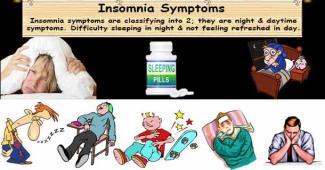
Insomnia symptoms are classifying into two; they are night and daytime symptoms. Sleeping on difficulty in night and nor feeling refreshed in the morning are the most common insomnia symptoms.
Night time Insomnia Symptoms
- Sleeping difficulty – that is difficulty falling asleep despite being tired
- Relying on sleeping pills or alcohol to fall asleep
- Awakening frequently or lying awake in the middle of the night
- Awakening too early in the morning and not feeling refreshed
Daytime Insomnia Symptoms
- Daytime drowsiness, fatigue, or irritability
- Difficulty concentrating; poor job/school performance
- Lower reaction times and diminished mental alertness; increased likelihood to accidents.
- Weakened immune system
- Increased risk of depression, anxiety and substance abuse
The lack of sleep also can cause other symptoms. Wake up feeling tired or not well rested, and feel tired during the day. It furthermore, may have trouble focusing on tasks. Insomnia can cause to feel anxious, depressed, or irritable.
Insomnia may affect daily activities and cause serious problems. For example, it may feel drowsy while driving. Driving while sleepy can leads to more than 100,000 car crashes each year. In older women, research shows that insomnia raises the risk of falling.
Insomnia
Insomnia is a common condition in which have trouble falling or staying asleep. This condition can range from mild to severe, depending on how often it occurs, and for how long.
Sleeping insomnia can be chronic (long term) or acute (short-term). Chronic-insomnia means having symptoms at least three nights a week for more than a month. Acute-insomnia lasts for short time, lasting from few days to less than three months.
What is Insomnia?
Any has the following, and then you may be any Insomniac and need immediate testing and treatment.
- Trouble falling asleep
- May falls asleep easily but wakes up too soon
- Trouble with both falling asleep and staying asleep.
As a result, insomnia can cause to get too little sleep or poor-quality sleep. So may not feel refreshed when wake up?
This is a common problem experienced by 20% to 30% of adults at various times in their lives. The most prevalent sleeping disorder is chronic insomnia disorder, which is an experience by 15% of adults.
Sleep is one of the most deeply healing and revitalizing experiences known. When we can get enough restful sleep each night, the entire world looks brighter.
Simply, insomnia can define as the inability to get high quality sleep. Because different individuals need varying amounts of sleep, insomnia is not able to define by the number of hours of sleep or by how quickly one fall asleep. Instead, it depends on the quality of the sleep and how one feel after sleeping. Even after sleeping eight hours a night, still feel drowsy and fatigued during the day, means may be experiencing insomnia.
Sleep Disorders

Sleeping-disorders are conditions characterized by abnormal sleep or inadequate sleep or cannot sleep or problem sleeping that interferes with once physical, mental, and emotional function.
One may have sleep problems if having:
- Hard to fall asleep (trouble sleeping or cannot be able to sleep) or stay asleep throughout the night,
- Wake up with feeling tired or feel very sleepy during the day, even if have had enough sleep?
Sleeping-disorders
Most common sleeping disorders are:
- Insomnia - a hard time falling or staying asleep,
- Sleep apnea (loud snoring caused by an obstructed airway),
- Narcolepsy (falling asleep spontaneously- daytime "sleep attacks"),
- Restless leg syndrome (sudden shock movement of legs or leg),
- Sleepwalking (walking when sleeping),
- Bruxism (grinding of the teeth while sleeping) is a condition that also may contribute to sleep-disorders.
- Nightmares, night terrors, sleepwalking, sleep talking, head banging, wetting the bed and grinding the teeth are kinds of sleep problems called parasomnias. There are treatments for most sleep disorders. Sometimes just having regular sleep habits can help.
Sleep disorder risks and complications
- Poor performance at work or school,
- Anxiety and mood disorders,
- Increased risk of injury in a workplace,
- Health problems - heart disease, heart failure, irregular heartbeat, heart attack, high blood pressure, stroke, and diabetes.
- In addition, adults who sleep less than six hours a night are 50 percent more likely to become obese than those who sleep for seven to eight hours a night.
Sleep Disorder Studies and its Results
- Preschoolers who deprive of sleep may have more chances to develop ADHD in childhood, a U.S. study suggests.
- A new study suggests that women, who do not get enough sleep, may affect their quality of marriage life.
- Getting enough sleep and reduced stress level may support your weight loss effort. Even for people who already in healthy eating habit and consistent exercise regiment, sound sleep helps weight loss.
- Kids already having ADHD may face more trouble to keep attention when they lost their sleep, a new study has found.
- New study has found that a person who is getting too much/little sleep can increase chances of developing chronic conditions such as diabetes, high blood pressure, and heart disease.
- A new study shows that a lack of rapid-eye movement (REM) sleep appears to trigger proteins linked to migraines.
- An article in the journal Sleep says that getting fewer than six hours of sleep per night may increase the chance of dying prematurely.
- A study shows even one night of sleeplessness can induce insulin resistance. Therefore, the rise in diabetes mirrors the sleepless hours of many adults endure now.
- A long nap every afternoon appears to help the brain to remember things and make you smarter, a new study has found.
- Chronic insomnia may affect the brain structure. The scans of chronic insomniacs have the less gray matter in their left orbitofrontal cortex, and the worst affected insomniacs had the least gray matters. The left orbitofrontal cortex is in-charge of feelings of pleasure and comfort.
- A study suggests that teenagers go to bed earlier are less likely to suffer from depression than those who go late.
- An animal study shows a lack of sleep may link to the cause of Alzheimer's disease.
- An article published in the journal Sleep says that people who suffered from insomnia may have high nighttime blood pressure.
- Small studies have shown that long nap in afternoon can reduce ADHD, anxiety and depression in young children.
Sleep Well Tips

The ideas behind sleep-well tips are to help to stay healthy by keeping the mind and body rested enough and makes it strong. Following these will help to fall asleep fast, sleep better, and feel best.
How do you get to sleep?
Seventeen ways to get to sleep faster:
- Do not go to bed unless sleepy - If not feel sleepy at bedtime, do something else; read a book, listen to soft music, or browse through a magazine. Find something relaxing, but not stimulating, to take the mind off worries about sleep.
- Avoid heavy, spicy foods, especially for those who prone to heartburn. Eating too much may cause to feel physically uncomfortable when lying down.
- If you are not able to asleep after 20 minutes, then get out of the bed and find something else to do that will make feel relaxed. If possible, do it in another room other than the bedroom. Bedroom should be only to sleep, and it is not a place for reading, discussion or something similar. Once feel sleepy again, go back to bed.
- Begin rituals that help you relax each night before bed. This can include such things as a warm bath, light snack or a few minutes of reading.
- Get up at the same time every morning, even on weekends and holidays.
- Get a full night sleep regularly; get enough sleep so that feels well rested nearly every day.
- Avoid taking naps, if not try to keep it short (less than one hour). Never take a nap after 3 p.m.
- Keep a regular schedule - same times for meals, medications, chores, and other activities help keep the inner body clock running smoothly.
- Do not read, write, eat, and watch TV, talk on the phone, or play cards in bed or bedroom.
- Do not have any caffeine before bedtime.
- Do not have any alcohol containing drinks within six hours of the bedtime.
- Do not have a cigarette or any other source of nicotine before bedtime.
- Do not go to bed hungry, but do not eat a big meal near bedtime either.
- Avoid any tough exercise within six hours of the bedtime. You should exercise regularly, preferably do it earlier in the day. (Consult your doctor before beginning an exercise program.)
- Avoid sleeping medication, or use them cautiously. Most doctors do not prescribe sleeping medicines for periods of more than three weeks. Do not drink alcohol while taking sleeping pills.
- Try to get rid of or deal with things that make worry. If unable to do this, then find a time during the day to get all of these worries out of the system. Bed is a place to rest, not a place to worry.
- Make the bedroom quiet, dark, and an optimum temperature. An easy way to remember this: it should remind you of a cave. It seems to work for bats; they are considering as a champion sleeper. They get about 16 hours of sleep each day. Maybe it is because they sleep in dark, cool caves.