
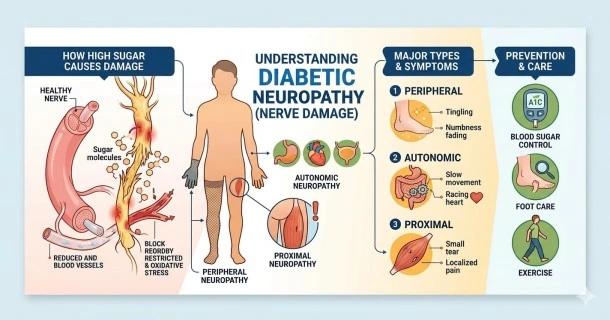
Learn how chronic high blood sugar causes nerve damage. Discover the symptoms of peripheral, autonomic, focal, and proximal diabetic neuropathy and how to slow progression.
Understanding Diabetic Neuropathy
Diabetic neuropathy is a type of serious nerve damage that can occur if you have diabetes. Consistently high blood sugar (hyperglycemia) injures nerves throughout your body, most commonly affecting the nerves in your legs and feet.
Depending on the affected nerves, symptoms can range from pain and numbness in your limbs to problems with your digestive system, urinary tract, blood vessels, and heart. While nerve damage cannot be entirely reversed, early detection and strict glycemic control can slow its progression and significantly improve quality of life.
Visual Description of Diabetic Neuropathy
Clinically, peripheral diabetic neuropathy frequently manifests in the lower extremities. In its early stages, it presents as a symmetrical "stocking-glove" distribution of sensory loss. Visually, an affected foot may appear entirely normal externally, or it may exhibit dry, cracking skin due to a lack of autonomic sweating. In advanced stages, structural changes occur, such as hammertoes or prominent metatarsal heads due to muscle wasting. If left unmanaged, minor friction can lead to painless, deep, circular ulcers—typically on the sole of the foot or over bony prominences—which can become infected due to reduced blood circulation.
How Diabetes Causes Nerve Damage
The physiological connection between diabetes and nerve damage involves a combination of metabolic and vascular factors:
- Vascular Impairment: High blood sugar weakens the walls of the microscopic blood vessels (capillaries) that supply your nerves with vital oxygen and nutrients. Without a steady blood supply, nerve fibers wither and lose their ability to transmit signals.
- Metabolic Stress: Elevated intracellular glucose levels trigger the polyol pathway, leading to an accumulation of sorbitol and fructose inside nerve cells. This chemical imbalance reduces essential cell enzymes and impairs normal nerve conduction.
- Inflammatory Injury: Chronic hyperglycemia creates systemic inflammation and oxidative stress, which directly damages the protective myelin sheath surrounding nerve fibers.
The Four Main Types of Diabetic Neuropathy
1. Peripheral Neuropathy
This is the most common form of diabetic neuropathy. It affects the extremities first, typically beginning in the feet and legs before progressing to the hands and arms.
- Symptoms: Numbness, reduced ability to feel pain or temperature changes, a tingling or burning sensation, sharp pains or cramps, and extreme sensitivity to even light touch (allodynia).
- Complications: Loss of protective sensation means minor blisters or cuts can go unnoticed, quickly developing into deep ulcers or severe infections.
2. Autonomic Neuropathy
The autonomic nervous system controls your involuntary functions, including your heart, bladder, stomach, intestines, eyes, and sex organs.
- Digestive System: Damage to the vagus nerve causes diabetic gastroparesis, where the stomach empties food too slowly, causing nausea, vomiting, and bloating.
- Urinary and Reproductive Systems: Can lead to bladder dysfunction (incomplete emptying or urinary incontinence), frequent urinary tract infections (UTIs), and erectile dysfunction (ED) in men.
- Cardiovascular System: Can impair the body's ability to regulate blood pressure, leading to a sudden drop in blood pressure when standing up (orthostatic hypotension), dizziness, or a abnormally rapid resting heart rate.
3. Proximal Neuropathy (Diabetic Amyotrophy)
This type affects nerves in the thighs, hips, buttocks, or legs. It is more common in older adults with type 2 diabetes.
- Symptoms: Severe, sudden pain in the hip, thigh, or buttock, followed by progressive weakness and wasting (atrophy) of the thigh muscles, making it difficult to stand up from a seated position.
4. Focal Neuropathy (Mononeuropathy)
Focal neuropathy involves damage to a single, specific nerve, most often in the face, torso, arm, or leg.
- Symptoms: Sudden, severe pain in a specific area, such as the shin, foot, lower back, or chest. It can also manifest as cranial nerve damage, leading to double vision, aching behind one eye, or bell's palsy (paralysis on one side of the face).
Differential Diagnosis: 3 Potential Possibilities
It is important to note that not all nerve pain or numbness in individuals with diabetes is caused by diabetic neuropathy. A clinician will consider multiple distinct possibilities during an evaluation:
- Vitamin B12 Deficiency: Long-term use of metformin (a common first-line type 2 diabetes medication) can impair vitamin B12 absorption, leading to neurological symptoms that mimic peripheral neuropathy.
- Chronic Inflammatory Demyelinating Polyneuropathy (CIDP): An autoimmune disorder that causes progressive weakness and impaired sensory function in the legs and arms due to immune-mediated destruction of myelin.
- Lumbar Radiculopathy (Sciatica): Nerve root compression in the lower spine caused by a herniated disc or spinal stenosis, resulting in radiating leg pain and numbness.
Treatment and Management Options: 3 Distinct Pathways
While you cannot reverse structural nerve death, a combination of medical and lifestyle options can alleviate symptoms and halt further progression:
1. Tight Glycemic and Metabolic Control
The foundational step in managing nerve damage is keeping blood sugar consistently within your target clinical range. Stabilizing your HbA1C stops the ongoing metabolic destruction of nerve pathways and allows damaged, non-dead fibers a chance to repair. Managing blood pressure and cholesterol is also vital to keep the capillaries supplying the nerves healthy.
2. Pharmacological Pain Management
Doctors can prescribe targeted medications to alter how your central nervous system interprets nerve pain signals. Common medical options include:
- Anticonvulsants: Medications like pregabalin or gabapentin are frequently used as first-line therapies for nerve pain.
- Antidepressants: Serotonin-norepinephrine reuptake inhibitors (SNRIs) like duloxetine can effectively ease neuropathic pain independent of their antidepressant properties.
- Topical Agents: Capsaicin creams or lidocaine patches applied directly to the feet can provide localized temporary relief.
3. Comprehensive Preventative Foot Care
Because neuropathy diminishes pain sensation, strict daily foot inspections are mandatory to prevent severe infections and amputations. Wash your feet daily in lukewarm water, dry them thoroughly, moisturize the tops and bottoms (avoiding between the toes), and always wear properly fitted, moisture-wicking socks and supportive shoes to avoid friction injuries.
Frequently Asked Questions (FAQ)
Can diabetic neuropathy be cured or reversed?
No, established structural damage to the nerve fibers cannot be entirely cured or reversed. However, by strictly managing your blood sugar levels, you can effectively halt the progression of the condition, prevent further nerve damage, and allow minor nerve irritation to improve over time.
Why does diabetic nerve damage start in the feet first?
Diabetic peripheral neuropathy follows a "length-dependent" pattern. The longest nerve fibers in the human body extend all the way from the lower spine down to the toes. Because these long fibers have the highest metabolic demands and rely on a vast network of tiny capillaries, they are the most vulnerable to the vascular damage and oxidative stress caused by chronic high blood sugar.
How can I tell the difference between poor circulation and nerve damage?
While both conditions affect the legs and feet, they present differently. Nerve damage (neuropathy) typically causes constant tingling, burning pain, numbness, or hypersensitivity even at rest. Poor circulation (Peripheral Artery Disease) generally causes a dull, cramping muscle ache in the calves or thighs that triggers specifically during physical activity (walking) and resolves quickly with rest.