
Can brewer's yeast lower blood sugar? Discover what clinical science says about its chromium content, B-vitamins, proper dosage, and side effects.
Brewer's Yeast for Diabetes: An Evidence-Based Guide to Benefits and Safety
Brewer's yeast (derived from the fungus Saccharomyces cerevisiae) is a traditional nutritional supplement widely recognized as a dense powerhouse of essential micronutrients. In the context of diabetes management, it has garnered substantial interest because it serves as a natural, highly bioavailable source of trace minerals and vitamins involved in glucose metabolism.
However, because brewer's yeast can interact strongly with common prescription medications and carries distinct health warnings, separating marketing hype from clinical science is crucial before adding it to your daily routine.
The Nutrient Complex: Why Brewer's Yeast Matters
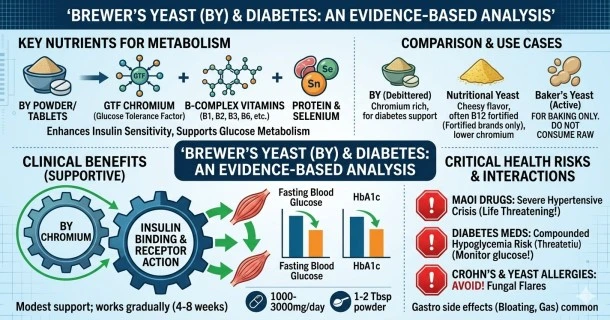
Brewer's yeast is not a single isolated nutrient; rather, it is a complex whole-food supplement containing three key pillars of metabolic support:
1. Glucose Tolerance Factor (GTF) Chromium
The primary reason brewer's yeast is studied for diabetes is its exceptionally high concentration of chromium, structured naturally as Glucose Tolerance Factor (GTF). GTF is an organic compound that binds trace chromium to amino acids and nicotinic acid, making it significantly more bioavailable and easily absorbed by the human gut than inorganic forms like chromium chloride.
At the cellular level, GTF chromium acts as a vital cofactor that enhances the metabolic action of insulin. It supports insulin binding to cell receptors, amplifies intracellular signaling, and assists muscle and fat cells in pulling glucose out of the blood more efficiently.
2. High-Density B-Complex Vitamins
Brewer’s yeast is naturally rich in B-complex vitamins, including Thiamine (B1), Riboflavin (B2), Niacin (B3), Pantothenic Acid (B5), Pyridoxine (B6), Biotin (B7), and Folate (B9). (Note: Active Vitamin B12 is not naturally present in yeast unless specifically fortified by the manufacturer).
These B-vitamins act as essential coenzymes that drive the biochemical pathways responsible for breaking down carbohydrates and converting glucose into cellular energy.
3. Dietary Protein and Selenium
It consists of roughly 50% high-quality protein by weight and contains trace levels of selenium, a structural antioxidant that protects vascular tissue walls from the systemic oxidative stress caused by chronic high blood sugar.
What Does Clinical Research Say About Blood Sugar?
Clinical trials evaluating oral brewer's yeast supplementation have demonstrated modest, supportive benefits for individuals living with type 2 diabetes and insulin resistance.
Clinical Study Findings
- Glycemic Control: Meta-analyses of clinical studies show that consistent daily intake of chromium-rich brewer's yeast can lead to a modest, gradual reduction in fasting blood glucose (FBG) and a slight downward shift in long-term HbA1c percentages.
- Lipid Management: Some trials have also noted favorable secondary improvements in lipid profiles, demonstrating a mild reduction in low-density lipoprotein (LDL) "bad" cholesterol and a slight increase in high-density lipoprotein (HDL) "good" cholesterol.
Important Medical Context: Brewer's yeast cannot replace standard prescription anti-diabetes medications (such as metformin or insulin). It acts strictly as a supportive nutritional tool to help correct underlying trace mineral gaps that may aggravate insulin resistance.
Recommended Dosages and Supplement Forms
To capture the metabolic benefits of brewer's yeast safely, it is important to stay within standardized daily parameters.
- Standard Clinical Dosage: The typical dietary dose utilized in clinical evaluations ranges from 1 to 2 tablespoons of powder per day, or 1,000 mg to 3,000 mg daily when taken in compressed tablet or capsule form.
- A Note on Flavor: Natural brewer's yeast possesses an intensely bitter, distinct flavor. Many commercial brands offer "debittered" brewer's yeast powder, which undergoes specialized washing processing to remove the bitterness while preserving the structural micronutrient matrix.
Critical Health Risks, Side Effects, and Drug Interactions
Despite its natural origins, brewer's yeast carries strict medical precautions and can cause severe health complications if combined improperly.
Potential Side Effects
- Gastrointestinal Symptoms: The most frequent short-term side effects include flatulence, abdominal bloating, abdominal cramping, and mild headaches.
- Fungal Flares and Migraines: Because it contains yeast elements, individuals prone to frequent yeast infections or those living with inflammatory bowel diseases (such as Crohn's disease) must completely avoid it. Additionally, brewer's yeast is very high in tyramine, a chemical compound that can trigger severe migraine headaches in sensitive individuals.
Critical Medication Interactions
- MAOIs (Monoamine Oxidase Inhibitors): If you take prescription MAOI antidepressants (such as phenelzine, tranylcypromine, or selegiline), you must never consume brewer's yeast. The exceptionally high tyramine content in the yeast can interact with these drugs to trigger a sudden, life-threatening spike in blood pressure known as a hypertensive crisis.
- Prescription Diabetes Medications: Because the active chromium in brewer's yeast enhances insulin sensitivity, taking it simultaneously with insulin injections or sulfonylureas (like glipizide or glyburide) can compound their blood-sugar-lowering actions. This unexpectedly raises your risk of developing clinical hypoglycemia (low blood sugar). Close monitoring of blood glucose levels is necessary.
Frequently Asked Questions (FAQ)
Does brewer's yeast lower blood sugar levels immediately?
No. Brewer's yeast does not function as an immediate glucose-lowering therapy like fast-acting insulin. It works gradually over a period of 4 to 8 weeks by rebuilding cellular trace chromium stores, which slowly optimizes the body's natural insulin receptor sensitivity and stabilizes baseline fasting blood glucose levels over time.
Is brewer's yeast the same as baker's yeast or nutritional yeast?
No, they are distinct. While all three are forms of Saccharomyces cerevisiae, brewer's yeast is a byproduct of beer brewing that is deactivated and rich in chromium. Baker's yeast is live yeast used to leaven bread and should not be eaten raw. Nutritional yeast is explicitly grown on molasses, deactivated, features a cheesy flavor, and typically lacks the high Glucose Tolerance Factor (GTF) chromium matrix found in brewer's yeast.
Can individuals taking metformin safely use brewer's yeast?
In most cases, yes, provided it is cleared by your healthcare provider. Metformin use can cause long-term Vitamin B12 depletion. While brewer's yeast is a massive source of other B-complex vitamins, it does not naturally contain active Vitamin B12 unless the product label explicitly states it has been fortified. Check the nutritional label carefully to confirm.