Learn to identify early signs of nearsightedness in children and adults, understand symptoms, and explore management options.
Myopia Symptoms: Early Signs of Nearsightedness in Kids & Adults
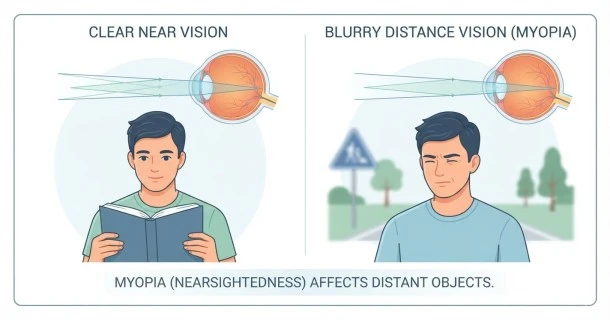
Myopia (nearsightedness) is a common refractive error where close objects are clear, but distant objects appear blurry due to an elongated eyeball causing light to focus in front of the retina. Early recognition helps manage visual strain.
Nearsightedness Symptoms in Adults
Adults often mistake uncorrected vision side effects for fatigue. Common signs include:
- Distant Blur: Trouble seeing road signs, TV, or faces across a room.
- Persistent Eyestrain & Headaches: Aching eyes and frontal headaches from focusing efforts.
- Chronic Squinting & Visual Fatigue: Partially closing eyelids to sharpen images or tiring during distance tasks.
Early Signs of Nearsightedness in Children
Children often do not notice gradual vision loss. Key behavioral indicators include:
- Academic struggles with board visibility.
- Holding reading materials close or excessive blinking/rubbing.
- Loss of interest in distance-based activities.
Medical Context & Management
Management options include corrective lenses and specialized treatments to slow progression.
Frequently Asked Questions (FAQ)
Can adults develop myopia?
Yes, adult-onset myopia can occur due to intense near-work or underlying health factors.
Why do people squint when nearsighted?
Squinting temporarily improves focus by reducing light scatter.
What are the risks of unmanaged myopia?
Progressive myopia can increase long-term risks for serious retinal conditions.