Calculate how much water you should drink each day in liters, milliliters, ounces, and glasses based on your body weight, exercise duration, and climate.
Daily Water Intake & Hydration Calculator
Use this Daily Water Intake & Hydration Calculator to estimate how much fluid your body needs each day in liters, milliliters, fluid ounces, and 250 mL glasses based on your weight, daily exercise, climate, and life stage.
Calculate Your Daily Water Requirement
Enter your body weight, daily exercise duration, ambient climate, and pregnancy or breastfeeding status if applicable.
How Daily Water Intake Is Calculated
There is no single "one-size-fits-all" rule like 8 glasses a day for every adult. Clinical hydration estimates scale fluid needs to your body size and sweat loss:
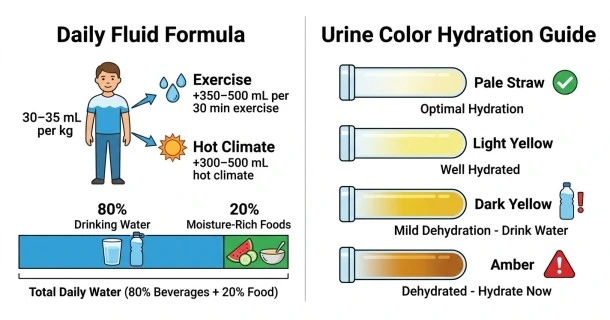
- Baseline Weight Formula: Healthy adults generally require 30 to 35 mL of total fluid per kilogram of body weight per day (roughly 0.5 fluid ounces per pound).
- Physical Activity Adjustment: Sweating increases fluid loss. Add approximately 350 to 500 mL (12 to 16 oz) of extra water for every 30 minutes of moderate-to-vigorous exercise.
- Hot & Humid Climate Adjustment: Living or working in warm, tropical, or high-altitude environments increases insensible skin and respiratory water loss, adding roughly 10% to 15% (300 to 500 mL) to daily fluid needs.
- Food vs. Drinking Water Split: Roughly 20% of your total daily water comes naturally from moisture-rich foods (fruits, vegetables, yogurt, soups, and cooked grains), while the remaining 80% comes from plain water and unsweetened beverages.
General Daily Fluid Guidelines by Life Stage
Major public health bodies—including the National Academies of Sciences, Engineering, and Medicine (NASEM) and the Indian Council of Medical Research (ICMR)—outline these baseline total daily water benchmarks (from both beverages and food):
| Group / Life Stage | Total Daily Fluid (Liters) | Total Daily Fluid (US oz) | Approx. Drinking Water (80%) |
|---|---|---|---|
| Adult Men (19+ years) | 3.0 – 3.7 L/day | 101 – 125 oz/day | 2.4 – 3.0 L (10–12 glasses) |
| Adult Women (19+ years) | 2.2 – 2.7 L/day | 74 – 91 oz/day | 1.8 – 2.2 L (7–9 glasses) |
| Pregnant Women | 2.7 – 3.0 L/day | 91 – 101 oz/day | 2.2 – 2.4 L (9–10 glasses) |
| Breastfeeding Women | 3.1 – 3.8 L/day | 105 – 128 oz/day | 2.5 – 3.0 L (10–12 glasses) |
How to Check Your Hydration Status at Home
- Urine Color Check: Well-hydrated individuals typically produce pale straw-colored or light yellow urine. Dark yellow or amber urine usually signals mild dehydration, whereas completely colorless urine all day may indicate over-drinking.
- Thirst & Energy Cues: Dry mouth, fatigue, mild headaches, dizziness when standing, and reduced urination frequency are early signs that you need fluids.
- Steady Intake Over Time: Sip water evenly across the morning, afternoon, and evening rather than gulping large amounts all at once.
Important Medical Cautions & Fluid Restrictions
- Medical Fluid Restrictions: Do not follow general hydration calculators if a doctor has placed you on a fluid restriction for congestive heart failure, advanced chronic kidney disease (CKD), dialysis, or liver cirrhosis with ascites.
- Avoid Overhydration (Hyponatremia): Drinking excessive amounts of plain water in a short window—especially during endurance sports without replacing sodium—can dangerously dilute blood sodium levels (hyponatremia).
- Illness & Fever: Fever, vomiting, or diarrhea rapidly deplete both water and electrolytes; use oral rehydration solutions (ORS) rather than plain water alone when ill.
Frequently Asked Questions (FAQ)
How much water should I drink per day based on my weight?
A reliable clinical rule of thumb is 30 to 35 mL of water per kilogram of body weight (or 0.5 ounces per pound). For example, a 70 kg (154 lb) adult typically needs about 2.1 to 2.5 liters of fluids daily, plus extra water for exercise or hot weather.
Do tea, coffee, and food count toward daily water intake?
Yes. About 20% of your daily fluid comes from water-rich foods like watermelon, cucumbers, oranges, soups, and curd. Unsweetened tea and moderate coffee also contribute to hydration, though plain water remains the best zero-calorie choice.
Does drinking more water help with weight loss and kidney stones?
Staying well hydrated supports kidney stone prevention by keeping urine diluted and helps manage appetite when water replaces sugary beverages. Drinking a glass of water before meals can modestly reduce calorie intake.
Can you drink too much water in a day?
Yes. Healthy kidneys can excrete roughly 0.8 to 1.0 liter of fluid per hour. Exceeding this rate consistently can overwhelm kidney filtration and cause low blood sodium (hyponatremia), leading to nausea, confusion, and swelling.