
Compare top Type 2 diabetes weight loss medications like Ozempic, Mounjaro, and Jardiance. Learn how they lower HbA1c, control appetite, and improve heart health safely.
Advanced Weight Loss Medications for Type 2 Diabetes: A Patient's Guide
Managing Type 2 diabetes often requires a multi-pronged approach. When healthy lifestyle modifications—like carbohydrate management and regular exercise—are not enough to hit your target HbA1c and weight goals, your doctor may recommend adding a targeted weight-loss or metabolic medication to your regimen.
Today's advanced diabetes therapies do double duty: they provide superior glycemic control while simultaneously promoting significant, clinically meaningful weight loss.
How Modern Diabetes Medications Drive Weight Loss
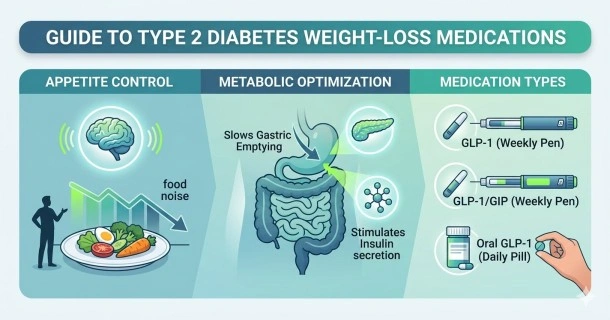
The most commonly prescribed weight-loss medications for Type 2 diabetes belong to a class called GLP-1 receptor agonists or multi-hormone receptor agonists. They work by mimicking natural metabolic hormones (incretins) that your body naturally secretes after a meal.
These medications work via three primary biological pathways:
- Pancreatic Optimization: They signal your pancreas to release the right amount of insulin when blood sugar rises, while lowering excess glucagon levels.
- Slowing Gastric Emptying: They delay the speed at which food leaves your stomach. This keeps you feeling full for a much longer period after eating.
- Appetite Regulation: They directly interact with the hunger centers in your brain to reduce daily food cravings, dampening what many patients refer to as constant "food noise."
Direct Comparison of Leading Medications
Medication Class & Ingredient Common Brand Names Route & Frequency Primary Clinical Impact Average Weight Loss Potential GLP-1 Receptor Agonist
(Semaglutide)Ozempic (Diabetes)
Wegovy (Weight Loss)Subcutaneous Injection
Once WeeklyPotently lowers HbA1c, improves fasting glucose, and provides robust long-term cardiovascular protection. 10% to 15% of total body weight on average. Dual GLP-1 / GIP Agonist
(Tirzepatide)Mounjaro (Diabetes)
Zepbound (Weight Loss)Subcutaneous Injection
Once WeeklyMimics two gut hormones for enhanced blood sugar lowering; frequently leads to the highest clinical glucose drops. 15% to 20%+ of total body weight at top therapeutic doses. Oral GLP-1 Agonist
(Semaglutide)Rybelsus Oral Tablet
Once Daily (Fasting)Offers reliable blood sugar control and modest weight management for those who wish to avoid needles. 5% to 10% of total body weight on average. SGLT2 Inhibitor
(Empagliflozin / Dapagliflozin)Jardiance
FarxigaOral Tablet
Once DailyCauses the kidneys to filter out excess glucose through urine; provides massive protection against heart and kidney failure. 3% to 5% of body weight (modest loss, primarily via fluid/glucose excretion).
Managing Expectations and Clinical Safety
While these medications are highly effective, they require patient education regarding side effects and active management boundaries:
Gastrointestinal Adaptations
Because these medications slow down your digestive system, the most common side effects are gastrointestinal—including mild-to-moderate nausea, vomiting, diarrhea, constipation, or indigestion. To minimize these symptoms, doctors always start patients at a very low "initiation dose" and gradually step the dosage up over several months. Eating smaller portions and avoiding high-fat or greasy foods can drastically reduce these symptoms.
Hypoglycemia Risks
GLP-1 receptor agonists and SGLT2 inhibitors are inherently "glucose-dependent," meaning they rarely cause low blood sugar (hypoglycemia) when used on their own. However, if you add them to a treatment plan that already includes insulin or a sulfonylurea (like glimepiride or glipizide), your risk of a dangerous blood sugar drop rises sharply. Your prescribing doctor will likely need to proactively reduce your daily insulin or oral medication doses when you start these therapies.
Important Medical Contraindications
These medications are not suitable for everyone. GLP-1 receptor agonists carry a boxed warning and should completely be avoided by individuals with a personal or family history of Medullary Thyroid Carcinoma (MTC) or Multiple Endocrine Neoplasia syndrome type 2 (MEN 2). They are also contraindicated for individuals with a history of severe pancreatitis.
Frequently Asked Questions (FAQ)
What is the difference between Ozempic and Mounjaro?
While both are highly effective once-weekly injections for Type 2 diabetes, they target different hormone pathways. Ozempic (semaglutide) is a single-hormone GLP-1 receptor agonist. Mounjaro (tirzepatide) is a dual-hormone agonist that targets both GLP-1 and GIP receptors. Because Mounjaro hits two distinct metabolic receptors, clinical trials indicate it generally provides slightly stronger blood sugar reductions and a higher average percentage of body weight loss compared to Ozempic.
Do I have to stay on these weight-loss medications permanently?
Clinical data shows that Type 2 diabetes weight-loss medications are designed for long-term chronic management. If you discontinue the medication, the suppressed appetite signals will revert to their baseline levels, gastric emptying will speed back up, and most individuals will experience a regain of the lost weight alongside a subsequent rise in their HbA1c levels. However, if a patient achieves significant weight loss and maintains permanent, intensive lifestyle changes, a doctor may evaluate a trial taper or transition to alternative management strategies.
Can I take these medications if I have Type 1 diabetes?
No, modern GLP-1 receptor agonists and dual agonists are currently FDA-approved exclusively for individuals with Type 2 diabetes or chronic weight management. They are not indicated as a primary treatment for Type 1 diabetes, which is an autoimmune condition characterized by the complete destruction of insulin-producing beta cells and strictly requires lifelong insulin therapy.